It’s not unreasonable though. For every x watts of server you need y watts of cooling.
Years ago Google complained that they couldn’t fill up their data centers because they had hit the limits of electrical code. Servers plus A/C took them into no man’s land as far as electrical code was concerned. That also means wasted real estate.
> Years ago Google complained that they couldn’t fill up their data centers because they had hit the limits of electrical code. Servers plus A/C took them into no man’s land as far as electrical code was concerned. That also means wasted real estate.
I don't remember that, but I'm guessing it was from the days Google's servers were in datacenters built by other companies. They probably outfitted so many circuits at x volts / y amps each, and there's only so much you can do with that.
(To be precise, Google still runs some servers in non-Google datacenters, as part of running a CDN. But this isn't the bulk of Google's processing power.)
"Power shift: Data centers to replace aluminum industry as largest energy consumers in Washington state"
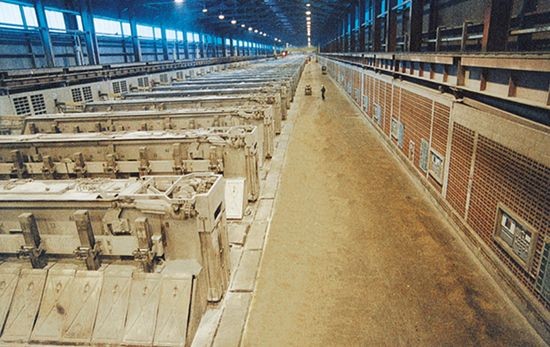
Large custom data centers draw on the order of 300MW, a non-scientific survey of aluminum smelters on the web has their draw around 400-700MW, so I'd be careful about 'ever will'.
Your first argument is about aggregate demand which is irrelevant. Home lighting uses a lot of power in aggregate but it’s very low per home.
Smelting issues a lot of power in a very small space resulting in a lot of heat, where computing it not getting anywhere close to that in terms of density, just in aggregate over giant data centers.
The fact that data centers don’t get hot enough to melt aluminum is by design.
But I’m not sure I understand your point. I look Google Maps images of the Wenatchee Alcoa works and the Google Data center in the Dalles and they seem order-of-magnitude the same size to my eyeballs.
You seem to think I don’t appreciate how much energy aluminum smelting requires - I do. But imagine the heating element of your aluminum crucible broken into a million pieces, each piece with a cooling system to keep its temperature down. That’s a data center.
The point is aggregate demand is not that difficult to deal with, just look at say New York City.
Large data centers are huge building, the density is very much limited by heat issues and while the building might get bigger the power demand per square foot does not. We can move lots of power through very small areas consider individual steam turbines are up at 600 MW.
Even if we start talking about GW for a single datacenter, the single Kashiwazaki-Kariwa plant is already 8GW.
Yeah that’s a good question. Smelters don’t generate their own power generally, right? But I believe they also use a lot of air cooling so most of that draw is going to be electrolysis.
Wikipedia has a list of aluminum smelters and I notice none of the biggest are in the US. Is that just because, or due to code limitations?
Aluminum smelting is dirty and uses a ton of power -- we generally don't subsidize power here (in stark contrast to China / Argentina / etc.) and have increasingly strict environmental controls so we're offshoring most production and pollution associated with smelting from ore. We do have a lot of 'secondary' production which is much cleaner since it uses aluminum scrap as the input.


Years ago Google complained that they couldn’t fill up their data centers because they had hit the limits of electrical code. Servers plus A/C took them into no man’s land as far as electrical code was concerned. That also means wasted real estate.