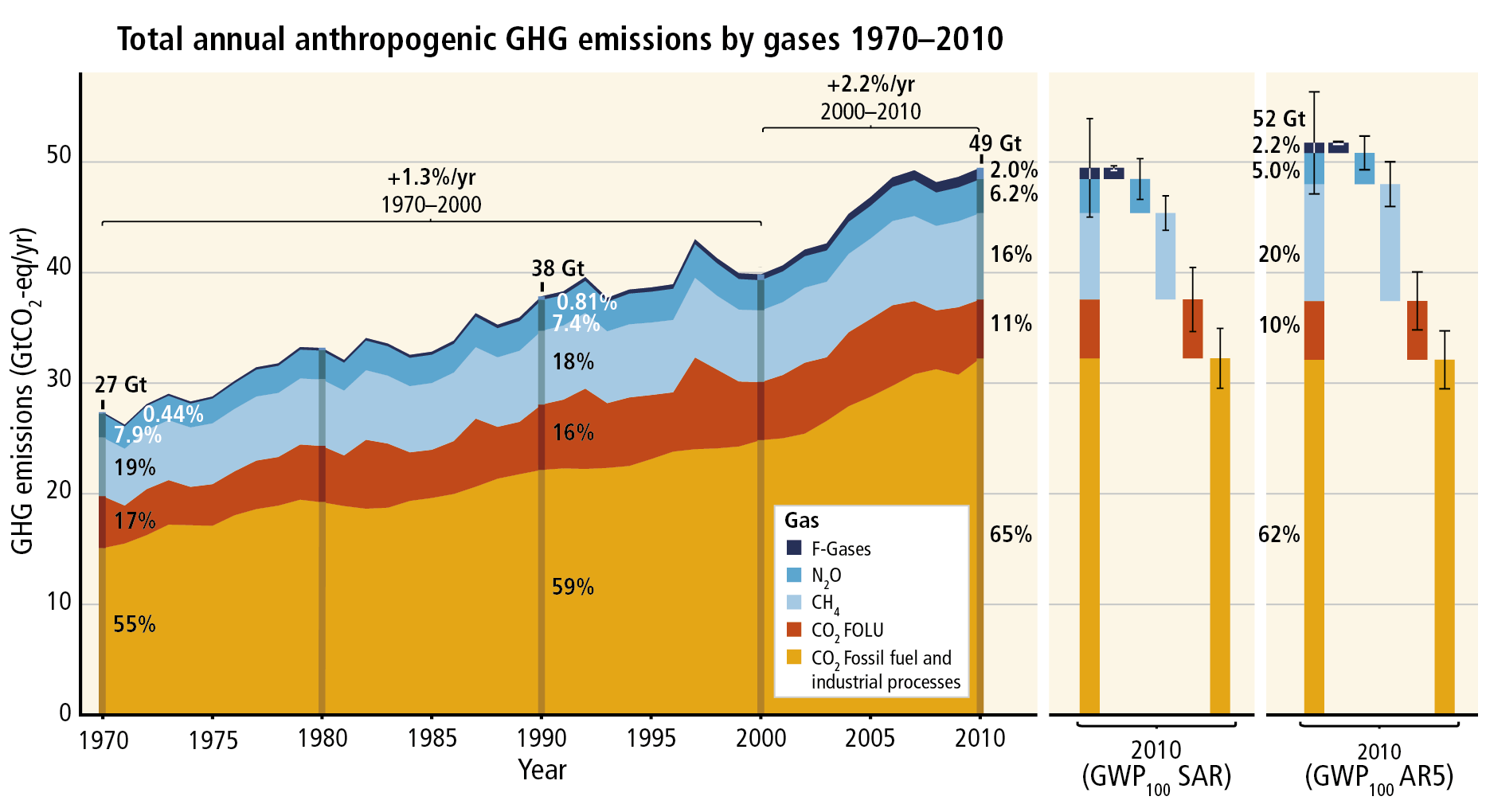
Climate change isnt just energy production, anyway. I highly recommend the book Drawdown. The sector that they recommend as the highest impact intervention is actually refrigerants.
They are ranked a bit confusingly by the metric of 'potential future impact' divided by 'cost'. Refrigerants could have a huge impact if they are not controlled and/or improved, but they need not be very costly to control and improve. They don't yet present the scale of problem that carbon emissions present. The IPCC after decades of studying and advising on the matter is pretty well clear on that.
You're right. Super-pollutants like methane, tropospheric ozone, black carbon, and hydrofluorocarbon have up to 2,000 times the warming potential of carbon over a 100 year time scale.[264], [265] Advanced economies can investigate good mitigation strategies and pay emerging economies to phase them out as soon as possible.
However, the overall funding gap is likely much lower (perhaps in the hundreds of millions) than for clean energy R&D (which is in the tens of billions) and so diminishing returns will set in earlier. Thus, while investing in this is quite cost-effective, there is an upper bound on the benefits (low benefit-costs).
The gross global warming effect of pollutants that you are mentioning is low compared to CO2. Methane emissions amount to around 16% of CO2(e) emissions, and NOx emissions amount to around half of methanes. Refrigerants and others about 2% so far, though they could get worse if not better controlled (which seems to be drawdowns case).
The IPCC highlights CO2 because it is the main problem which has to be dealt with.
I do like that the impact is in "equivalent CO2 tons" allowing comparison across more than emissions. Yes, scaling by cost is questionable but allows simple policy comparisons.
Drawdown seems very interesting overall, but their ranked list is confusing with the top 'solution' being about refrigerants, which amount to no more than a couple of percent gross CO2e emissions. Thats not what most people would expect from a top ranked solution, and potentially detracts from IPCCs seriously worked out advice - that we need to deal most with CO2.