So, today, what is the most practical way to solder two wires in a straight line?
I've tried the sleeves, but they are bulky, and it is difficult to see if a good connection is made.
I've also tried manual soldering but it is always difficult to align the wires with grippers, and the temperature causes the grippers to go through the insulation. And you need shrink tubing.
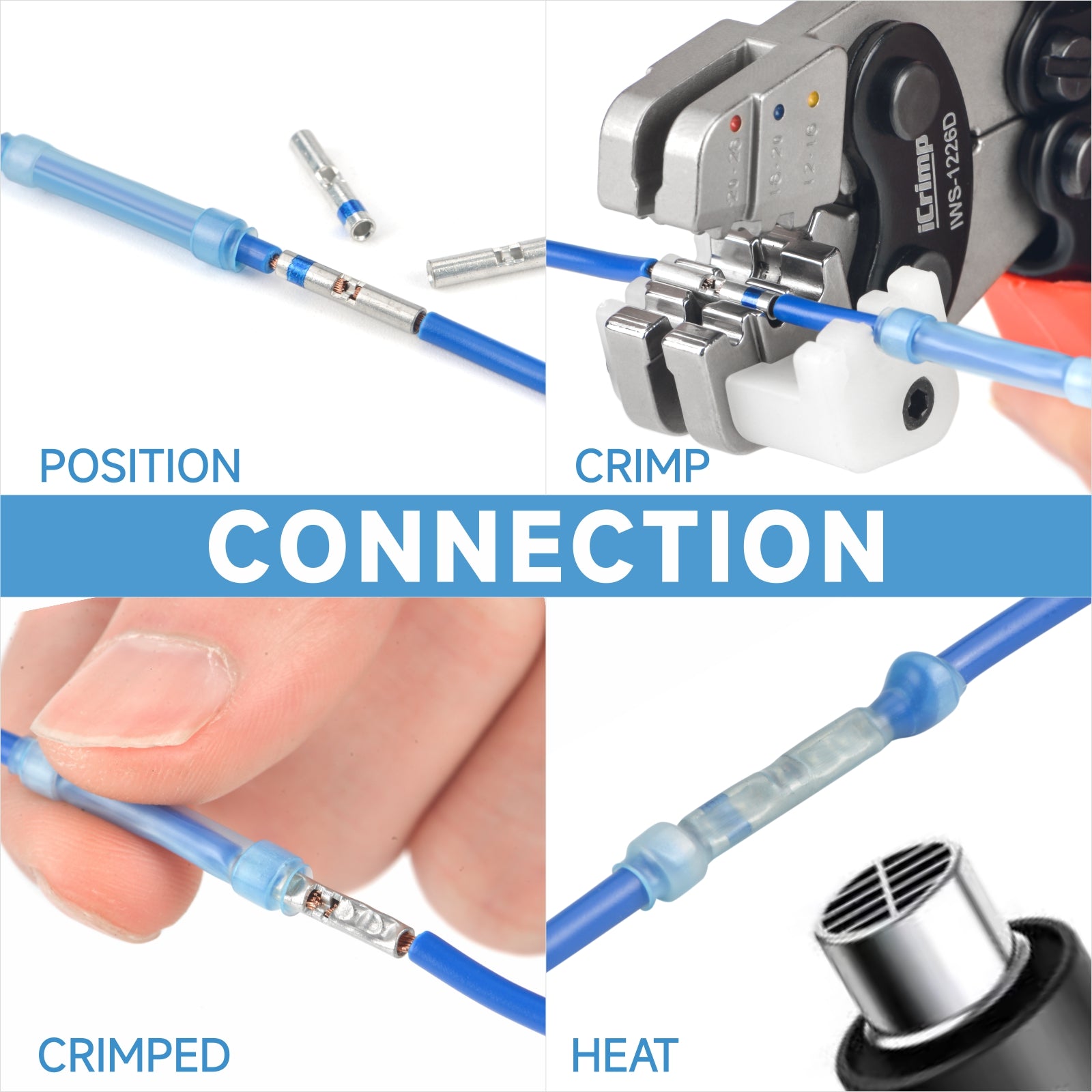
Not to solder, but to use a crimped connector - the good ones come with hot-glue-lined heat shrink so you crimp the wires for a great connection, then heat the connector and the shrink glues itself down, making a totally sealed connection.
If it's just low volt, low current, low mechanical stress stuff indoors - just twist and solder and wrap a bit of elec tape around it. But if it matters, break out the crimp tool.
Just use a Wago connector no soldering needed. Not everything has to be or should be soldered so maybe the question should be what to use for which situation?
From what I have read high current connections shouldn't be soldered (heat may melt solder) so you crimp not solder.
Far less bulky than they appear because they shrink while being heated so they're barely thicker than the wire. They can also be bent while hot which lets you get joints into tiny places.
So far, haven't had a single one fail, although I'm still dubious at using them on corroded or non-copper wires.
Not sure if that's what you meant, but there are small heat shrink plastic sleeves with low melting point solder in the middle. You can heat it with a heat gun and the solder will melt, joining the two wire together. They're often used to fix lawnmower robot perimeter cables. I find them very useful, reliable, waterproof and they are barely wider than the wire itself.
I recently used those to repair a friends scooter (a cheap knock off of the Xiamomi M365). Water ingress through the charge port seems like a foregone conclusion and it shorted some wires running from the motor controller to the dashboard PCB, frying both. I swapped out all the JST connectors for marine grade solder sleeves. It's less "repairable" now, but hopefully a lot less likely to need repair in the first place.
Yeah, that's what I meant, but I don't think they work well if you have to solder more then a few parallel wires because then it gets really bulky. Not really good for production work, imho.
I've tried to make a thinner splice on a four-wire cable, by staggering the joints. But I found it was too difficult to cut, strip, pre-load heat shrink, twist wires, and solder without melting the adjacent heat shrink. I think it's doable if you really need it, but I was just experimenting, so I gave up on it.
Put heat shrink on first. Then make a lineman's splice. If appropriate (solder can cause a stress riser in some cases making vibration problematic) solder. Then slide the heat shrink tube up & shrink it.
Alternatively, use self-vulcanizing silicone tape instead of heat shrink. That stuff doesn't need to be put on first, and doesn't need a heat gun, but is harder to apply on small wires due to the need to stretch it as it's applied.
Don't use the shitty metal alligator grippers you get on "helping hands", they're terrible even when not heating the wire much. A small smooth-jawed vice or two is far better for small work, e.g. a PanaVise model 201.


I've tried the sleeves, but they are bulky, and it is difficult to see if a good connection is made.
I've also tried manual soldering but it is always difficult to align the wires with grippers, and the temperature causes the grippers to go through the insulation. And you need shrink tubing.