Hacker Newsnew | past | comments | ask | show | jobs | submitlogin
Why would a YC company use 99Designs for web design?
24 points by MRonney on July 13, 2012 | hide | past | favorite | 47 comments
I'm a web designer and was talking to a YC company about designing their site. Instead of going with me or any designer for that matter, they put a contest up on 99designs with a whopping grand prize of $200. They kindly let me know that they would love for me to enter. Shouldn't a YC company know better? You would think the most sough-after mentos would tell their startups to invest in good design. Am i missing something here? Has any startup had a good experience designing their site with 99designs or similar sites?


Co-founder of 99designs here.

For clarification, there's no such thing as a $200 web design contest on 99designs.

Prices start at $599 but you really have to offer $1000-$2000 or more to get a good result. You browse thousands of finished web design projects here to see the outcomes that customers get:

http://99designs.com/web-design/contests?show=finished

I think the quality speaks for itself... the typical 7-10 day turnaround is also very helpful for a fast-moving start-up that needs results FAST and doesn't want to spend time getting multiple quotes/proposals and reviewing contracts.


YC companies are told to launch an MVP with a design that's good enough as fast as possible and iterate from there.

Spending months obsessing over a pixel-perfect design before you know you've made something people want is the wrong way to launch a startup.


"Spending months obsessing over a pixel-perfect design before you know you've made something people want "

Kickstarter projects as only one example run contrary to that thinking. It is easier to get people to buy into an idea if it looks professional and is well executed. This is not saying to throw money out and to "Spend... months obsessing over a pixel-perfect design"

Hiring a designer instead of 99designs is not the same as "spending months obsessing..".

This is not to imply that hiring a designer is always appropriate and using 99designs is not. It depends on the particular situation and circumstances obviously.

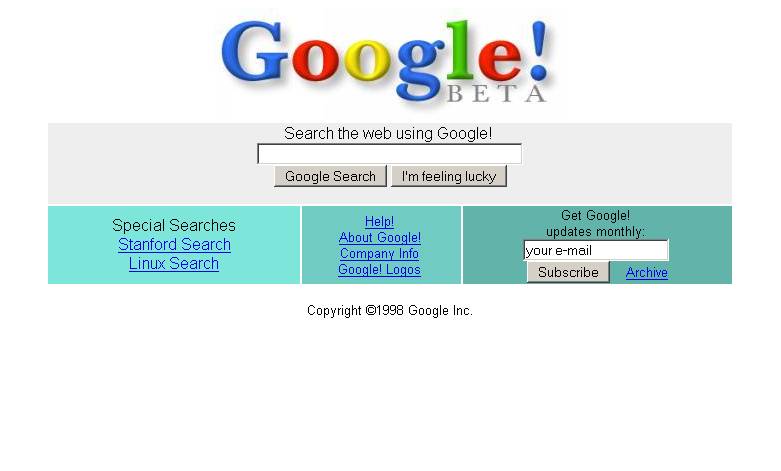
As an example google (which PG cited and forgetting it's one data point) is a service that is free and the results are immediately apparent after using it. If google were trying to crack corporate america with a paid product that design wouldn't have gotten them anywhere.


But you don't even need a product to do a Kickstarter. In fact in most cases the product doesn't even exist, the only thing that exists is the design and even that gets changed once the projects is funded sometimes to the chagrin of the backers when they receive a product that did not meet the original design expectations. (for example: http://a.wholelottanothing.org/2012/01/lessons-for-kickstart...)

So yes, if all you're selling is an idea, instead of a product, then of course design matters as that's all you've got.


Uh, Google was trying to crack corporate america with a paid product at the time that website was around. Before they launched ads in 2000, all the revenue came from selling the Google Search Appliance.


Most enterprise software in 2012 looks a lot worse than Google in 1998.


kickstarter => selling to the masses

yc => selling to experts who understand the domain

Design will be more important at kickstarter.


I think the OP has his answer.

In any case I do not agree. Design does matter even if there are outliers that break that mold. If you have no funding then you have to do what you can given your resources. If you have money you can allocate it wisely which is not the same as throwing it away.


Why are you citing something from 1998 as an example of successful design in 2012?


The point is not that startups should make sites that look exactly like that, but that initially they can get away with similarly low production values.


"startups should make sites that look exactly like that, but that initially they can get away with similarly low production values."

I'm assuming that that statement refers to YC startups as opposed to "startups" who may seek VC or angel funding (who may have limited knowledge and be more impressed with visual slickness). In that case the design, usability and appeal of the site matters much more.


If a startup gets something done well, no one will notice their uglyness unless beauty is a non-trivial part of getting their job done, initially.


The important thing about Google from 1998 was the fact that it was one box in which you typed what you want.

99 designs probably isn't going to help someone who doesn't know how to make a usable product, but YC has enough mentors that it's not an issue.


Nobody but designers care about a "successful design". They are supposed to be caring about a successful business, which means a good enough design.


"citing something from 1998"

Of course if one is going to use an example of where design didn't matter in 1998 you could always counter with an example of the imac, circa 1998, of which the design was key to the success of the product. (I won't even get into the other apple products).

http://designmuseum.org/exhibitions/online/jonathan-ive-on-a...


Apple wasn't a startup in 1998 either.


While I agree that pg's example is a bit extreme, the point still stands. At the beginning stages, great design won't determine the success of the product. Having customers will. So time and money is better spent in other areas. This isn't to say they won't come to you eventually when a better design is needed. Great design is still important, just not at the stage this company is at.


> At the beginning stages, great design won't determine the success of the product.

People hear 'design' and just think it is just the prettification of a product and not the actual usability and utter simplification of it. Maybe it's because there are so many designers that focus on gradients and drop-shadows anymore instead of the what and why, but design is imperative to the success of a company. Even though PG's point was that it doesn't matter (if I understood it correctly?), Google's minimalistic homepage compared to other search companies' sites in 1998 (bold colors, links everywhere, multiple functions/offshoots of the site) is part of what made it so popular; it did what it said on the tin and it made sense doing it.


That's not an example of successful design. That's an example of a successful company for whom design was secondary. I think YC founding teams in a field where design is of primary importance generally have design talent in the team.


That's the thing though: it's not an example of a successful company for whom design was secondary. That page was considered excellent design -- in 1998.


No, actually that was a very crude looking page in 1998.


So my prodigious gut agreed strongly with you and I was all psyched up to write a snarky comment with Archive.org links to other, better-designed search engines --- because I remember simplicity being one of Google's hallmarks when they launched.

But no, it turns out, 'thaumaturgy is right. Go look at Lycos and Altavista. It's hard to make a concise and compelling argument for Google's design being worse than its competitors. This was what professional web designs looked like in 1998.


One can claim Google's design was crude without claiming its design was worse than Lycos and Altavista.

It's especially easy to claim one without the other when the whole argument is that design is not a competitive edge for search engines.


Sure. Then you should be able to go find the top sites in 1998, select somehow for the sites where design was a competitive edge, and find among them many examples of designs that are better in some way that is straightforward to explain.

I gave up trying, for whatever that's worth. 1998 just looked crappy. Great year for indie rock! Neutral Milk Hotel! Bad year for web design.


It was simple -- apocryphally because Larry or Sergei weren't familiar with HTML -- but I don't see what makes it crude compared to the competition at the time (http://sixrevisions.com/web_design/popular-search-engines-in...).


Exactly, the simplicity and clarity, as I recall, combined with page rank of course, where the main draw of Google.

It's evident in comparison, that simplicity pioneered by Google, has been a significant principal in modern web design.

While a lot has improved in the design of Google's image over time, mostly aiming towards simplicity, the essence of Google's design, remains unchanged.


Count the cute icons.


I have a similar image from Facebook posted up above my desk: http://1.bp.blogspot.com/-CSGOgp31KQE/TXzi88yH1XI/AAAAAAAAO7...


The difference between good design and good enough design doesn't matter to almost the entire world.


YC says they are looking for the next Steve Jobs (http://paulgraham.com/ambitious.html). The most oft-cited reason for Steve Jobs' success was his ruthless attention to detail in all aspects of design, even when others didn't think it mattered (e.g., http://folklore.org/StoryView.py?project=Macintosh&story...).

I doubt that "the next Steve Jobs" would spend $200 at 99Designs for his company's first impressions.


What percentage of Apple's budget do you imagine was spent on marketing in the pre-Apple II years? I bet it was pretty small compared to what was spent on product development.

The Apple I didn't come with a keyboard or a case. It was not much to look at from a visual design standpoint.


This is a dangerous example of cargo culting. What is right for Apple is not always right for every startup on the planet.


You're saying this in a thread that was started by pg citing Google as an example of what is right.

Furthermore, YC is specifically looking for "the next Steve Jobs". I did not choose Apple as an example of what is right; they did. I merely pointed out that the advice re: design conflicted with what they claim to be looking for.


Money is a factor. A company is YC is not flush with cash -- the YC investment is $11,000 + $3000 per founder.

If you were building a start-up, and had to cut corners somewhere, think about where you might do so.


They get Yuri Milner's $150k too so they are not that broke...


They get this when the finish the program, not at the start.


We're working with someone who is a friend of my co-founder's, but if we had no inexpensive contacts with the design community I would consider a very cheap option. (I don't believe in spec work, but I wouldn't hesitate to hire a student or offshore, or to use Themeforest for that matter.)

It isn't that I don't respect the results that a great designer can provide, but I don't have the budget for it. Thus, I'm handling the User Experience, and depending on the designer to provide the graphics because I am inefficient in Illustrator and Photoshop, and I don't want to spend the money for legal copies. (I use Gimp and Inkscape but I'm very inefficient none the less.)

99Designs isn't paying for design as much as paying for a set of graphics that can be used. Great design is for people who have money. Now, it so happens that I'm focused on front end work and I've worked with good UX people in the past, so I am ahead of the game on UX, but this is the trade off that most startups will make.


A great product can easily overcome mediocre web design, but a fantastic website will never overcome a crappy product.


Exactly. No one uses Pinterest for this exact reason.


Snark if you want to, but I believe what I said.

I wish a successful product launch just meant you had to have a great looking website! That would make my life easier.


"I'm a web designer and was talking to a YC company about designing their site

....a whopping grand prize of $200. They kindly let me know that they would love for me to enter."

Apparently they think everyone places zero value on their time as well.

I think this also shows a certain maturity level and knowledge of business on their part regardless of the direction they have chosen. It would have been more appropriate to show an understanding of how things work and give you a softer landing. As in "we decided we didn't want to spend money on a designer and have decided to go another route. Thanks for your time and effort."

By the way I think I figured out who you are and you do nice work. (100 billion beverage cans?).


A lot of times founders don't have the knowledge to know the difference between a good designer and a bad designer. So I can try to pick one of the 10 I talked to and get one set of designs that I have to pay for or I can go to 99design and get 100 to look at and choose one to pay for. Once I get that design I can go back to a designer to tweak things if I need to, but more likely I will reach out to the person on 99 that designed it to help.


As a first design, I even use a theme because it has all the tools I need : different layouts, buttons, boxes, typos...

Here is an example of a theme with the related website : - http://themeforest.net/item/fadelicious-responsive-html-blog... - http://jolishare.com

I think working with a designer comes later.


Because sometimes things have to be done to a price point?

If $200 is all they can afford, then so be it. They'll seek to get the best product for the price. Maybe you would have done a better job, maybe not, but in either case it doesn't matter. They budgeted an amount and moved on. So should you. not everyone is in your target market.


It's regional thing too. Depending on the location, the startup's values places emphasis on different things. An NYC startup probably has more emphasis on 'smoke and mirrors', and has more of a market to capitalize your design skills for.


I don't agree with the assessment that NYC startups are more "smoke and mirrors". I will concede that there seems to be more of an engineering culture in SV and more of a design culture in NYC but if you look at NYC it's to be expected.


Guidelines | FAQ | Lists | API | Security | Legal | Apply to YC | Contact

Search: