I live and work in Poble Nou and I checked out the Superille. It was marvellous.
It is (I believe) a temporary project to explore how it all might work. In that sense, it's prototype and that's in fact really cool too. Basically they did an MVP of a Superille - low cost and very fast - in order to validate their hypotheses.
They mocked up the place to give people a feel of how living in this way could be. And they spent as little as possible - using old tyres and paint and recycled plywood to mark out spaces and make them feel "owned" by the people. Placing large lots of (quite big) trees and plants in pots on the car-free streets to see how it felt to walk down a street that was leafy and spacious and open.
The amount of extra space feels inspiring and liberating. Walking is faster if you want it to be - you can cut across streets and don't need to wait at stop signals. A lot of people riding bikes. A lot of smiles.
They definitely could have done a better job explaining it though. I have friends who support the idea but felt they could have been better informed. It felt like they didn't give enough warning.
However, what is interesting and cool is that once it was in place they did their best to engage residents in a dialogue about the proposal - they painted markings on the tarmac of the streets to lay out spaces for people to assemble and discuss. They had a soapbox platform for people to rant from, and a bunch of chairs scattered around the street for people to sit and discuss. They had walls for comments to be posted.
I certainly hope they go ahead with making it permanent and making more of them.
Cities without care are very different and much more humane places to live. Scale matters and cars warp the scale of a city in ways that are counterproductive to vibrant urban life.
I'm pretty sure we can overcome the technical issues that restrain us from our inevitable transition away from routine private car use in cities. Problems like what to do about parking are a legacy of the current broken system, not a fact of nature. The economic incentives to car ownership and the infrastructure that supports it are baked into cities right now. But this can change - but not by solving parking but by solving the underlying system and that includes pressuring the system to change through initiatives like this.
I don't think there's much doubt about how awesome it is to live a trivial distance from everything you need. This much is clear from the extreme premium that housing in such places commands compared to freeway-connected suburbs of US cities. It's not surprising that abundance of public space and a lack of through traffic would make them even better.
Cars and their infrastructure are indeed ugly and dangerous, but we have them because they so drastically increase the quality of life available to those who can't or won't pay the rent in the same superblocks as their jobs (or move to tenements).
Increasing the luxuriousness of this kind of premium housing would seem to come at the cost of extracting yet more free time from those who need to come into or through these areas but can't live in them, or yet more money from those who decide to stretch their housing budgets. It'd be entirely appropriate coupled with a massive increase in rail infrastructure or something, but on its own is concerning.
I'll be very interested to see whether US cities that adopt this model can add supply faster than people who used to commute can bid up the price of close-to-everything housing. My guess is no, not even close, a few elites get great lives and everyone else is driven to exurbs.
With a bit of planning, there is no difference in quality of life for able-bodied people living in communities from "town" up to metropolis:
Center of large city (i. e. new York, Paris):
Above a certain density, public transport becomes the norm across all income levels (cf. bankers in New York).
Suburb of large city down to towns:
For commuters coming in from the suburbs, there are hundreds of cities that show that rail is an option that's affordable and it usually takes 1/2h to the city center.
What motivates people to buy cars seems to be mostly daily life within the suburbs: shopping, getting children to school etc. This is a failure of city planning, because it's perfectly feasible to combine the density of a suburb with local subcenters that provide all daily needs (schools, shopping, medical etc.) within walking distance (let's say 1.5 miles).
Taking the worst as an example, the density of Atlanta's suburbs is about 1000/sq mile (http://www.city-data.com/forum/attachments/city-vs-city/6570...). Meaning there are 7074 people within a mile of any given point. That's plenty to sustain the infrastructure to provide for daily needs, although it may mean a need for more, but somewhat smaller schools/shops etc. (If this isn't convincing, consider that Atlanta is the worst of the worst in terms of waste of space. You can easily fit 10000 people within a mile^2 and still have backyards for everyone).
It's only rural living that requires a car. The quality of live in large cities will dramatically increase in the next few years, if only because self-driving cars and car sharing require far fewer parking spots. These make up about half of the space required for cars right now, meaning their abolition could double the space available for pedestrians.
I do like the idea, but there have been some problems[1].
Miscommunication, neighbours not knowing about the change or what it entailed.
Worse trafic on the main streets out of the superblock, with people that are thinking about leaving.
Having to train children to act differently on the main streets than in the ones in the superblock, as on the later streets they can be more oblivious, like in the park, but all look similar.
Bussinesses loosing tons of bussiness, a couple of bussinesses have reported losses of 40% and 50%.
All this while we know that drivers use the car because they need to, not because they want. Yes, there are alternatives, but you use the car when the alternatives are worse.
So, as I said, I like the idea, but we have to work in the implementation.
If we are to cite articles here, let me get one from Quim Monzó (a reputed catalan journalist) [1]. I'm pasting a Google translation directly here:
""
Noone can stop it
The latest rumors report that, after the first days of confusion in which many people (myself for example) had just did not understand the superblock Poblenou is so successful that the council considers mounted another even fatter. Instead of the nine islands now recovered and released to the public, the new superblock, which would be the Eixample district, in aggregate compensar- eighties. Sepúlveda go to Paris and Rocafort Aribau, including the four islands of the Clinic. The proliferation of space-and the undeniable fact that trim the circulation paths as important as Roma Avenue, the street Aragon and Great fea- would be a traffic calming infinitely superior to that now allows Poblenou.
In addition, it could hold more activities, not just those that are in the Poblenou. Convert planters of trees of the streets in small urban gardens so residents are planted to tomatoes from parsley. Every afternoon at five, would mime workshops all corners of the street Villarroel. At the intersection of Valencia Viladomat, barbecues because residents can cook sausages grilled tofu and mushrooms in which they exist. Years rain soon, like this, if the mushrooms are imported (Soria, Romania ...) it is verified Mushroom Fair Trade. Without this accreditation we are not allowed to use the picnic tables that are installed because citizens can enjoy these products along with their children. Saying that both barbecues and picnic tables would be designed for students and students of architecture, in a gesture of solidarity and protest sustainable. Once a week, the space freed Gran Via Casanova push forward the Factory of Ideas: a neighbor or neighbor tells a thought that has had this thought and then under discussion between all. It also may explain dreams, which are analyzed equally between everyone.
I can not conclude without noting that bus routes to be amended to avoid going through this supersuperilla would not be fixed. Each driver is free to choose what you want, you also can change from one day to another. This will not only encourage the creativity of colleagues and drivers but the genius of passengers and passenger. That could be targeted opening in September 2018, coinciding with the Feast of Mercy. And I forgot: stretched between the buildings around this area and recovered released settled zip, overflying stops caramelized apples that would allow it (the zip, no stops) than boys and children and adults, and adults could interact with each other and vice versa.
""
Quim Monzó is also a quite humorous writer, and this writing is full of his humour. He's making fun of the superblock, an 80 blocks superblock and random bus routes? You can't be fully sure whether he is for or against it, but one tends to make fun of things he disagrees with.
I'm actually in Barcelona at the moment, and it's definitely been easy to walk around, but that could also be because the touristy areas near the ocean are very dense, and day to day living north or west of that hub might be different. Besides the giant blocks for walking (I'm not sure I've found a "superblock", but the blocks I've walked on are huge), there are an incredible amount of mopeds. That seems to be a default way of getting around town for locals. That's a big difference than bikers who have to worry about bikes getting stolen, mopeds are probably going to be safe where you leave them, and people here are able to leave them pretty much everywhere. Movement in the city seems very easy for sure.
Side note, anyone here work at or know about Pier 01 down near the water? I just walked by there and was wondering what kind of companies were located there.
:) mopeds (or rather "scooters" and "vespas" in Italy) get stolen left right and centre. They are used more than bikes simply because they require less effort - they are the closest modern equivalent to horses, the transportation method for which old European cities were actually built.
> they are the closest modern equivalent to horses
I'm not sure how you're making this comparison, but if we're gonna compare machines to horses, the bicycle was invented in the 19th century to compete with horses, before automobiles were invented.
His comparison makes sense to me. When you ride a horse or a moped, you aren't putting the effort into it, something else is. When you ride a bike, you're putting the effort into it. It's definitely a difference. I enjoy a 10 km bike ride, but it definitely takes effort, and I'm not likely to do that if I'm going somewhere I'm not willing to show up sweaty too. It's a completely different consideration on a moped (or a horse, but who has a horse these days anyway).
I know a little about Pier 01. It's full of Barcelona and international startups, and I believe it's part of the Barcelona Activa city project to develop entrepreneurship. There's a French accelerator called Numa opening there and a bunch of other companies. I can find you someone to talk to there if you want.
I was there a few days ago and while walking around the Encants neighborhood, I was using a maps app and looking at the block I was on, which showed a hollow interior (similar to that seen in overhead shots of BCN). But I don't think that makes it anything more than just a block with a unique design.
Like you, I didn't find a superblock but I think that's due to it being a concept and not something you can necessarily visually see (as explained in the somewhat recent Vox video).
But actually, super blocks aren't closed to traffic, they enforce slow traffic speeds -- like 5MPH. A van could still cruise by at 5MPH and steal a moped,
but it would be super obvious in a crowded super block.
In terms of the obviousness of a crime, is there any word as to correlation or causation for street crime vs. pedestrian traffic? My gut says that busier streets lead to fewer crimes, but I'd like to see numbers on that.
Modern Vespas actually have an immobilizer device that prevents the scooter from working without the right transponder key, so it's even more difficult than just "hot-wiring" them.
I'm surprised the NYT article didn't mention anything about Barcelona's existing legacy in novel and pedestrian-friendly urban layout. The "superilles" likely reference part of the city's existing street grid composed of "illes," where blocks are chamfered to create large intersections and provide space for walkways, green strips, even expand sunlight penetration somewhat. https://en.wikipedia.org/wiki/Eixample
They can learn a lot more from Barcelona's $39m/km subway construction costs, compared to something like $1b/km in New York. Some of that is NY's density but worldwide averages are still around $300m/km and Barcelona is a stellar outlier.
Their "subway" is actually more like light rail. I think the lesson here is that more cities should be building high quality underground light rail (none of this at-grade Muni BS that exists in SF and other Pacific Northwest cities).
Really a matter of terminology, but there's a clear separation between underground heavy rail (all of the New York City Subway) and underground light rail. You can see this division in Boston and San Francisco. Heavy rail has much more capacity, generally has more/larger/better entryways, and has more spacious trains. It might also be faster, although that's possibly just a function of stop frequency.
In Portland, a far too frequent cause of MAX (the light rail) service interruptions is due to car/train collisions. See the following links for a small taste:
Sounds like a poor design, most places will have people boarding from sidewalks or a raise area.
As for the 2nd, people run into stuff in the cars all the time. Around 50-100 people die each day on US roads. And in the story you mentioned only the people in the car were injured, nobody on the train.
It's not really comparable to heavy rail in terms of speed or capacity. You can fit 1,500 people into a single NYC subway train, way more than any light rail system in existence, and the express trains go way faster than any light rail because they don't have to worry about potentially hitting stray pedestrians, bikers, or vehicles. NYC subway cars will go up to 55 mph going express or in tunnels. At-grade light rail simply can't go that fast, or even if it could, it wouldn't do it because it's unsafe.
Select-bus service (that is, buses running in dedicated lanes) is about as fast as at-grade light rail, and significantly cheaper to construct. NYC has been going in that direction for awhile. Building at-grade rail is just a complete non-starter. The city already tore out all of its above-ground rail a long time ago for a variety of reasons that persist to the present day.
Wow, I thought Amsterdam's new metro line (Noord/Zuidlijn) was extremely expensive because it's way over budget, Amsterdam was built in a swamp and there was damage to rows of houses etc.
But it's 9.7km, originally planned at 680 million euro, now estimated at 3.1 billion euro (project started in 2009, currently expected to be completed in 2018). That works out to $360m/km or so, not that bad compared to the worldwide average.
Most of the cost in infrastructure is actually caused by too many regulations in countries such as the US. It is estimated that current regulations increase the costs by a factor of 6-7.
When you look at Barcelona an how they build there it is obvious that they (currently or at least in the recent past) do not have that problem.
That's also one of the reasons why the Chinese can complete a large infrastructure project like a skyscraper in a few months while we need half a decade for the same task.
This is pretty silly since countries like Sweden, France and Germany have much lower infrastructure costs but equally or more stringent regulations and obviously stronger unions. I'd love to see a source for the 6-7x figure for regulation costs.
Alon Levy has a good blog that steadily beats the drum about US costs and what can be done to fix them:
I live in NY and I spent time living in the UK. In the UK most city centers had blocked off pedestrian areas that were only open in the morning for truck deliveries. This was possible because there was a commercial core where people did not reside, and there was plenty of outlying roads to park and drive around.
NYC has a LOT of people living in every area of the city. There is a lot of construction and residential deliveries, and emergency traffic. Certain areas have become pedestrian plazas, and some are closed off during the weekend but it is simply not possible to close off a significant amount of space. Anyone driving to Manhattan especially during peak times is not doing it out of convenience as it is extremely inconvenient to drive there. Often people have tools and equipment, and parking in garages in Midtown can easily cost you $40-$60.
If you live or are visiting NYC it is a nice thought to have pedestrian only roads. But we have to remember that the trades people that make city life possible really need roads to work.
With respect to emergency services, NYC ambulances and fire trucks get stuck in the traffic of private cars/taxis all of the time. If there were less cars, that wouldn't happen.
With respect to deliveries, if the sides of streets weren't given away to free parking, delivery vehicles would be free to use loading zones.
Most people don't advocate the removal of four-wheeled motor vehicles. They advocate the removal of private cars.
All these reasons were used in the UK too when pedestrian zones and congestion zones were first touted. For the most part, the envisioned Armageddon didn't occur.
In NYC I would expect the biggest problem would be the grid system. Closing off straight roads wouldn't really make a pedestrian nexus which is what makes these work.
Turning chunks of downtown pedestrian up to maybe TriBeCa would work fantastically well though.
This would be harder to do in New York because the blocks are very long east-to-west. It's a third of a mile from 6th avenue to 8th avenue. It'd be easy to shut down a bunch of the east-to-west streets (which are often pretty quiet anyway), but you'd lose a lot of the utility of the superblock without an internal north-south pedestrian route connecting them.
This can partially be fixed by significantly expanding the sidewalks on the avenues (especially in Midtown). Take them down to 1 bus/emergency lane, 1 private car lane, and some loading zones (where there aren't bus stops), which will also help with induced demand.
I see your point, but NYC pedestrians tend to make up for it by simply walking fast (with the highest average pedestrian walking speed of any city in North America). The really long blocks have always seemed like a questionable decision to me.
A street that has pedestrian/event space in the center and one lane roads on the outside. This street connects the Convention Center to the Bankers Life Field House (where the Pacers play).
I'm not sure how this might work considering the fact that trucks are taking stuff to and from Manhattan businesses and homes almost 24/7. Barcelona might be a city, but it's scale and density is nowhere near that of New York.
Perhaps I can see this being tested in another borough in an area with lower density.
I always find it surprising when people, imagining some large change, pick on some current reality and how it would have trouble fitting into the imagined future as some sort of indictment of that future.
I would suggest that roads closed to most vehicle traffic would be open to delivery trucks, like in most old european town centres, and or delivery is made by smaller vehicles. In the long-term, I can imagine a new model of city infrastructure that allows easy small-scale delivery with some standardized container system and small electric vehicles.
They aren't even suggesting that the interior streets be completely closed, just that the speed limit be reduced to 5 mph and pedestrians be given priority. That would make them unattractive if you are trying to get all the way through the block, but if you are trying to drive up to a building inside the block it would only be a minor inconvenience.
The first two photos given are from el born and poblenou, which is out of the famous neighborhood l'exiample. Only l'exaimple is famous with their blocks. El born is a part of the historical center of Barcelona but now pedestrian area while poblenou was the industrial area before 1992 olympic games.
If you are looking for an example in Barcelona, it should only be l'eixample, which is one of architectural and engineering successes of 20th century.
And many times a very big fact is overseen: Barcelona is a village comparing to other big cities of the world. It is famous, popular, a great touristic destination in the summer but in the winter it is a village. A small city where people has normal, calm life. You can't compare it to any metropolitan city.
>
Barcelona is a village comparing to other big cities of the world
Compared to what? It has 1.6 million people. Counting metropolitan area, you have nearly 5 million people. And, unfortunately, spanish cities are quite dense (compared to other european cities at least)
There's no such thing as a space "just for automobiles". People are in those cars. People who are trying to go to/from somewhere. If you want to get rid of cars, you have to provide some alternative (preferably better) mode of transportation for the people and stuff within them.
But that part rarely happens. Everyone loves doing the easy part (ban cars!). No one wants to do the hard part of still letting people and stuff get around somehow.
It's like saying "sewers smell gross, we should ban them", while conveniently ignoring the fact that thousands of people are still going to generate wastewater, and it's has to go somewhere.
> If you want to get rid of cars, you have to provide some alternative (preferably better) mode of transportation for the people and stuff within them.
Are we participating in the same conversations?
In my experience, people trying to "get rid of cars" generally advocate for public transit and bike/pedestrian-friendly infrastructure. Their goal might be something like Copenhagen or Amsterdam. They're certainly not looking forward to living in a wasteland full of people wishing they had some way to travel across town. Case in point, you seem to have come away from this article thinking it's saying "ban cars for no reason!" when in fact it has a heavy focus on making life better for pedestrians. Traveling by foot is a form of transportation!
In practice, the "get rid of cars" part happens (because it's free), and bike lanes get drawn (because it's effectively free to paint lines). But the transit never gets built (because that would cost money). The net amount of transit capacity drops in most of these changes, even as most cities are experiencing population growth.
For example, this article mentions building superblocks in NYC, while neglecting to mention that NYC subway system has been over capacity for over a year - http://www.wsj.com/articles/new-yorks-subway-system-cant-kee... Superblocks in NYC would literally eliminate transit capacity and replace it with nothing. It's net destruction to capacity. It's suburbanizing an urban environment.
> Traveling by foot is a form of transportation!
I love to walk too, but if walking were a viable option, the cars wouldn't exist in the first place. This isn't some American stripmall being discussed -- Both NYC and Barcelona are already quite dense, and some of the most walkable cities on Earth. If more walking were possible, it would already occur.
And yet, some people are still driving cars there, even though it's already extremely inconvenient to do so. We should be studying why it's occurring, and offering up legitimate alternatives that are better than the current solution.
---
It's a common new urbanist trope, to read some Jane Jacobs and then blame cars for every problem in the entire universe. But cars aren't some evil villain -- they simply represent a person, who needed to go to a place, in a reasonable amount of time.
The best way to eliminate cars is not to punish that person who just wanted to get somewhere efficiently -- they've done no wrong. The best way to reduce cars is to provide better (cheaper, faster, easier, safer) ways to get places that don't require cars, let people voluntarily choose these better options.
New urbanists are great at talking about that. But they're not great at actually doing that. They'd (usually) rather hit people with sticks, than offer up carrots. Which is a shame.
> But cars aren't some evil villain -- they simply represent a person, who needed to go to a place, in a reasonable amount of time.
They also represent negative externalities - both in air/noise (HONK HONK HONK) pollution and in human cost. Why should a person who chose to take up more space and introduce these externalities be favored over a person that is using significantly less space and not producing those externalities.
> The best way to reduce cars is to provide better (cheaper, faster, easier, safer) ways to get places that don't require cars
This requires removing the cars! Buses don't work well if the streets are clogged with cars (see: 23rd St. a few months ago vs. 23rd St. now, a huge improvement, and SBS hasn't even been enabled yet). Opponents of street safety improvements love to scream above truck deliveries, but truck deliveries would certainly be easy if there weren't private cars and taxis clogging up the street and using free parking, instead of having empty streets and adequate loading-only zones.
> They'd (usually) rather hit people with sticks, than offer up carrots.
Is hitting people with metaphorical sticks worse than hitting them with literal cars? That's what's happening in New York currently, people are run down all the time, and the killers get away with it almost every time. This isn't just about walkability, it's about crossing the street without feeling like my life is in danger. I've almost never seen a car be ready to turn and actually stay out of the crosswalk until all of the people have left it.
Who murdered Matthew Von Ohlen? The police found the car that did it, will we ever find out who owns it? Probably not.
There is a very limited amount of space in dense cities like Manhattan. Every bit of space needs to be maximized. Free on-street parking is a very poor use of publicly owned space. Lots of people making individual trips in private vehicles is another poor use of publicly owned space. It makes sense to maximize the total utility of the space for all. If that inconveniences some drivers for the benefit of the much larger number of people who can make better trips now that single-occupant vehicles are deprioritized, so be it.
I live in a dense part of Manhattan. I barely know anyone who owns a car, and the few who do do not rely on them for daily transportation; they're more of a "weekend fun get-away" kind of thing. I bike everywhere, but I recognize that a lot of people who otherwise would do not because they are (rightfully) afraid of how dangerous it can be. Start to deprioritize cars, further densify Citi Bike, and you will see an explosion of trips taken via bike. The vast, vast majority of trips that occur in Manhattan are already not being made by private cars, so we don't particularly view it as a big loss if that is cut down further to the detriment of 5% of people if it benefits the other 95% who walk/bike/take transit everywhere.
But again, you seem to be under the impression that we want to get rid of cars and not do anything to improve transit. That simply isn't the case. We want better mass transit, we want more subway lines, we want faster bus service that runs in exclusive lanes that doesn't get gummed up by other vehicles, we want more bike lanes, and we want the elimination of free on-street parking to pay for some of it and make room for all of the above.
My experience in Italy: it's not about "ban cars", it's about transportation becoming a "right tool for the job" thing, rather than "only cars". Does that make sense?
* We could walk to: supermarket, kids schools, pizza, pastry shop, ice cream place.
* We could bike downtown when it was nice out, and preferred to.
* Public transportation took us downtown conveniently, with the kids or when the weather was inclement.
* We had a car to go further afield, or haul a larger load of groceries.
What happens is people have to spend more of their free time in transit (and be much less comfortable in transit), or more of their money for housing that is closer to their destinations. This is time and money that is no longer available for the other things people want. The businesses don't close. People cope. Their quality of life just declines.
This is sort of necessarily true - people wouldn't be choosing to drive unless they felt it was better than alternatives. Taking away that option is necessarily forcing them into worse alternatives.
> This is sort of necessarily true - people wouldn't be choosing to drive unless they felt it was better than alternatives. Taking away that option is necessarily forcing them into worse alternatives.
This is absolutely not "necessarily true." It's possible that driving has large negative externalities and requires large public expenditures, to the extent that while for any individual trip we'd be happier driving, we'd be even happier if we could coordinate non-driving. I love living in a car-unfriendly place, because while it might be less pleasant and more stressful when I do have to drive, it's wonderful to be able to walk or ride my bike to the grocery store, work, parks, playgrounds, etc.
I'm not sure what you're saying here. I've no doubt that you love walking and biking, but if your neighbors felt the same way, they wouldn't need to be coerced into it by car-unfriendly design.
One could just as easily say "I have no doubt that you love traveling the speed limit through your neighborhood, but if your neighbors felt the same way, they wouldn't need to be coerced into it by enforcement and design." Even when I drive safely, there are costs borne by others when I drive--if nothing else, I make the street less pleasant and useful for my neighbors and their children and I make transportation more dangerous/stressful for cyclists and pedestrians.
Second, this is a bizarre way to use the word "coercion." It isn't like our existing infrastructure is some neutral ideal and I prefer "car-unfriendly" designs--spending $1.1 billion to add lanes to the 405 freeway in LA isn't a gift from god, it's a government subsidy for a particular behavior. Living in Orange County without a car, getting around involved walking or biking along busy, unpleasant multilane arterials with 45+mph speed limits (quieter streets were inevitably cul de sacs that spit you right back out into the meat grinder). I didn't think "hm, I find driving pleasant, so I will drive." I decided that driving would be dramatically less likely to result in my sudden death than riding--on streets like that.
People in Amsterdam choose to bike because they feel it's better than the alternatives. People in LA choose to drive for the exact same reason. If you think the difference is the amount of "coercion" they face, then you need to be able to explain why my current neighbors are being "coerced" while my former neighbors in OC are not.
>we'd be even happier if we could coordinate non-driving
was more central to what you were getting at. I've never really thought of the presence of other drivers as a primary or even ancillary reason to also drive. Far more important are things like the weather, duration of the trip, physical exertion, cargo capacity, do I want to be sweaty and tired when I get there, is there a locker room with a shower, etc. In Milwaukee, Chicago, and Berkeley I've always felt like the separation of pedestrians and bikes from cars was pretty good.
There are places where it's dangerous to bike in the Milwaukee and Chicago metros, but they were also the kind of places you'd never visit unless you lived in them, and I didn't.
It sounds like LA could solve your problem with better sidewalks and bike lanes at much lower net cost to everyone else.
I guess people in LA are being coerced to drive, but plenty of other places facilitate driving, cycling, and walking safely at the same time.
The more interesting tension (to me) is between density and parking, where my basic argument is that parking inhibits density but is also inclusive of a much larger land area (and therefore people paying lower rents), while dense areas without parking are great for their residents but coercive to the people who can't or don't want to pay the rents in them.
If it were true that other modes of transportation are always better for the people using them, banning cars would be a no-op as there would not be any.
The presense of drivers inherently make other forms of transportation worse. Drivers often kill cyclists (seemingly for the fun of it, sometimes, see the case of Matthew Van Ohlen). Drivers intrude on crosswalks, and honk their car's at people that dare cross with the light. Drivers occupy the majority of the allocated street space, despite being a minority of street users.
The presence of buses inherently makes other forms of transportation worse. Buses will often kill cyclists. Buses intrude on crosswalks and honk their horns at people who dare cross the light.
The presence of pedestrians inherently makes other forms of transportation worse. Pedestrians commit most murders. Pedestrian intrude on spaces for motor and bicycle traffic. They cross the street without thought for other traffic.
> The presence of buses inherently makes other forms of transportation worse. Buses will often kill cyclists. Buses intrude on crosswalks and honk their horns at people who dare cross the light.
It sure does! That's why we need more rail-like bus designs, with physically separated lanes and dedicated signals. Buses shouldn't be driving in the same lanes as cyclists, and their routes shouldn't be designed to minimize turning, and when they do, it shouldn't be during a regular crosswalk cycle.
> Pedestrians commit most murders.
Oh, come on. This isn't even worth addressing, but if I must, please compare:
I didn't say "always". But apart from that, people do not always choose the most optimal solution for a problem. There are many reasons people might be using cars in a city although they are not the optimal way of transportation. They could be lazy, want to show off their new BMW, don't like sit close to strangers, have a broken feet, do have to transport something heavy, ...
No it's not like that at all, cities are for people, freeways are for cars. Delivery trucks and trade people, sure, everyone else should have to park on outskirts and get bus / train / bike in.
I bet most planners who let cars into cities had some kind of vested interest in doing so.
I wonder if big cities eventually incorporate more of these superblocks, whether the need for rapid transit through some of these areas - as well as accommodating transit for the elderly - will spawn more use of "vehicles" like the Segway [https://en.wikipedia.org/wiki/Segway_PT]? Maybe not the single-rider segway, but i mean some smaller-scale, non-gas-powered vehicles which allow comfy and safer travel for a few people?
In my city, we have these small electric buses[1], designed to travel at a reduced speed. Not exactly tremendously innovative, but still, they're much nicer than regular buses, and since they stop anywhere (just wave), they're helpful for people with reduced mobility.
It's an interesting question, though it is somewhat suburb-centric.
In NYC, the elderly and disabled have no natural access to these kinds of services unless they live a block or two away from such an establishment, for the simple reason that hardly anyone living in NYC owns a car. Yes, they can take a cab, and that makes it feasible, but economically speaking, the most common outcome is these people are dependent on the bodega on their block to provide their food.
Well said, but I actually had the UES in mind, specifically as compared to the UWS, which always seemed much more accessible by comparison. More trains, fewer hills, and better spacing-out of services. But the socioeconomic make-up is also very different, so it might be a non-issue.
I disagree, I see a lot of elderly people pushing around some pretty sizable grocery hauls in wheeled carts in NYC. When you're retired and you don't have anything else to do with your time, then walking some extra blocks to go to a real grocery store and save money and get better product is absolutely worth it. People live longer in Manhattan than anywhere else in the United States. Part of that has to do with people continuing to be active and getting exercise at older ages. And grocery runs count. But you're definitely right that hardly anyone owns a car.
I see no reason to automatically equate "elderly and disabled" with "poor" (bodega?!). Ubers/Lyfts are not terribly expensive compared to owning and maintaining a car+insurance in the city, especially if only used for shopping and not commuting.
In NYC, small grocery stores (i.e. one of many retail storefronts on a block) are often colloquially referred to as bodegas, no matter the economic status of the area.
I have to second the other guy. There's no negative stigma associated with the word "bodega". It's just a small store that sells a large variety of random goods, including food, and that is run as a small business (i.e. it isn't a national chain). They're everywhere, in all neighborhoods.
Access to supermarkets and big-box stores isn't as necessary when if streets are lined with small grocery stores and other retailers. Assuming the zoning allows it, I would think the increased pedestrian traffic makes those types of stores more sustainable.
Less the cost of a car, less the time you have to go out of your way to go to a box store, less the space in your apartment to store the stuff.
I live in the West Village and just got back from picking up my weekly farm delivery six blocks away. The vegetables were picked probably in the last 36 hours and are consistently the most delicious I've tasted, including compared to my parents' gardens, where I can eat them off the vine.
I walked to the pickup place and back in less time I've seen people wait in line, or even walk from their car to the entrance of a supermarket.
Not really. When I lived in SoHo, we would walk an extra 5 blocks each way to shop at the Grand Union because the pricing was significantly different shopping at a place with more buying power.
In the long term, if elderly people are able to be more active (walking etc) they're going to have a better quality of life. The reduction in air pollution will also help.
The elderly people (>75) I know don't often go to places like Home Depot. In Barcelona supermarkets will be within walking distance -- if I've found the correct area on Google Maps, there are at least 3 within 300 metres of each other.
Well, just this morning a driver killed an elderly person in Manhattan! She certainly won't be going to the supermarket anymore! (and this isn't a rare occurrence)
The only things I've ever had delivered by car or truck are things for which I would need a car or truck to pick up (furniture, more bags of groceries than I can carry.)
As a relatively infrequent HN user, what is the time limit up to which stories can be re-posted and end up as new stories?
I posted this yesterday on HN, and am glad to see some discussion around it. Just curious that the new submission didn't get mapped back to the old one – I've usually get linked back to an already posted article if I repost it after a short time.
I was hoping for something closer to an arcology, society assimilating disperse buildings in to a more cohesive urban /plan/ that services their transportation needs and encourages high quality space within the middle.
This is more like the budget version of that. Don't really solve the big issues, don't really improve the central areas.
What would make this better is consolidation; actually moving the parking to the interlink point of the node, making it faster for a pedestrian to get from there to their home, or another point within the node. Improving the center so that it's more of an actual park, possibly with the shopping at level around it. Raising the standard of integration, interaction, and building codes for noise/fire suppression.
Is there a list or map of all the superblocks that have already been built in Barcelona? I've tried Googling for more info, but all I find are articles praising the urban planning concepts.
There exists only one superblock so far, and it is a prototype. It was created last month.
The hype is well ahead of the reality.
You can find plans for more superblocks, but the official website is mostly in Catalan only, so it might not be too helpful to you (assuming you don't speak Catalan)
Thank you very much for the info! I spent so much time searching in vain for these superblocks, but that was more than a month ago, so now it makes sense.
It's not the first time I read about Barcelona but it is more than just street layout that makes a city tick.
It's the people, culture, history, weather, waste and delivery trucks.
So you can't just do the exact same thing to other cities and hope that it works.
The argument about culdesacs is that they don't allow traffic to flow. They create tiered street systems with feeder roads. "Hip" urbanists are always on about how that's a bad thing. These superblocks do the exact same thing.
It's an hybrid; it keeps a fairly dense grid system while providing tiny cul-de-sac (which aren't really, since the road starts and ends in different spots), which do have some advantages.
More importantly, in my opinion, it's not a cul-de-sac for pedestrians, which avoids the terrible result of taking the car to go to the supermarket 300m away simply because there's no way to walk from A-to-B.
> The argument about culdesacs is that they don't allow traffic to flow.
That's not an "argument" -- that's simply a fact that is what proponents praise them for (keeping neigborhoods quite and safe by keeping out through traffic by providing no access to anywhere traffic would want to go) and what critics criticize them for (preventing efficient transit or foot traffic by lengthening routes to any road that provides access to any place you'd like to go.)
(1) I don't see evidence that its, in general, the same people praising superblocks as criticizing superblocks, and
more importantly
(2) I don't see evidence that they do the same thing, so even if it is the same people, there's no inherent inconsistency: both reduce local traffic, but by very different means which have different effects. Superblocks don't create a hierarchical network which favors long travel routes but prevents through traffic, superblocks don't create a road system that lacks through access on main corridors within easy walking distant so as to support mass transit, and superblocks don't increase walking/bike travel distance by the manner in which they reduce local motor vehicle traffic.
Cul-de-sacs are purely residential, with nothing besides other people's houses in walking distance. Superblocks are in dense urban areas, with almost everything you could need in walking distance. Plus superblocks are designed to be maximally walkable, whereas cul-de-sacs are designed to be minimally transitable by any method. It doesn't affect cars as much because cars go faster, but it's murder on getting anywhere efficiently by walking.
I live in NYC and ... in the winter, on cold days, people just wear heavy coats. It doesn't stop them from doing the things they need to do, like go to work or buy groceries. There's way too many people here for everyone to take cars anyway, regardless of heating requirements. Traffic is already in gridlock conditions for many hours of the day in the summer, so it's not like you could add any trips in the winter for people who don't want to walk.
The real solution, although we're starting to go tangential here, is to do what Toronto has done and build a massive city-spanning series of underground pedestrian passages and malls. I've walked through a large part of the system and it is pretty astounding.
I'm from Toronto, that's what informed my original comment. The path is primarily used by commuters with offices in the downtown core. There aren't typically places you would choose to spend prolonged time in - they're often closed on weekends.
The idea of 'superblocks' is a great ideal, but needs to be adapted, not duplicated for cold climates.
Agree that cities in generally should be much better suited to walking.
We're fortunate enough here in NYC that it doesn't get down to Toronto-levels of cold very frequently, meaning that the construction of something similar to the PATH hasn't been necessary. I think the superblock layout would work pretty much unedited here. There might be a few super cold days in some winters that'll make you just want to hate life, but the subway is already the solution that most people use for that, and adding superblocks isn't going to make anyone's walk to the subway any longer -- it'll actually make it shorter, since there's fewer pedestrian crossings to stop for.
I like the other commenter's idea of above-ground enclosed passages with access to sunlight and windows. That sounds need. Vegas actually has something sort of similar on the Strip, but for different reasons. I think that, at least in NYC, something like this is orthogonal to the issue of superblocks; most people already aren't using cars to escape the warmth anyway, so if this kind of solution were necessary it would've already been made, with superblocks having little effect.
or, like other northern cities, build the pedestrian passages one story above road level instead of burying them underground, where the light and windows makes them a much nicer place to be.
> Imagine if streets were for strolling, intersections were for playing and cars were almost never allowed.
Why is it considered progress to go back to how urban life was several centuries ago? Peter Thiel is right; we used to be optimistic about the future being better than today.
What would you consider progress, then? To me, this concept of the future sounds better than today. I'm optimistic that people have begun to realize that car-scale cities aren't the only option, and that human-scale neighborhoods can be great places to live. I see this as progress informed by past mistakes (that is, designing cities and neighborhoods around the needs of cars).
> "Why is it considered progress to go back to how urban life was several centuries ago?"
Just because something is newer doesn't mean it is automatically better. Regression is just as possible as progression.
There's a difference in quality of life between human-focused cities and transport-focused cities. People who have experienced both tend to prefer the former. Why do you think that is?
'progress' in the sense of 'changes that occur over time' is distinct from 'progress' in the sense of 'an overall improvement in human quality of life'. When we talk about progress we normally intend the latter case.


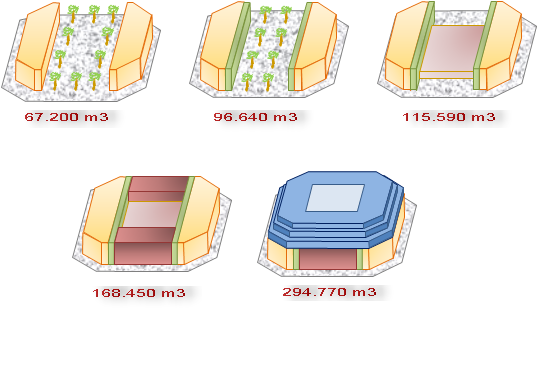

It is (I believe) a temporary project to explore how it all might work. In that sense, it's prototype and that's in fact really cool too. Basically they did an MVP of a Superille - low cost and very fast - in order to validate their hypotheses.
They mocked up the place to give people a feel of how living in this way could be. And they spent as little as possible - using old tyres and paint and recycled plywood to mark out spaces and make them feel "owned" by the people. Placing large lots of (quite big) trees and plants in pots on the car-free streets to see how it felt to walk down a street that was leafy and spacious and open.
The amount of extra space feels inspiring and liberating. Walking is faster if you want it to be - you can cut across streets and don't need to wait at stop signals. A lot of people riding bikes. A lot of smiles.
They definitely could have done a better job explaining it though. I have friends who support the idea but felt they could have been better informed. It felt like they didn't give enough warning.
However, what is interesting and cool is that once it was in place they did their best to engage residents in a dialogue about the proposal - they painted markings on the tarmac of the streets to lay out spaces for people to assemble and discuss. They had a soapbox platform for people to rant from, and a bunch of chairs scattered around the street for people to sit and discuss. They had walls for comments to be posted.
I certainly hope they go ahead with making it permanent and making more of them.
Cities without care are very different and much more humane places to live. Scale matters and cars warp the scale of a city in ways that are counterproductive to vibrant urban life.
I'm pretty sure we can overcome the technical issues that restrain us from our inevitable transition away from routine private car use in cities. Problems like what to do about parking are a legacy of the current broken system, not a fact of nature. The economic incentives to car ownership and the infrastructure that supports it are baked into cities right now. But this can change - but not by solving parking but by solving the underlying system and that includes pressuring the system to change through initiatives like this.