It's worth keeping in mind that the modeled data lines up with reality because it's supposed to. That's how you calibrate your model, by making sure it fits reality.
The real trick is to see how well your model extrapolates from the data you have out into the future. As in, if you feed it data up to, say, 1990, will it correctly spit out 2015 temperatures that fit the reality of 2015, or will it spit out crazy 2015 predictions like the models that were built in 1990 did. And, the bigger question: How will its predictions for 2040 (given 2015 data) match up to the reality over the next 25 years.
We seem to be getting a lot better at the modeling side. That's a good thing, since the first couple decades of watching people panicking and fighting each other over whatever scary results came out of the first generation climate models wasn't any fun to watch.
"The real trick is to see how well your model extrapolates from the data you have out into the future."
That is the most common way to show the modeller is not shamelessly overfitting.:-| Another way, though, is less common but not vanishingly uncommon: the model may be so much simpler than the data it fits that overfitting is not a plausible explanation. (Roughly there are too many bits of entropy in the match to the data to have been packed into the model no matter how careless or dishonest you might have been about overfitting.) E.g., quantum mechanics is fundamentally pretty simple --- I can't quantify it exactly, but I think 5 pages of LaTeX output, in a sort of telegraphic elevator pitch cheat sheet style, would suffice to explain it to 1903 Einstein or Planck well enough that they could quickly figure out how to do calculations. Indeed, one page might suffice. And there are only a few adjustable parameters (particle/nucleus masses, Planck's constant, and less than a dozen others). And it matches sizable tables of spectroscopic data to more than six significant figures. (Though admittedly I dunno whether the non-hydrogen calculations would have been practical in 1903.) For the usual information-theoretical reasons, overfitting is not a real possibility: even if you don't check QM with spectroscopic measurements on previously unstudied substances, you can be pretty sure that QM is a good model. (Of course you still have to worry about it potentially breaking down in areas you haven't investigated yet, but at least it impressively captures regularities in the area you have investigated.)
It's not just a question of how the model extrapolates from the input data itself. The actual input data may be in question as well, because there are always judgments involved in deciding how to measure, what "unreasonable" datapoints will be discarded, etc.
Read, for example, here:
"It is indisputable that a theory that is inconsistent with empirical data is a poor theory. No theory should be accepted merely because of the beauty of its logic or because it leads to conclusions that are ideologically welcome or politically convenient. Yet it is naive in the extreme to suppose that facts – especially the facts of the social sciences – speak for themselves. Not only is it true that sound analysis is unavoidably a judgment-laden mix of rigorous reasoning (“theory”) with careful observation of the facts; it is also true that the facts themselves are in large part the product of theorizing. ..."
While the general gist of your argument is right, I think there are some non-trivial ways to overfit. There are some 25 constants in the standard model apparently that describe the world around us to enormous precision. This is so little information that of course the trivial 'overfitting by encoding observations directly' will fail, but we could still be overfitting by having an excess number of variables: perhaps there's really some mechanism in neutrino physics that explains neutrino oscillation without needing some constants to describe how it really happens. This might in turn boost tremendously our predictive precision for neutrino oscillation to match the precision of the other more fundamental variables in the model, for example. But I think you're right that it's so little data that we have some strong information theoretic guarantees that at least the model will have predictive power matching the precision of previous measurements.
Well - that's true apart from co-incidence. You can have a very simple theory which says "x is directly caused by y" and there is a lot of good data, and a great fit. But it's kist a co-incidence and breaks down immediately.
Occam's razor is a rule of thumb and an aesthetic boon, but nothing more.
The real test is that you have a theory that is meaningful and has explanatory power. If it grants insight on the mechanisms that are driving the relationships or generating the data and these make sense - you are pretty golden.
Another one is that the theory makes unexpected predictions that you can then test. This is a real winner, and why complex physics is so well regarded.
I think the information theoretic approach to modeling concerns actually implies such "simpler is better" approaches as Occam's Razor. At least that's my take on [http://arxiv.org/abs/cond-mat/9601030], which derives a quantitative form of it.
I haven't read that paper, and the abstract makes my head spin! I'll have a look later, and try and figure out the argument. I agree with you that things like the I-measure are based on the idea that simpler is good, and it works well in practice - both in Machine Learning and in the real world - which is why humans tend to prefer it. But (the paper you cite aside) I don't know of a deep reason why simple is preferred by nature.
Also there is a deep cognitive bias here, perhaps we lack the machinery to understand the world as it really is!
> Occam's razor is a rule of thumb and an aesthetic boon, but nothing more.
Occam's razor is a bit more than that. It isn't just that given a theory X and a theory Y = X + ε, both of which fit the facts, you should prefer X because it's "cleaner" or more aesthetically pleasing or whatever. You should prefer X because you can prove it is more likely to be true.
No, it was a thought experiment I made up, not an exercise I've ever seen performed: how abbreviated a description of quantum mechanics could I get away with and still convey the idea to on-the-eve-of-QM scientists?
The QM equations are naturally very short, the stuff that I would worry about expressing concisely are concepts like what probability amplitude is, how it connects to prior-to-QM concepts of probability, the interpretation of what it means to make an ideal measurement, stuff like that. I don't know of any bright concise formulation of that stuff, and I'm not sure how I'd do it. I am fairly sure, though, that 5 pages could get the job done well enough to connect to spectroscopic observations.
Note also in the original story it was intended to be given to Einstein and Planck, deeply knowledgeable in classical physics, so it'd be natural to use analogies that would be more meaningful to them than to the typical CS/EE-oriented HN reader. For example, I'd probably try to motivate the probability amplitude by detailed mathematical analogy to the wave amplitudes described by the classical wave PDEs that E. and P. knew backwards and forwards, and I don't think a concise version written that way would work as well for a typical member of the HN audience.
I believe he is referring to the 'postulates of quantum mechanics', you can find several formats from a quick google search.
Dirac, 1929:
"The fundamental laws necessary for the mathematical treatment of a large part of physics, and the whole of chemistry are thus completely known, and the difficulty lies only in the fact that application of these laws leads to equations that are too complex to be solved."
I think you can do it, but you'd probably want to start with density matrices, or use the Heisenberg picture to keep your wavefunction super-simple. If we're talking to geniuses then maybe we can include a one-off statement, 'if det ρ = 0 so ρ = ψ ψ† for some "column vector" ψ, then the squared magnitudes of ψ's components are probabilities to be in that component's corresponding state.' to get the gist of it.
I agree, but I have to say their imagination on what other things might be causing warming is not very robust.
For just one example, there are at least two major effects of burning:
1. Release of chemicals into the atmosphere (ex: carbon dioxide)
2. Directly heating the atmosphere
There are literally billions of air conditioners, heaters, cars, factories, etc that all generate heat. The effect of these billions of heaters throughout the world definitely increases global temperatures. After all, this effect is a reason why cities are warmer than their surrounding rural areas (1). This is relevant because direct heating should be temporary while greenhouse gas increases are cumulative.
Honest question - has anyone calculated the effect of the direct heating on the atmosphere from the billions of heaters we use vs greenhouse gas increase?
The primary yearly energy consumption is about 155,000 TWh and the volume of the ocean is around 1.33e9 km^3, so back of the envelop, the heat dissipated by energy consumption yearly is enough to raise the temperature of the ocean by 0.0001 C. Doesn't seem very substantial.
> this effect is the reason why cities are warmer than their surrounding rural areas.
Anthropologically produced heat is certainly a contributor, but as the article itself says, I believe the majority of the difference is more accurately attributed to the large amount of concrete in cities which takes much longer to dissipate heat.
This doesn't add much to what earlier respondents have said, but it was five minutes of fun to do.
The mass of Earth's atmosphere is about 5e18kg. Specific heat of dry air is about 1kJ/kg-°K. Total human energy consumption in 1990 (just to pick a year) was about 102,000 TWhr (3.6e20 J/TWhr. Wikipedia for most of the numbers.
Assuming all the energy consumed resolved into heat and only heated the atmosphere, then I get the one-year temperature increase due to human energy use during 1990 as about 0.073°K.
Less than I would have guessed, and probably wrong by at least a couple orders of magnitude due to simplifying away 99% of what's really happening.
What about the heating caused by ~7.5 billion humans? Collectively, we consume ~13 trillion calories, or (IIRC) enough heat to vaporize a 4-cubic mile block of ice, every day.
It's not my field, but I'd be very surprised if models were not also calibrated by extrapolating earlier known years and comparing to later known years.
You can really only judge models on days that was not yet available when they were created.
The shape of the curve is driven by the independent variable (CO2 concentration, volcanic activity, etc). The magnitude needs to get adjusted so that it doesn't produce inconsistent results when extrapolated backwards in time. Which is the problem with explaining the recent spike in temperature as anything other than CO2 concentration. Most of the other variables like solar flux are relatively steady so that if you increase their climate forcing effect you get a really bad fit in the 1900s which is non-physical.
There's also additional data like satellite measurements of the broadening of the absorption lines of CO2 and H2O in the IR blackbody spectra that the Earth radiates and the measurement of the shortfall of outgoing radiation in the radiation budget which are consistent with GHG effects and independently confirm these models.
The IPCC, probably the best source overall for climate info, has in their reports visualizations showing predictions, and I think historical results, of multiple climate models. (Sorry but I don't have time now to find links and page numbers. Try the Summaries for Policy Makers.)
Just reading their summaries, which are meticulously prepared and reviewed by hundreds of scientists, will make you more informed than 99.9% of the population, and more than most reading this thread.
Depends, overall predictions from the mid 1980's where high and a lot of research has gone into why.
A significant part of the difference disappears if you adjust for CO2 produced vs predicted. Granted, you can argue that the older models needed to account for both, but what we want to validate is predictions of impacts not predictions of fossil fuel use.
It's extremely disingenuous to show a single line as the 'prediction'. There have been plenty of projections that include possible reductions in temperature. As well as a wide range of types of measurements.
Great points. To add a little more detail, predicting the results of greenhouse gasses in the atmosephere is science. Predicting the amount of gasses in the atmosephere requires predicting human economic activity in detail (how much, in what form, etc.), which is impossible, especially on longer timescales (imagine how many investors would love to know how to do that!)
The predictions I've seen, at least in the IPCC reports,[1] show not lines but confidence intervals that widen over time.
They've not performed well based on criteria chosen by global warming denialists.
For example, you'd be hard pressed to find a climate scientist making any solid predictions about annual global temperature averages. You will, however, see predictions about decadal averages, and those have borne out.
Borne out? Compared to what? The RSS and UAH 6.0 lower troposphere predictions? What other measurements do we have that don't have uncertainty bands as large as the measurements?
And the zero trend from May 2015 extends back to 1996 for RSS and UAH 6.0.
How do you use decadal moving averages from satellite data that has only existed since 1979? You'll get roughly the same trend as the full data set. Even so, the last two decades would still be flat, or very nearly so.
We already know the full data set has a 1.2K/century trend (this is annual trend most commonly used to represent the data). Decadal moving averages aren't going to shed more light than that. We also know that if you just grab the last 19 years and 6 months, or any smaller subset of that, you'll see 0 to negative trends.
But they're the best data we have. They have the widest coverage, the least uncertainty. At nighttime the SST satellites can have over 10C of error due to cloud cover. I've no doubt the earth is warming. My doubt is that measurements with wide confidence intervals should be used over those with low confidence intervals because they tell a more compelling story.
44 Climate Models all fighting to out-panic one another, not a single one guessing low enough to predict the actual values for 2012 (when it seems the dataset in question ended)
... and a seemingly more reputable one showing roughly the same thing:
Attacking a persons 'trustworthiness' instead of dealing with their arguments and evidence is pretty much the dictionary definition of the ad-hominem diversion. It doesn't interest me to learn that he kicks cats or dresses in lingerie and calls himself Marjorie at the weekends. If you believe that he is wrong, then show where and how he is in error.
"Are you aware that Claude Pepper is known all over Washington as a shameless extrovert [pervert]? Not only that, but this man is reliably reported to practice nepotism [necrophilia] with his sister-in-law and he has a sister who was once a thespian [lesbian] in wicked New York. Worst of all, it is an established fact that Mr. Pepper, before his marriage, habitually practiced celibacy [???]."
No, because that was actually irrelevant. In this context, Soon's record within the scope of climate research is what's being scrutinized, not his personal life.
If Soon's opponents were attacking his love of Dune or his tendency to eat falafel, there might be an analogue here.
Irrelevant. The technique you used was the same as Smathers, and your intent was the same - to damage someone's reputation by insinuations and smears. It is low behavior.
Smathers' accusations related to issues that had no bearing on Peppers' merit as a political candidate or his ability to carry out his official duties. My 'insinuations' (actually, again, statements of fact) are related to Soon's behaviour within the context of climate science. If you cannot grasp this, you are not qualified to engage in debate. If you do not wish to for whatever reason, it makes it pretty clear that you are not interested in good faith discussion of this issue and are not worth anyone's time in that regard.
A damaging and false insinuation is a damaging and false insinuation, whatever ground it purports to cover. Smathers chose smears that would do the maximum damage to Pepper as a politician, you did the same for Soon as a scientist.
You can't look at someone's financial interest to know whether what they said is true or not. Similarly for any other attribute about them that you don't like.
There are many great thinkers who were gay. We don't invalidate their work because of that.
At best, you need to keep that in mind and take what they said with a grain of salt. Funding gives you a clue about which areas to be more critical about, but just because they have an interest one way or the other doesn't invalidate what they said.
If someone has been found to be a nutjob, you may casually dismiss what they said as a time saving device or because there is low probability what they say has any value to you. But even a nutjob is sometimes right.
Really? You think it doesn't matter that the primary author on a paper about climate science doesn't even have an undergraduate-level education in the subject? That the second one credited has a history of accepting large sums of money to write papers endorsing spurious claims DIRECTLY RELATING to climate change?
A lot of the IPCC lead authors are paid by NGO's (like Greenpeace) with a vested interest in climate alarmism. Do we discount their work too?
Climate science covers a lot of different areas, everything from economics, through hard chemistry and fluid dynamics, to pure statistics. No one person can be an expert on all of this, and no one qualification will make anyone competent in all of them. Experts from related disciplines are perfectly qualified to speak on "their" areas of climate science.
Are you going to tell me that every person who has ever written a paper on computer science needs to have a degree in it? While I won't question this guys qualification might be questionable - making a blanket statement that someone must be specifically educated in a subject to write a good paper on it is specious.
How often does it happen that a layman manages to get published in a well-regarded journal? Out of all the papers that laypeople publish anywhere, how many survive scrutiny from experts in the paper's problem domain? And out of those, how many that actively seek to overturn a paradigm succeed?
Based on this metric alone, it is highly unlikely that Monkcton is qualified to discuss climate change, and as it happens, his published work tends to be published by fairly obscure journals whose standards of review are questionable, and when they pass the desks of career climatologists, the result is generally unfavourable to him.
There is a difference between "layman", "well known expert in their field", "so and so with a degree in $field" "well known expert in their field with a masters in $field"
If you read my reply, I don't question the guys qualifications, I was objecting to the blanket statement of "you must have a degree in $field, to be expert" - many papers in technology, are written by people without degrees in that field.
I did read your reply; I'm saying that in the aggregate, a credible paper is unlikely to be written by someone without formal schooling in the relevant field.
Further, technology is applied science - it is not unlikely that one can become an expert through informal and professional practice. Your previous comment was about computer science, which is not necessarily the same thing, and which is closer to mathematics than anything else. Climatology is concerned primarily with physics and chemistry, but also geology and in some cases, paleontology. Most of these fields share little in common with pure maths or engineering. The comparison, then is not totally valid.
The basic training you require to be a competent scientist is hard to come by outside of academia. The actual work of science tends to be done in a laboratory. It's highly, unlikely, then, that someone who has put in the years (often decades) of work in academia to be on par with a hobbyist, whatever that may look like in this context.
Neither you nor the person you are responding to probably has the requisite qualifications to actually tell …
Judging something like this without relying on outside signals seems rather impossible and pointless if you are not, you know, an actual expert. No matter how much you want to believe you can be one about everything …
It wasn't libel the last time you brought it up and it isn't libel this time. Soon failed to disclose non-trivial amounts of funding that he received from parties who have a vested interest in deriding climate science. Given how often his work has failed to pass muster when scrutinized by climate scientists and skeptics, it is hard to fathom how any of this can amount tosimple incompetence.
The article you linked to is almost comical in its petty malevolence, well beyond the point of self-satire. This kind of character assassination, however reprehensible, is ultimately irrelevant. If you believe Dr. Wei Hock Soon is wrong, then show where and how he is mistaken.
Climate scientists have been doing that for almost 25 years at this point, and Soon's response has pretty much been to complain that he's being bullied and that science is being politicised. I find that to be actually comical, almost as much as the presumption that an intelligent and intellectually honest person could do this for as long as Soon has. And that his association with political and industrial think tanks is a non-sequitur in this regard.
The first graph on that second link is a bit confusing and seems pretty disingenuous. It has the "observations" region stretching to 2050. The rest of the article seems much more factual and interesting, but why start with something so misleading if your supposed goal is to debunk misleading projections?
Spencer is pretty out there. He's gone on record to say that warming proponents are advancing an argument that will lead to more deaths than the NSDAP's policies did, and is a signatory to the Evangelical Declaration on Climate Change, which suggests that this is largely a matter of faith for him...
He does also maintain one of the satellite records, which does show global warming over the period 1960-2000 (not so much the last 10 years because of the global warming hiatus).
Did you even read the article? look at the university of York dataset, which clearly shows the 1960-2000 warming followed by the 2000-2010 hiatus. Note the York dataset is strictly observationally independent of the UAH dataset.
Hans von Storch, professor at the Meteorological Institute of the University of Hamburg discussed this issue in a recent interview with Der Spiegel. He remarked that less than 2% of model runs reproduced the 'pause'.
SPIEGEL: Just since the turn of the millennium, humanity has emitted another 400 billion metric tons of CO2 into the atmosphere, yet temperatures haven't risen in nearly 15 years. What can explain this?
Storch: So far, no one has been able to provide a compelling answer to why climate change seems to be taking a break. We're facing a puzzle. Recent CO2 emissions have actually risen even more steeply than we feared. As a result, according to most climate models, we should have seen temperatures rise by around 0.25 degrees Celsius (0.45 degrees Fahrenheit) over the past 10 years. That hasn't happened. In fact, the increase over the last 15 years was just 0.06 degrees Celsius (0.11 degrees Fahrenheit) -- a value very close to zero. This is a serious scientific problem that the Intergovernmental Panel on Climate Change (IPCC) will have to confront when it presents its next Assessment Report late next year.
SPIEGEL: Do the computer models with which physicists simulate the future climate ever show the sort of long standstill in temperature change that we're observing right now?
Storch: Yes, but only extremely rarely. At my institute, we analyzed how often such a 15-year stagnation in global warming occurred in the simulations. The answer was: in under 2 percent of all the times we ran the simulation. In other words, over 98 percent of forecasts show CO2 emissions as high as we have had in recent years leading to more of a temperature increase.
Simple: this is exactly what you would expect on a high plateau. Think about it in terms of climbing a mountain with a fairly flat top. For a long time you're moving continuously up-slope, then when you get to the plateau you wander around randomly and frequently find outcroppings that are higher than anything you've encountered before. That doesn't mean you're still climbing, and if we were still climbing at the rate seen from 1980-2000 the "global mean temperature" (which is a thermodynamically meaningless arithmetic average) would be even higher than what we see today.
People who continually beat on extrema (like Denialists who claim that cold weather on the East Coast last winter is somehow proof that AGW isn't happening) are adding noise to the argument, not signal. The physically meaningful number is the heat content of the Earth/ocean system, and there's quite a bit of evidence it is rising, and that a significant portion of that rise is due to human activity.
This makes me think of when financial journalists/broadcasters constantly report that the SPX or the DJIA or the FTSE or whatever are hitting 'all time highs' and it's a really useless piece of information. Investors want to know how much it went up by on the day (and what he trend of the last few days/months has been), the fact that it poked through to a new high level is not important.
Apparently, the past models did not, because they did not model the long term interaction of the oceans with the atmosphere, and the current "hiatus" is mostly about the atmosphere temperatures, while most of the warming is currently happening in the oceans.
The more sophisticated current models do match the recent observations if you feed them the past data:
Yes there is! In fact, this very visualization which you are commenting on is based upon the data produced by NASA Goddard from their climate model by running a historical data prediction, as their contribution to precisely such a comparison/consensus building study sponsored by the IPCC, called the "Coupled Model Intercomparison Project Phase Five". There are links to the sources for all of this in the original article. This information, which I'm sharing with you now, is in the first three paragraphs of endnotes on the actual article.
So.... please don't believe other posters who might come along and try to get you to believe that historical comparisons haven't been performed, or the results haven't been published, or that the IPCC ignored them, or whatever else they might choose to argue today.
Even if there is a model that performs well, how do you account for survivorship bias?
And how accurate are models without a clear understanding of the physical reasons why behind them?
Seems like we should be concentrating on understanding the physical relationships and less on trying to come up with abstract models. It kind of feels like a bunch of astrologists and just picking the one that seems to perform better.
Unless I understand the why, I have a hard time accepting what anyone says.
Exactly. When modeling most data, you would hold back a validation set, but that doesn't really work as well in this situation. The only thing holding back the validation set is time.
The thing is, it's not just the temperature measurements fitting the greenhouse gases. It's also all the biological and physical evidence. Bird migrations, plant species ranges, glacier and ice cap shrinkage and growth, permafrost melting, polar vortices occurring, etc.,etc.,etc. Screw the models: look at the reality.
There's a lovely book called The Limits to Growth published in 1972, through the years authors have updated their book and their models (there's more than 20). It turned out that business-as-usual model extrapolated very well from '70s to '00s. So, even them modelling was fairly good.
Yip, great book, good warnings, of which we have done very little about. Another book to recommend is "This changes everything" ... sets out a very reasonable argument while capitalism as it stands is basically incompatible with doing much to prevent climate change. Worth a read.
Corrupt politicians will find that using environmental concerns and climate change gives them the proper motivation to say "we need more control and the common man needs fewer freedoms". This is why it's a political issue.
Don't expect masses of people to gobble up the idea that climate change is going to ruin the planet when the motivating factor for a good portion of the people selling the idea is that they can seize more control.
It's no different than terrorism and things like the Patriot Act. Terrorism is a horrible problem and no one wants armed rebels chopping people's heads off in the streets of our cities. But when politicians start their backroom meetings and connive a way to start chipping away at our freedoms and our privacy (I'm being redundant), you start finding terrorism skeptics.
We have to find the proper balance between the rights of the individual and the rights of the community. But all the while the entity that sits between the community and the individual, government, is taking more and more control. And they seem to let no opportunity to do so pass.
Climate change is one of their new, favorite vehicles.
> if you feed it data up to, say, 1990, will it correctly spit out 2015 temperatures that fit the reality of 2015, or will it spit out crazy 2015 predictions like the models that were built in 1990 did
Yeah, so they pick models until they find one that fits both 1990 and 2015? That would be using the test data to train the model - like the Baidu approach.
I have absolutely no knowledge about this field, but from what I understand people who study the Sun wouldn't agree as much with the numbers about the suns temperature.
Really, I think from what I've read, there was some talk about sun-spots, which actually lower the sun's temperature or something. I'm really not convinced that they are measuring the correct value there at all.....
This visualization is a multivariate linear regression with time trending variables...lol the entire thing is garbage, I could get a better R^2 than the 7 or so variables they used if instead I used variables to explain climate change like: number of gay marriages in the world, murders, abortions, etc...I don't recommend this, I'm just saying trended data can "say" anything
This repeats some buried comments but I think it's worthwhile: I'm not a climate scientist, but in my experience the absolute most reliable, most time-efficient way to learn about climate change is the IPCC reports. I wonder if there is anything written in any other field that compares:
Specifically, if you are short on time, read the 'Summaries for Policymakers', written at the level and attention spans of non-technical politicians. They are quite readable and as I wrote in another post, if they can understand it, so can you. :) (The longer reports are fascinating, if you have an interest in science and want to get lost in something.)
As I understand it the reports are prepared by a global team of hundreds of scientists, and reviewed by thousands more.[1] (Seriously, has anything like that existed in any other field?) They are meant to cover the breath of climate science and the reports also are meticulous about the language of probabilities.
Spend a little time reading them and it will save you the time of reading 99% of what's written elsewhere, and you'll be much better informed.
---
EDIT:
[1] Review process: http://www.ipcc.ch/activities/activities.shtml (scroll down to "The AR5 Writing and Review Process") -- for example, one report had over 50,000 comments on two drafts from >600 experts.
---
EDIT 2: Website interface help.
Can you believe this needs to be written, and for HN readers? I had JavaScript off which makes the site usable (if not pretty). With JavaScript on, apparantly the UX concept is 'Easter eggs':
There are 4 images arranged horizontally at the top; these are report covers (with text too small to read even if you knew they were clickable). If you click a report cover then the section beneath it changes to display a description of and links to that report.
All that work making the reports accessible to the world, hamstrung by web design.
A couple years back I read the IPCC reports trying to find out if global warming was real or not. I noticed the Vostok ice core data in the earlier reports showed the temperature rose first and then the CO2 rose. Likewise, the temperature fell first and then the CO2 fell later on. They fixed this little inconvenient data problem in the later reports.
> ... This statement does not tell the whole story. The initial changes in temperature during this period are explained by changes in the Earth’s orbit around the sun, which affects the amount of seasonal sunlight reaching the Earth’s surface. In the case of warming, the lag between temperature and CO2 is explained as follows: as ocean temperatures rise, oceans release CO2 into the atmosphere. In turn, this release amplifies the warming trend, leading to yet more CO2 being released. In other words, increasing CO2 levels become both the cause and effect of further warming. This positive feedback is necessary to trigger the shifts between glacials and interglacials as the effect of orbital changes is too weak to cause such variation.
In the Vostok data the temperature falls first and then the CO2 falls. If the CO2 released amplified the increased warming trend then why would the temperature suddenly reverse absent a CO2 drop?
BTW, I am really really disappointed in the quality of all the replies. It's mostly ad hominem and hand-waving. This is the one reply that's not but it doesn't explain the behavior of the drop in temperature.
Thus to sum it up:
Increased temperature causes gas to become less soluble in the ocean, thus leading to increased CO2. Decreased temperature causes CO2 to become more soluble in the ocean thus leading to decreased CO2. This data shows then that CO2 increases are not enough to cause warming all by themselves or to prevent cooling all by themselves.
Obviously a very large amount of CO2 in the atmosphere will lead to warming (e.g Venus's atmosphere is 96% CO2) but we're many orders of magnitude off from that (0.04% CO2).
So we are left with what I like to call a Listerine argument: Listerine has been selling more over the past century, Listerine prevents tooth decay, thus Listerine is the cause of the improvement in dental health over the past century. Thus we should put Listerine in the water and implement a global tax so everyone can have Listerine.
You might be interested in the opinion of Richard Muller:
In 2010, I watched one of his talks in which he had very uncharitable things to say about some groups of climate scientists and why he did not consider them trustworthy [1].
At about 34:28 of the video, you can hear him say the following:
This is why I'm now leading a study to redo all this in a totally transparent way.
He did [2].
What was his conclusion? Global warming is real, and in all likelihood the culprit is indeed CO2.
How did he come to that conclusion? Because it's the only proposed mechanism for global warming that actually fits the data on the 250y scale.
This is not an inconvenient data problem. That the ends of past ice ages were not caused by a rising atmospheric carbon dioxide concentration but instead caused it with some lag does not at all proof that a rising atmospheric carbon dioxide concentration can not cause rising atmospheric temperatures.
For example - completely made up - a change in the orbit of the earth could cause rising temperatures and therefore the end of an ice age. This could then free carbon dioxide trapped in or under the now melting snow and ice and in turn this change in the composition of the atmosphere could additionally contribute to the rising temperatures.
I'm sure the IPCC has flaws, like every other human institution (but what else do we have to work with?), but the original reports came out in 1990. Also, every data set ever produced has inconsitencies.
I don't feel that one inconsistency from 25 years ago, which might have a valid explanation or might be validly considered inconsequential, undermines the IPCC reports' credibility.
This is hardly unexpected. As water warms, the solubility of various gases decreases. I.e., if you exogenously warm up the ocean, it will release CO2 and other trace gases into the atmosphere. I'm pretty sure you could get the same pattern for Argon and other (non-greenouse) trace gases.
So, that's an interesting phenomenom, albeit one with possible explanations (that others have provided), but I'd like to volley a question back to you: have you performed the same experiments that Arrhenious[1] performed in 1896, that has been reproduced thousands of times before, and come up with a different result? (ie, that CO2 doesn't create a greenhouse effect).
Ugh. This is exactly the type of poorly-informed response you generally get when people attempt to "read the data" for themselves with little to no understanding of the science behind it. Seems to be a lot of that going around HN today.
Well, for one, that their uneducated skim through the IPCC report found a mistake which thousands of qualified scientists had missed, one so fundamental that it undermines all of the rest of the work in the report and the conclusions it leads to.
The scientists say so, therefore the commenter is wrong? This still doesn't explain why the above is wrong. Attacking the premises of an argument is sound logic, and should be welcome. Ad hominem arguments should be called out.
It's exacerbated when it's less someone reading it for themselves, than reading it in a blog post by someone who's motivated to try to strip context and mislead about results.
Your comment reminds me how the Catholic Church treated the Bible during the Middle Ages (environmentalism runs so parallel to religion it's uncanny).
The clergy would not let lay people read the Bible themselves, claiming there are "poorly-informed responses you get when people attempt to read the scripture for themselves with little to no understanding of the theology behind it."
"Just trust us," they said, "we will interpret it for you and tell you how to live accordingly."
This is a summary of research in those peer-reviewed journals, the summary being far better reviewed (by hundreds and thousands, as described) than the individual articles.
I don't know about other HN readers, but I don't have time or expertise to keep up on individual articles. I doubt many climate scientists have the expertise in all those different fields.
I'm not afraid of looking at the source.
Many times the "summaries" get distorted.
Statements like "provide some evidence for" gets translated into "this proves". Popular press often does this.
The actual raw data and original article and independent confirmation is the gold standard for science.
I've chased down many stories reporting "proof" in many fields and , after examining the actual article, found that it actually said "well, this might be some evidence for possibly maybe supporting something".
This is a hazard in MANY fields.
Many people know this.
We Hacker News readers ran in to this a couple of days ago.
Somebody said "Fasting helps in cancer therapy" and listed some science papers. It was voted up.
The actual papers DID NOT SAY THAT. They said "this small sample might provide some evidence but more study needs to be done".
These are separate things and careful readers can discern this.
Appeal to Authority or to a Mob or to Fashion is NOT science.
> Statements like "provide some evidence" for gets translated into "this proves".
For what it's worth, the IPCC reports are very, very careful about this. They have a chart (though it can be hard to find) of exactly what confidence/probability is meant by each phrasing.
EDIT: for example, from the Sythesis Summary for Policymakers report:
The following terms have been used to indicate the assessed likelihood of an outcome or a result: virtually certain 99–100% probability, very likely 90–100%, likely 66–100%, about as likely as not 33–66%, unlikely 0–33%, very unlikely 0–10%, exceptionally unlikely 0–1%. Additional terms (extremely
likely 95–100%, more likely than not >50–100%, more unlikely than likely 0–<50%, extremely unlikely 0–5%) may also be used when appropriate.
What prestige science journal article says "virtually certain" that man is primary cause of global warming?
What phrasing in the results section makes you feel that it is "near proof" ?
I'm not asking for "it is likely or probable". I'll buy that. I want solid proof ... or , uh "almost proof".
Proofs don't exist in sciences concerned with the physical world. For proofs to work in the real world, you'd need certainty that you have recognised and correctly measured every variable that could affect the outcome of an observation/experiment.
The last philosophy of science that allowed proofs was positivism. For the natural sciences, it has been replaced by critical rationalism (https://en.wikipedia.org/wiki/Critical_rationalism). CR gave a solution to the proof problem: While positive proofs like in your quote don't work, you can still falsify a theory. By continuously falsifying theory after theory about an observed outcome, something resembling truth remains. Truth, but never certainty. Hence the talk about likelihood and probability.
> I'm curious. Gravity has not been proven to attract two masses, for instance?
Correct. That's why it's called the theory of gravity :) You would need Laplace's demon (https://en.wikipedia.org/wiki/Laplace's_demon) for a proof. "Proof" means absolute certainty. You only find that in math, not in the physical world.
As he already said, science doesn't do proofs; proof is something for Math, science does evidence, nothing is ever proven. Asking a scientist for proof merely shows you don't know what science is and thus aren't capable of using it to make decisions.
> Is there any evidence that two masses don't attract ?
The answer to that question does not in any way proof the existence of gravity.
I don't mean to offend, but if you honestly ask these types of questions, I doubt you are able to evaluate the quality of original papers dealing with climate research.
Am I to understand that you'll only "bet the climate" if it's a sure thing? I'm curious to know if all important decisions you make are backed only by "virtually certain" odds that the outcome of your decision will be as you predicted.
Not trolling, honestly. I really want to better understand this mindset.
Science once labeled gay as a mental disease.
Science once said that neutrinos have no mass.
Science once thought that the universe was the Milky Way only.
"Virtual certainty" may not always be "settled science".
I do think we should curtail pollution; regardless of the scientific certainty on man as primary cause of global warming.
> Science once thought that the universe was the Milky Way only.
No it didn't.
All of those are made up facts that bear no resemblance to reality. Science doesn't say or think things, it merely shows the current state of evidence for theories and when new evidence comes along, wrong theories are disproven. That's what science does, it disproves ideas.
A scientist likely once theorized that gay was a mental disease, the process of science disproved that theory; ditto for everything else you said. You're confusing some scientists bad theories for science itself, they are entirely different things.
Yes really. That scientists had such debates proves my point, not yours. Science doesn't make absolute claims, it posits positions based on evidence and changes those positions when the evidence changes. Sadly, you're clearly not intelligent enough to understand the distinction.
Only the second and fourth paragraph of this response are "important". The rest is an attempt at clarification of my personal viewpoint. I'm doing my absolute best to not offend people on a very touchy subject - but I know it is inevitable to do so. For that, I apologize for holding a different opinion but ask that you read the entire response to understand the reasoning behind my position.
[Paragraph the second] The declassification of homosexuality as a mental disorder had more to do with harassment of the APA for several years leading up to 1973 by advocate groups than it does scientific consensus. Scientists are afraid to speak on the issue due to harassment and the possibility of losing their jobs due to said advocate groups. Even so much as trying to conduct studies on SOCE would get you harassment nowadays if the public was aware.
If we are to consider reproduction and the continuation of a species to be what is "normal" for a species (ie. the goal of a species is to produce a generation to succeed it to avoid extinction) then homosexuality is a disorder. Homosexuals cannot reproduce naturally and only through scientific advances can they choose to have a surrogate mother or a sperm donor to have a child: which is from a heterosexual process.
[Paragraph the fourth] The issue that arises of classifying it as a mental disorder is the stigma people attach to people with mental disorders. This stigma can be harmful to people and thus should be avoided. Regardless of scientific accuracy - I approve of any effort to treat people more humanely and if that means not considering a deviation from the norm to be a disorder, than so be it. I would like to point out that not all mental disorders have equivalent social stigma attached. OCD and insomnia don't tend to get someone harassed - while being anti-social or autistic is more likely to get someone harassed.
The definition of "mental disorder" is a mental condition that negatively impacts the person with the disorder. It's not clear (due to poorly conducted studies [0]) whether homosexuality is a disorder or if societal pressures are the cause of an increased number of suicides and depression. Until the social stigma goes away, I don't think we can find an answer on this. My intuition tells me that the increased amount of stress/depression/suicide are all strongly correlated with social stigma and that in more progressive and accepting regions these negative feelings are more rare. But my intuition and science don't always agree, so I've learned to not trust my intuition.
My personal views are closely related to Havelock Ellis [1].
>He proposed that being “exclusively homosexual” is to be deviant because the person is a member of a minority and therefore statistically unusual, but that society should accept that deviations from the "normal" were harmless, and maybe even valuable. Ellis believed that psychological problems arose not from homosexual acts alone, but from when someone "psychologically harms himself by fearfully limiting his own sex behavior.
TFL;DFR: It doesn't matter if it is or isn't. What matters is that society works to remove the stigma attached and treat each other humanely.
A layperson named Steve McIntyre did just that, after reading the IPCC's 3rd Assessment Report and seeing the prominently featured "Hockey Stick" based on a paper by Mann et al., and wondering, hmm... perhaps this study is reproducible?
The rabbit hole that McIntyre and his colleagues have found themselves in over the last 10 years has, in my view, demonstrated the value of hacker-types taking an interest in climate science.
"Of crucial importance here: the data for the bottom panel of Figure 6 is from a folder called CENSORED on Mann’s FTP site. He did this very experiment himself and discovered that the PCs lose their hockeystick shape when the Graybill-Idso series are removed. In so doing he discovered that the hockey stick is not a global pattern, it is driven by a flawed group of US proxies that experts do not consider valid as climate indicators. But he did not disclose this fatal weakness of his results, and it only came to light because of Stephen McIntyre’s laborious efforts."
IIRC, despite the criticsim, the 'hockey stick' study and its author were proven right. Lots of criticism doesn't make it wrong, especially in politicized debates.
You should just stop with this line of thinking. You have to understand the scientific context and the limits of the data to learn anything. (Source: I know several contributors to the IPCC AR5 report, and I try to have the proper respect for their expertise.)
Great, so you're capable of writing highly parallel cluster-scale code in C that does intensive precision numerical analysis? Most choose vectorized FORTRAN or a combination of C++ and CUDA, but hey, knock yourself out.
CERN has a 3700 core supercomputer to crunch through this kind of data. You can rent that on Amazon for about $800 an hour, so I guess you're good to go.
Sorry to be so harsh here. While there's always desirable amount of "constructive naivety" necessary to try the impossible, you need to recognize that there's considerable amounts of expertise required to process and analyze data of this complexity at scale.
This is not like a movie where six minutes of furious typing can solve any problem.
The gist of this argument is that the IPCC's members, the schools that employ them, the governments of their constituent nations, the FAO, the UN, the mainstream news media, and all administrative and custodial staff of all of these organizations are perpetrating a conspiracy to push carbon taxes on the world. Presuming the absurd scale implied herein doesn't beggar belief, the fact that the combined power of all these people has proved insufficient in bringing 'the plan' to reality ought to.
> the United Nations would be funded by such taxes
The UN does not tax anyone. They are funded by governments, which are funded by taxes.
1) By your theory, there is a confict of interest for the UN as long as anyone involved pays taxes, which covers every issue on the planet (and some in orbit, on Mars, etc.).
2) One major tax-paying industry, which has exceptional influence in government, is oil and gas. If the UN has a conflict of interest in favor of an industry, one with a long track record, I don't think I can find a better example.
You're basically saying anything funded by government that might impact economics, and thus revenues, is biased. Right..
You do realize that you can be against taxing say, income and profits, but be for taxing carbon? I think quite a few economists would agree that you tax things that you want less of. A simplified carbon tax could be a boon to business.
> You're basically saying anything funded by government that might impact economics, and thus revenues, is biased. Right.
While I don't see the now-deleted comment you're replying to, I do feel there is validity to the viewpoint that studies funded by the government can be biased in much the same way as studies funded by private companies. Government is not magically above tainting research with predisposition and prejudice.
The deleted comment said that the IPCC wants to introduce climate taxes; that the IPCC would get funded by those taxes, and thus there is a conflict of interest.
In the absence of any other context, saying "X has a conflict of interest because Y" implies "and therefore X is unlikely to be believed." Yes, presumably the UN does have a conflict of interest here. However, as Cholantesh points out, the size of the IPCC makes it unlikely that conflict is a major factor in affecting the interpretation of data (I am agnostic as to how likely the CoI is to affect the actual policy recommendations). Just pointing out the conflict, without any additional interpretation, is dodgy enough that it's reasonable to assume it's motivated by a conspiracy theory.
Helpful when reading this thread to keep in mind Michael Mann's six stages of climate change denial:
1. CO2 is not actually increasing.
2. Even if it is, the increase has no impact on the climate since there is no convincing evidence of warming.
3. Even if there is warming, it is due to natural causes.
4. Even if the warming cannot be explained by natural causes, the human impact is small, and the impact of continued greenhouse gas emissions will be minor.
5. Even if the current and future projected human effects on Earth's climate are not negligible, the changes are generally going to be good for us.
6. Whether or not the changes are going to be good for us, humans are very adept at adapting to changes; besides, it’s too late to do anything about it, and/or a technological fix is bound to come along when we really need it.
Interesting note from the l0phet article the other day regarding how fire codes and regulation in cities didn't come about even after great disaster swept the city.
  Wysopal offered this grim precedent: Cities were once
  vulnerable to disastrous fires, which raged through dense
  clusters of mostly wooden buildings. It took a giant fire
  in Chicago to spur government officials into serious
  reforms, including limits on new wooden structures, a
  more robust water supply for suppressing blazes and an
  overhaul to the city’s fire department.


  “The market didn’t solve the problem of cities burning
  down,” Wysopal said, predicting that Internet security
  may require a historic disaster to force change. “It
  seems to me that the market isn’t really going to solve
  this one on its own.”

  But here’s a frightening fact: The push to create tough
  new fire-safety standards did not start after the Great
  Chicago Fire in 1871, which killed hundreds of people and
  left 100,000 homeless. It took a second fire, nearly
  three years later in 1874, to get officials in Chicago to
  finally make real changes.
Though I wouldn't accept #5 and #6 exactly as phrased, it does seem like positive effects ought to be balanced against the negative, and the uncertainty of future technological developments ought to inform our current decision of how much to spend addressing climate change.
Your position is similar to that of Swedish environmentalist and academic, Bjorn Lomberg who accepts that rising CO2 levels are the cause of warming, and that this is a problem, but argues that the dangers are overstated and resources would be better devoted to mitigation of climate change and addressing other pressing issues such as global poverty.
Despite his relatively orthodox views, he was recently run off campus at the University of Western Australia where he had set up a think tank, The Consensus Centre, to which the Australian government had pledged $4 million.
Bjorn Lomborg is a sad case. He titled his book The Skeptical Environmentalist and everyone got the message, without reading the book, that he was a climate-change skeptic -- and for the most part labeled him as an "enemy" and rebuffed him. It was just a public relations disaster.
For what it's worth, he's not a "skeptic" in any of the conventional ways. I also remember looking at the IPCC reports once when I was a young physics student and saying, "hey, it's only a couple degrees Celsius over many years?" I was educated enough to realize that you could predict bad storms etc -- what I like to tell people right now is that it's like having a really huge boulder and, right next to it, digging a little ditch, only to cause the boulder to smack you down: the small change in the height of an equilibrium can still have a huge effect if a big enough system is relaxing to the new equilibrium. Someone came up with a memorable name for it: it's less of a concern about "global warming" and more about "global weirding." It took me a while to appreciate that there is a small (but scary) probability that the slope that the boulder is on might have a net incline one or the other way, so that the boulder might not just hit us but roll over us if it gets disturbed far enough from equilibrium. It makes a lot of sense for there to be a big scientific research program about that, even though no IPCC model predicts runaway climate change because the probability is so low and the possible causes are typically unexpected.
With that said: though hurricanes, floods and tornadoes certainly can have a massive economic impact, Bjorn has a good point of "the weather disasters that we know will happen due to the warming that we know is happening are important, but let's figure out how this compares to other things which we can predict really well, and see where our money is best spent: climate-change relief efforts, or climate-change mitigation, or general alleviation of poverty, or what?"
What I think is most missing from all of this is: we're talking about so little money, especially if we compare to governments' military expenditures, going towards the science. What would be great is if a government said, "hey, we're putting forward this huge grant to climate change research just because we think research is intrinsically good and want to support this huge project of, y'know, knowing more."
I am quite happy saying, "Climate change is a plausibly serious problem and the current best solution is to build nuclear (fission) power plants today to replace base load coal, to shift from income taxes to carbon taxes and tarifs immediately, to build solar power and storage immediately, and to phase in regulations that will make it essentially impossible for new thermal coal development. We should also have public subsidies for nuclear and solar to ensure rapid deployment."
When I say that I fequently get called a climate change denier, because that is a label used primarily (not exclusively) by people whose primary goal is smashing global capitalism, and who find climate change a useful stick to beat their political enemies with.
> We should also have public subsidies for nuclear and solar to ensure rapid deployment."
Can you elaborate on the relation between the nuclear energy industry and insurance companies? Even as someone who sympathizes with the goal of "smashing global capitalism," I would find it interesting to know what the free market has to say in this respect.
It's important to understand that if we completely shut off CO2 production today, the climate would continue to warm significantly for decades/centuries into the future. And that warming might not be completely catastrophic, and could even seem positive in some ways to a minority of world citizens. The 350ppm of 350.org is still way above pre-industrial levels, but is seen by most as safe.
However, that's no longer what anyone is arguing about. What is argued about is the continued effect of dumping 40 billion tons of CO2 into the atmosphere year after year after year with no end in sight, while we're already over 400ppm. Any arguable positive effect, we've already achieved - it's the 4-5C of warming we're currently on track for that scientists claim, with good reason, will be catastrophic for human civilization and the present state of life on earth.
You're certainly not denying climate change, but maybe you're someone who doesn't care about the impact, as long as humanity survives. And why should we care? There are so many reasons not to care.
- We're out of touch with nature.
- Even for those in touch with nature, the human scale is too short to personally see and feel any change.
- The individual's responsibility is extremely diluted with the rest of humanity.
It will sound cheesy, but I care because of the beauty of nature. An extinction event is something that destroys biodiversity, and biodiversity is the source of this beauty as I feel it. Maybe the diversity of life will return in another form a few million years later (and maybe not), but simply understanding the act of destruction that is underway does impact me emotionally, and makes me want to stop it.
> and the uncertainty of future technological developments ought to inform our current decision of how much to spend addressing climate change.
Well, that does not necessarily sound like something the author of the grandparent comment would disagree with, especially when you consider that the technological developments may not universally be regarded as solutions (e.g. geoengineering).
The first four stages have always baffled me. Anyone who knows basic chemistry understands how carbon dioxide interacts with infrared radiation. Combine that with the fact that human activity is releasing tens of billions of tons of CO2 every year, which does not magically disappear. In fact, it's quite measurable.
The climate is complex, but the basic facts of the situation are incredibly simple and unavoidable. And yet, people have still tried.
Indeed, I studied chemistry and certainly believe that carbon dioxide interacts with infrared radiation, but actually understanding that process is a totally different story.
What I don't like about "my side" of the climate change conversation is that it so often underestimates the difficulty and time investment necessary to really understand this stuff, and in so doing, disrespects people who aren't scientists. Is it any wonder then, that those people turn to the side that is willing to put things in terms they understand instead of making them feel stupid?
We need more Carl Sagan types; people who recognize that their years of scientific study have put them in a position to understand things that vanishingly few people can even conceptualize, and make it their work to educate rather than condescend.
Another interesting tidbit: You'll find this on both sides of most public discussions I guess.
A whole lot of the people who tries to defend man made global warming in public forums seems to be parroting what they have heard, just like the naysayers.
Getting to the facts instead of gettings served up brochures seems hard and asking questions gets you smacked down by a bunch of zealots.
Which is why I found this piece interesting: at least some numbers and charts that seems understandable.
Lots of people across broad spectrums do this all the time. It's uncomfortable to publicly admit you don't know something; a lot of people, especially otherwise smart people, try to apply their expertise in one area to another area they have no specialized knowledge in.
Programmers as a group are maybe a little bit worse about this than most other groups (except maybe physicists), because they view themselves as "systems people", and "everything is a system", therefore similar rules apply everywhere: software is buggy by nature, so scientific research must suffer from similar error rates, for example.
Well, a lot of people argue that the moon landing was a hoax (without knowing basic engineering) and that the holocaust didn't happen (without knowing basic history). I find it more depressing than baffling.
Well, carbon dioxide's interaction with infrared radiation would be more studied by physics than chemistry.
Also, I kind of hate these types of statements. I could say something like, "Anybody that knows anything about music should know that parallel minor of A Major is F# minor," but it's not like I would be adding anything to any discussion by saying such.
I don't think the general population is thinking about it that much. To me, the main denial seems to be a dislike and/or distrust of the people advocating the AGW theory.
For example, having Al Gore as a prominent figure of the AGW theory movement for a number of years is enough to make them suspicious. They see him fly in private jets, own multiple humongous homes, make investments that will pay off if things like carbon credits become mainstream, release a movie 9 months after Katrina that promised more and more severe hurricanes that never materialized, etc, etc. He might not be a duck but he sure seems to quack a lot.
The other main denial seems to be things like, "It's cold today - in your face global warming".
I think Michael Mann is giving people far too much credit.
There's also the pretty standard *these scientists' intuitions about causal links between human activity, atmospheric CO^2 and recorded temperature might well be right. But you're not convincing me to pay carbon taxes or cycle. Which is less unreasonable than it sounds when you consider the evidence of human ability to slow or reverse climate change (at all, never mind through eyecatching civic initiatives) is in rather shorter supply than the evidence of human ability to adapt to climate change.
Please don't take this as a denial of climate change, it is an honest question. How do scientists learn the levels of ozone, aerosols, green house gases, and the other data points going so far back at a global scale? Is the data from before the latter half of the 20th century spotty? If so, why is it considered good enough to use in a context of scientific research where quality and correctness of data is paramount?
They use so-called "proxy data". You measure something else that has been accumulated and preserved over time and that somehow correlates. You have to create a model, fit it so it correlates with recent measures and you are done.
Level of oxygen for example can be estimated from layers of ice. Mann used tree slice(s) for temperature estimation.
There's a lot of problems with proxy data and their models and there is a lot of space for scientific misdemeanor. Some journals recently started to require a full disclosure of all data and models on which they base their claims, which - surprisingly - isn't always the case.
As more data is gathered over time some models need to be adjusted. How much they need to be adjusted reflects quality of the model.
It's a serious problem in multiple areas in society these days; the inability to ask simple questions that may go against the "accepted" narrative without being personally attacked. Science, religion, politics, sports, it's everywhere.
It's a seriously sad state of affairs, but nothing new really, if you think about it. The reach of modern communications has inflated the problem in my opinion.
Here's the thing: honest enquiry is something that should be encouraged. Sea-lioning[1], JAQing off[2] and Gish gallops[3] should not. When you are buried to your eyeballs in bullshit, it's hard to see who is really someone willing learn, and who is just shoveling on more.
It boggles my mind that people use the term sealioning unironically. How can it possibly be that a sensible person thinks it's ok to make a hateful statement in a public place and when someone asks clarification about it they are the harassers?!
You are not a priest preaching to the ignorant congregation, if you don't want to deal with the bullshit get off the fucking podium.
Here's my sealion of a question. What parts of climate change research are actually backed up by the scientific method (experiments with falsifiable hypotheses and all that) and what parts are more akin to natural history or something else? To clarify, I believe humans caused the problem (it appears that stating this makes people like you more, which is weird, but ok) but I cringe every time I hear the word science attached to the debate. Is it like a social science? I think someone told me that we know for sure that greenhouse gas emissions cause ozone depletion but I can't remember anymore. What is the actual hard science here?
>What parts of climate change research are actually backed up by the scientific method (experiments with falsifiable hypotheses and all that) and what parts are more akin to natural history or something else?
I do not generally get involved in the climate change debate because it has multiple problems: it happens on scales (both time and space) that humans have difficulty observing, it is about a system with lots of feedback that could very well behave chaotically, direct observations of the phenomenon are limited compared to its timescale, experts of the subject are operating under perverse incentives, it is highly politicized and almost everything that's easy to read about the subject is blatant propaganda (see all the climate change denialist posted in this thread as well as the OP).
Your question is hard to answer because it assumes there is a shared and agreed upon definition of the word "science" that can be used to determine with certainty wethere something is science or not.
> Is it like a social science? I think someone told me that we know for sure that greenhouse gas emissions cause ozone depletion but I can't remember anymore. What is the actual hard science here?
I think it is in better shape than the average social science, the greenhouse effect and the ozone depletion are two separate phenomena, this [1] is the experiment that explains how the greenhouse effect works, the wikipedia page about ozone depletion explains the chemical reactions that lead to that.
1) You can't tell whether someone is "just asking questions" in good faith or not.
2) Dismissing a horde of people all raising the same problems with one's beliefs as "sealions" is a tempting shortcut to actually examining one's beliefs, which might in fact be wrong.
So the answer is to assume that everyone is pulling your chain in an effort piss you off with their bullshit? That is a prime example as to why I see all this as really sad. If one can't handle the bullshit, perceived or real, slung out in public discourse then maybe one shouldn't participate in the public discourse about that particular topic. Because most likely these are the type people who sling their own bullshit disguised as truth.
My memories of a debate, especially a scientific debate, was that both sides presented their best evidence to determine a likely winner. These days it seems the easiest way to win a debate is to insult the other side enough so that they shut up. If someone uses that tactic in a debate I immediately question the validity of their viewpoint; because it seems they question it themselves and are not willing to admit it.
Good question. I know of one way, which is to look at sedement and other physical evidence that is laid down gradually over time. For example, tree rings (of trees hundreds or thousands of years old, or maybe even petrified trees) and ice cores (for example, from Antartica; the chemical composition of the ice and the air trapped in it depends on the prevailing environment). As I understand it, your question has received much attention over the years and these techniques are mature and well-developed.
To understand these issues and much more, I highly recommend spend a little time on the IPCC reports:
They don't for aerosols/ozone past the 50s I dont think.
But carbon/methane/NO/etc... they get from ice samples that have trapped air bubbles from quite a long time ago. They also take a ton of samples from ice cores and the data is reproducible both in the north and south poles. I believe temperature is also learned from the ice samples.
Its either directly measured or inferred. Ice cores, lake bottom cores, old wood cores. The error bars are wider for some, I'm sure, but that's accounted for in the models, to degrees of course.
"Several causes have been proposed: cyclical lows in solar radiation, heightened volcanic activity, changes in the ocean circulation, an inherent variability in global climate, or decreases in the human population."
It seems we don't even know how the little ice age happened. How do we know these same forces aren't changing our environment now?
We've been having all these strange temperatures lately and also this:
The problem is that it's too political now. When claimed scientists are coming out and saying the science is "settled", I know we have a problem. Science is never really settled.
Remember that's a well-documented, established technique often used by people who want to obstruct things; create so much noise (as in signal-to-noise) and FUD (Fear, uncertainty, and doubt) as to confuse the public about the facts. In every field, you always can find someone to say anything on TV; heck, you can find tax attorneys who will say you don't have to pay income tax (good luck with that!).
> When claimed scientists are coming out and saying the science is "settled", I know we have a problem. Science is never really settled.
'Settled science' is jargon; it distinguishes theories that are still up in the air (string theory) from theories that have proven themselves as very reliable (gravity). Nothing in the world is ever "settled", but the evidence is pretty certain about climate change:
IIRC, 97% of climate scientists believe it's happening and caused by humans; the US National Academies of Science agree, as does the Royal Society in the UK; the US defense and intelligence communities are planning on it, as is the insurance and other industries. Sure, they all could be wrong, but so could the deniers. Who seems like a better bet, the 3%, or the 97%?
It's become a politicized issue, and as such, the media has created a narrative of 2 sides and a "debate." Take the 97% and put it into a different context and it makes the situation seem absolutely ludicrous.
If you had a sore stomach, and asked 2 groups of people to help you figure out why, would you trust the diagnosis from a group with 100 world-class doctors, surgeons, dieticians, etc... or 100 random people? When the random people say "Ya, but the doctor's don't know anything"... why would you believe them?
We've got global consensus from the leading experts in a dozen or so related fields, all pointing to the same thing. I trust the people that landed on the moon and can launch satellites to space to give me better information about the Earth's macro trends than the guy next door that uses his bible and the cold weather last week as his evidence of a trend.
Your medical example has happened before. And, it gives us the answer! People will believe the people who have better access to the media, which, in this case, was tobacco companies hiring hacks to push a certain line of evidence demanding that the media teach the debate and give equal time. And as a result we got hundreds of thousands of excess deaths.
Ironically, many of the same tobacco-cancer link deniers are now working in the service of the global warming denialist bloc. I guess oil barons pay better than southern planters.
>If you had a sore stomach, and asked 2 groups of people to help you figure out why, would you trust the diagnosis from a group with 100 world-class doctors, surgeons, dieticians, etc... or 100 random people?
Not unless two of those 100 random individuals were Barry Marshall and Robin Warren and the stomach pain was due to a peptic ulcer.
"Marshall and Robin Warren showed that the bacterium Helicobacter pylori (H. pylori) is the cause of most peptic ulcers, reversing decades of medical doctrine holding that ulcers were caused by stress, spicy foods, and too much acid."
The point being that a reasonable belief long held by experts was shown to be false by careful scientific investigation. That said, I don't find this kind of meta-rhetoric helpful as it serves only to steer attention away from the pertinent matter at hand and to shut down discussion.
I get what you're saying, but Marshall was a doctor. He'd be in the 3% of the group of informed scientists that are working to figure out this scenario. My point is that the general public's opinion and perception of the issue shouldn't carry as much weight as the experts.
Apologies to anyone basing their beliefs on religious faith or personal experience. That's your choice, and unfair for me to judge.
As for straw man, I don't think that's technically correct, but it's a hard point to make without analogy.
Conventional wisdom is (I believe the majority of people are under the impression) that there's actually a scientific debate about this, and that the scientists and climatologists are all bickering about the causes. That's not the case, but we're largely ignoring that because the media and a few opposing scientists are casting doubt.
> IIRC, 97% of climate scientists believe it's happening and caused by humans
No, you didn't recall correctly. It's published papers taking a position on AGW and even that number is questionable at best:
  To manufacture their misleading asserted consensus, Cook and his colleagues also misclassified various papers as taking “no position” on human-caused global warming. When Cook and his colleagues determined a paper took no position on the issue, they simply pretended, for the purpose of their 97-percent claim, that the paper did not exist.

  Morner, a sea level scientist, told Popular Technology that Cook classifying one of his papers as “no position” was “Certainly not correct and certainly misleading. The paper is strongly against AGW [anthropogenic global warming], and documents its absence in the sea level observational facts. Also, it invalidates the mode of sea level handling by the IPCC.”
"IIRC, 97% of climate scientists believe it's happening and caused by humans"
Okay, show me a study that has the details on which parts are human made and which parts are caused by nature (with numbers). I have never seen this anywhere and You would think if they actually knew, we would have seen it by now. This isn't that difficult and it doesn't really make any sense that humans are causing 100%. Especially with things like the little ice age before we were around to pollute the earth.
"the US National Academies of Science agree, as does the Royal Society in the UK; the US defense and intelligence communities are planning on it, as is the insurance and other industries. Sure, they all could be wrong, but so could the deniers. Who seems like a better bet, the 3%, or the 97%?"
Well, if we are going to use this argument, we could very well think the solar system revolves around the earth rather than the sun.
What about our treatment of women and minorities? Everyone did it, so it MUST be the correct behavior..right?
How about smoking? Even Doctors promoted it at the time (they are experts, right?).
Being homosexual and transgender was seen as a mental illness for decades. But all the experts agreed, so it must again be correct, right?
I guess it is a mental illness!! The experts all agreed..I can't go against them..
Even more recently, "Hands up don't shoot". Forensic evidence came out and said that it never happened, yet we have mainstream media and seemingly intelligent people continuing on with the stretching of the truth to fit a narrative.
"but the evidence is pretty certain about climate change"
Yes, the climate is changing (a fact). But we still don't know if it's completely due to man-made changes or nature.
You also left out government funding and the politics around academia, which is very important when it comes to studies. It's pretty well known in the academic world that if you don't support the current narrative, you will not get funding.
I worked for many years in Academia and it's 99% politics if you want to actually get funding. If someone in a higher position doesn't like you for any reason, you can kiss it goodbye.
Climate change (also known as Global warming and Global cooling depending on what the new narrative is for the day) has been talked about since the 1970s. None of the predictions by scientists at that time came even close to true and it was a majority..just like today.
Science shouldn't be about trying to fit the evidence to a narrative. It should be trying to figure out the truth.
If you can't even debate me on these simple questions, how can I ever believe what you are saying is true?
Even the behavior here on HN is pretty telling. I ask a few questions and I am met with: hostility, anger, and people using words like "fucking". If it is this bad here, I can't imagine the climate scientists with contrary evidence. It's just like during the middle ages. Except they won't be burned at the stake, they will lose their careers.
You claim to be interested in the science, yet you reject what the overwhelming majority of scientists have to say, and only quote people who have no experience or expertise in the topic area and who produce very many innaccurate statements, which all get rapidly debunked. But because you reject science you ignore the debunking.
Well, it's much worse than that. It is not true that 97% of scientists agree with AGW theory. That claim is a lie, based on the paper by Cook, et al. That paper was a premeditated fraud. But people are still perpetrating the lie about consensus. The media loudly announced the claim, but the media has ignored the uncovering of the conspiracy. Of course, anyone can google it, if they want to...
So, you have 1) the consensus claim shown to be a lie, and 2) the IPCC shown to be telling scientists to deceive the public.
Either of those facts alone should sink the AGW movement. But it's hard to get the truth out to people who don't care enough to look it up themselves, because the media is invested into the false narrative.
"Honestly dude, do the fucking research. Read the IPCC. Hell even Wikipedia has the fundamentals extremely well explained. We know very, stupid well what's causing the climate to change. CO2 concentration is not just a correlation in the models, but has a directly observable physical effect that has been known about in labs and was later shown to be the primary reason for global warming."
It's interesting that we had a major climate change before the industrial revolution and we still don't underestand completely how it happened.
Maybe I'm just smarter than most climate scientists? After all the number fudging that has happened in the last few weeks (and during climate gate), I think it might just be the case.
>Again, "Do the fucking research" is not a debate.
Why do you want to debate instead of learn? Why not go read the IPCC report in which your questions are likely to be answered? Don't count on the lay interest of HN commentators, go read what the experts have to say directly. That's what that report is for.
>It's interesting that we had a major climate change before the industrial revolution and we still don't underestand completely how it happened.
We have a pretty good guess. Native Americans suddenly lost 95% of their population due to plagues introduced from Europe. They in turn stopped burning the forests of the Eastern US. The forests recovered, and pulled a huge amount of carbon out of the air. This caused an ice age.
I do learn. I learn by looking at all evidence and facts rather than just the ones that tell me what I want to hear. Even when it's been shown that evidence has been doctored (like during Climate gate and more recently with the temperature readings), it's just explained away to further write the narrative that man has caused Climate change and anybody that questions it is considered a kook. THIS ISN'T SCIENCE NO MATTER HOW MANY BLOGS AND WEBSITES SAY IT IS!!!!
The pope talked about it last week during his speech. He mentioned climate change, but he also mentioned that abortion is wrong (and hurting the environment) and that people that are transgender are against god.
Which part do you think the media picked up on?
The Left in the US has been demonizing religion for many years..especially the pope due to many anti-science beliefs. Now, because he happens to fit the narrative, he's talked about in those same communities like we should listen.
Since there isn't really any scientific basis for his opinion, it really makes me wonder about many of the other "studies" going around the Internet.
I've done research on many of the people that claim to be a 'Climate scientist' and most aren't even close.
"They in turn stopped burning the forests of the Eastern US. The forests recovered, and pulled a huge amount of carbon out of the air. This caused an ice age."
So there are other reasons why the climate changed.
Actually, all of the other comments to my post did it for me. I'm curious why seemingly intelligent people can be so easily manipulated by biased studies. Maybe it's the fire and brimstone articles.
Al gore knew this and is now a Billionaire because of it. He even tried to get the government to force entire industries to buy carbon credits from his companies. Nobody cared about this. Not even in the scientific community.
He was the one that championed the idea of "Global warming" and the scientific community followed it..even when he said foolish things like the science is "settled". I've heard this repeated over and over again. It's not..and if you say this, it's not science.
Even here on HN, anything said against him was down voted. If bullshit like this can be passed off as the truth, it again should make everyone question it.
How do you think the IPCC gets funded? Do you honestly think they would publish a report that bites the hand that feeds them? We need more independent studies.
If this were a big corporation funding a study on Climate change and it didn't fit the narrative, this is exactly what you would be saying.
When Money and Politics gets involved, the facts get muddied and hidden.
>The IPCC receives funding from UNEP, WMO, and its own Trust Fund for which it solicits contributions from governments. Its secretariat is hosted by the WMO, in Geneva.
What interest do these organizations have in inaccurate science? How could they possibly be more neutral?
"What interest do these organizations have in inaccurate science? How could they possibly be more neutral?"
If climate change is not man-made, they will no longer get funded. It's just as biased as any big company doing the same research, but it's excused because it's somehow seen as more 'scientific'
I can see through most of the political BS that people even here on HN can't seem to grasp. Why is that?
I am a little older and more experienced, that might be it. But I shouldn't really be that surprised from a community that willingly rallies around ideas that continues to subjugate them.
It puts me about 10 steps ahead of the majority of people.
> I can see through most of the political BS that people even here on HN can't seem to grasp. Why is that?
It isn't, you simply believe that it is; as the guy below said a clear case of Dunning Kruger, you are vastly overestimating your own intelligence. You've done nothing here but repeat plainly ignorant right wing propaganda that's not even smart enough to require disproving.
"Conversely, highly skilled individuals tend to underestimate their relative competence, erroneously assuming that tasks which are easy for them are also easy for others"
Going a bit grey isn't being "immediately silenced". People can still read your comment.
I think you're reading too much into the "the science is settled" comment. It's a field where powerful interests work aggressively to discredit a majority view of scientists, and it's likely that some (magnified by the media) may use a term like that out of frustration to imply consensus and a wish to have policy makers progress on action.
I know it's easy to find an aberration on Wikipedia, but the pros know all that stuff, they live it every minute of the day.
I disagree with your points on climate science, but I do agree there's a bit of overreaction to what could be honest questions. However maybe this explains the response:
* Your questions do seem a little like assertions with question marks at the end, because they repeat some climate denial propaganda. In fairness, maybe that's all you've read (Suggestion: Don't get your climate science from mainstream media that is at all politicized (e.g., most UK newspapers, Fox, Huffington Post, etc.) It's a waste of time and misinformation. Try Nature (nature.com), Science (sciencemag.org), New Scientist, Scientific American; even the NY Times is better, though IME very incomplete).
* Many of the questions are easily answered with a little research, which make them look more like assertions and not like questions from someone interested in learning.
* Unfortunately, easily researched questions that repeat inflamatory propaganda don't add much to the conversation.
Perhaps on a less inflamatory subject, where others were less tired of propaganda and less concerned with it taking over the conversation, nobody would have downvoted you.
As someone who definitely doesn't agree with the mainstream opinion about all this, it comes across as fundamentally un-serious when you casually refer to the opposing argument as "propaganda" without any elaboration. I've used that kind of rhetoric probably too often and it is counterproductive. If you are genuinely interested in communicating what you believe to be good information to those who don't agree, please consider avoiding that kind of language.
I generally agree, but at the same time I'm not going to create a false equivalency. A significant portion of climate change denial is, in fact, a propaganda campaign. The points are not fact or information, but propaganda. Still, I could have and should have phrased it in a less inflamatory manner. Thanks for the reminder.
Some advice: there is definitely an acceptable way to challenge the mainstream here, but I don't think you've succeeded at it. Since all of your points have appeared here before, my suggestion is not to make them all at once (which encourages people who disagree with you not to bother responding and just to downvote) but rather to pick one or two of the most relevant points and back them up with extreme detail, meaning more than a link to Wikipedia.
For example, if we're talking about the proxy studies, you can mention how central they are to the larger debate and then go into detail about the long history of problems like the short-centered PC analysis in at least one of the MBH papers, or Briffa's divergence problem, or more recently the all-but-retracted Marcott paper.
Or alternatively, respond to someone claiming that the skeptics are completely responsible for politicizing the subject by pointing out that since the alarmists are demanding all the change, action, new laws etc, there is a very significant burden of proof on their shoulders. Then say that claiming "the science is settled" so they can skip to the legislation is very much why the subject is so politicized today.
And unfortunately, no community can completely avoid politics and groupthink at all times. So if you see a large number of people who seem like they will violently disagree with any but the most tactful of arguments then you can always just let them have their echo chamber and move on.
"And unfortunately, no community can completely avoid politics and groupthink at all times. So if you see a large number of people who seem like they will violently disagree with any but the most tactful of arguments then you can always just let them have their echo chamber and move on."
This was my entire point of posting everything, and the HN community made it quite nicely: real science can't be accomplished because group think and politics are getting in the way.
Silencing political opinions (this has become a political opinion now) is never the answer.
Thanks HN, I just wanted to thank you all for making my point for me, so I didn't really need to.
Apart from the rhetorical strategy, the only other suggestion is just to be polite and edit out as much snark as you can do without, like for example that last paragraph. You may find that people here are more welcoming of (tactful) contrarian and minority viewpoints than your average internet place, although they do like a lively argument.
Given that the essay links approvingly to Crichton's Aliens Cause Global Warming address, I think you might understand it better if you read the whole thing again.
It's important to note that history didn't begin in 1880, and that some effects lag their cause. Forests, along with oceanic flora, normally sequester Carbon from CO2 and return O2 to the atmosphere. However, this effect only takes place when the forests are actually there.
I don't have any religion, one way or another, about climate change and its causes, but I think we won't learn anything from media propaganda like this. It doesn't even bring up the possibility of albedo playing a role in climate change?
While forests represent a sizable reservoir of fixed carbon, the amount of carbon they fix in any given year is actually not huge (trees grow slowly). It would not nearly be enough to offset our current rate of burning of fossil fuels, for instance.
No. The topic of deforestation covers a host of issues, but albedo can be changed without regard for forests. For instance, covering all the empty land black-top roads and parking lots, and putting black shingles on the roofs of hundreds of millions of houses adds a lot of dark surface area to the planet.
I didn't read the whole paper (where that graph came from), so my apologies if i am misstating anything. It appears that the paper is focused mostly on the forests in Eastern Canada. At first glance, I'd find the slope on that graph (last 500 years) very hard to believe if it were for all of planet earth.
I've updated my comment to add another chart. The chart was intended to reflect the relative rate of deforestation, but the second one does a better job, and is even more alarming.
Does it bother anyone else that only the Global temperate has its axis labelled?
What is the orbital wobble measuring?
What is the volcano line measuring?
Is that decreased forests or decreased land use?
Should be be using more aerosols?
Is that meant to be suns temperature or sun activity, or sun colour?
I realise that the actual data is from reliable carefully measured models but it makes this illustration so pointless.
"The colored temperature lines are the modeled estimates that each climate factor contributes to the overall temperature."
This is so bad that it makes me angry. They are showing these lines to convince you what influences climate change. And those lines represent how much they think different factors influence climate change. Sigh.
> What is the orbital wobble measuring? What is the volcano line measuring?
Read the bottom of the page; it explains that the colored lines measure the modeled expected impact from orbital wobble/whatever on climate. That is, all of the lines measure global temperature.
In climate 130 years is not a long time. I wish these articles showed graphs with historical data that go back thousands of years so that I could see how, in a historical context, greenhouse emissions are affecting the world. I've only ever seen data from the 1900's, and it looks pretty hockey stick, but would be interesting to see fluctuations with the ice age(s) and local highs included.
Edit: historical data is of course not available, but approximations must exist?
Are there any data on water vapor concentrations? I ask that because I have read that the contribution of water vapor to the greenhouse effect is perhaps two to four times greater than CO2.
Water vapor is a much larger contributor to the greenhouse effect than CO2. There is a lot more of it in the atmosphere.
The reason water vapor cannot be a forcing (i.e. root cause) of global warming is because of how short the water cycle is. If the amount of water vapor in the atmosphere increases, it is rather quickly balanced back by fixing some of the water vapor into liquid water. We call this process "precipitation."
I've seen estimates that the length of the water cycle is on the order of a week or two. So if human activity puts a lot of extra water vapor into the air--say, with a nuclear power cooling tower--then the excess water vapor will precipitate back into the liquid water within a week or two.
Human society has adapted very well to this cycle. We have built our societies to manage rain and snow [1].
The carbon cycle is much longer--I've seen estimates on the order of several decades at least. Thus, if human activity puts an excess of CO2 into the atmosphere, that will be there for several decades or longer. Thus the effect has quite a bit longer to compound, producing changes that seem long-term to human societies.
We have not built our societies to adapt to the effects of these types of trends. Think of how many human structures within just a few meters elevation above mean sea level, for example. Like: most of Manhattan.
Water vapor is a feedback. If the average atmospheric temperature goes up (for any reason), it can hold more water vapor, which then further increases the greenhouse effect, which raises the temperature more, etc. One reason scientists build complex computer models is to figure out how a little bump in temperature (from CO2 for example) can be magnified by feedbacks like water vapor.
[1] Well, at least in the volumes that have been common over the past few hundred years.
Not only that, all greenhouse models require a 'water feedback loop'.
Of course there are plenty of anthropogenic water emissions to go about. When you irrigate, you are effectively throwing water into the air - by increasing the surface area of water evaporation through plant transpiration networks.
I have never seen anyone talk about this alternative hypothesis.
A disclaimer - I am all for reducing CO2 emissions strictly on principle (this is not dependent on the effects of CO2) and have put my money behind my beliefs - I have driven hybrid vehicles to support technology towards that end since 2003. But in my judgement as a scientist in general (and to some degree as a chemist who has done advanced spectroscopy including IR spectroscopy) I am losing confidence in climatology.
It's a reasonable question. While I am not a climatologist...
Anthropogenic evaporation is probably minuscule next to deviations in natural evaporation due to small changes in temperature. A single hurricane, for example, dumps more power (as heat) than all human power generation.
Also, unlike CO2, I would also guess that atmospheric water probably reaches equilibrium much faster (half life ~1 year instead of ~30 years).
There is basically no equilibrium condition here. If you mean that there is a more 'inelastic' equilibrium constant, then keep in mind that the concentration level governed by such a constant is dependent on rate in versus rate out, and there are certainly ongoing inputs of ag water. We've completely drained several seas and underground aquifers as a result of human activity in the last 50 years.
Ah, but that's not at all the same as not addressing it, or as you state "I have never seen anyone talk about this alternative hypothesis." (of course I read it, and asked that question)
They are talking about it, and saying that it's a potential source of error that nobody knows how to account for yet, which is pretty common in science. If someone can demonstrate that the potential effect is dominant, it's a real problem. If someone can demonstrate that the potential effect is trivial it can safely be left alone. Otherwise you do the best modeling you can with the best data you can and talk about the possible confounding issues as so we proceed.
So I don't see any particularly damning issue here, have I missed something? It would be nice to resolve the differences between estimates. Is i the lack of analysis of radiative forcing that is bothering you? Do we have any reason to believe it can be a significant term? These sources of vapor are certainly not large (relative to total sources of water vapor in the atmosphere) so I'm not seeing the mechanism.
This really isn't my area, and as always I'm more than happy to be wrong (I learn more that way).
Perhaps the searches are [EDIT: not] looking in the PDFs? I just opened the Summary for Policymakers for the Physical Science Basis report, and found a few discussions of water vapor in the atmosphere.
I'd try looking at "Physical Science Basis" and "Impacts, Adaptation and Vulnerability" reports; try the Summaries for Policymakers first, and the full reports if those don't have what you need (though go straight to the full reports if you have time -- they can be fascinating!).
I opened the "Summary for Policymakers" listed right on their home page, and it popped up a PDF titled "AR5_SYR_FINAL_SPM-1.pdf". That's where I searched on the word "vapor" and found only one occurrence -- inside the word "evaporation".
I guess the "for the Physical Science Basis" report is something different that I haven't found yet.
Holy cow do they make it hard. I had JavaScript off, which made their page much more usable. Either do that or ...
With JavaScript on, apparantly the UX concept is 'Easter eggs': There are 4 images arranged horizontally at the top. If you click image, one the section beneath it changes. The second image is "Physical Science Basis".
All that work making the reports accessible, hamstrung by web design.
Sorry I deleted my comment out from under your feet. He was responding to my exclamation about the large spike upward in CO2 levels on that first graph on the EPA site. After posting it, I deleted it because I answered my own question.
There you can see a strong correlation between CO2 levels and temperature going back nearly half a million years. Teasing out cause and effect is the interesting task.
Yes I understand that effect, and it makes sense that higher temperatures might cause more CO2 to come out of solution, as in a bottle of soda going flat more quickly at room temperature than in the refrigerator.
That said, I am not certain that the recent dramatic spike to 400 ppm of CO2 (from what I've read) could be entirely caused by the fairly moderate temperature rises measured in recent years.
I think in the context of convincing people that we urgently need to address the current climate problem (for economic, ecological, and security reasons), that might be distracting.
Assuming there are probably other interglacial periods in Earth's long history that were a lot warmer than the current one[0], or maybe had lots more greenhouse gasses from some non-human source (if such a thing is geologically possible), that doesn't make the implications of global temperature rise on current human society any less disastrous, or absolve the fact that the current warming period is from gasses released by burning fossil fuels.
The fact is, that the Earth has had worse ecological disasters than the human species (although not many, and most of them were caused by big asteroid impacts[1]). So I'm less afraid of how this stacks up against the entire climatalogical history of the planet than I am of armed conflicts breaking out over water rights, or the loss of huge swaths of agricultural land.
Science shouldn't care about "convincing people that we urgently need to address the current climate problem" when it comes to testing their models. Scientists should test their predictions against all available usable data with impunity. Of course you don't want to write about that in your fancy Nature paper, you put that in a climate modelling conference paper or something.
Yes, the division of concerns is important. I guess I'm more concerned with how we talk about what it is the climate models are predicting rather than how those models are constructed. I wouldn't want anyone to conflate "natural processes without human influence can cause similar effects" with "we aren't causing it therefore we can keep burning oil/coal/etc. and it doesn't matter."
"...the Earth has had worse ecological disasters than the human species..."
True, but they were a long time ago and the human species wasn't around to experience them. The rate of change of present warming, and its likely effects, are going to cause very severe difficulties for our (and many other) species.
Totally agree. I'm not saying we should be sanguine about the current situation just because it isn't as bad as previous extinction events or the like (and in fact, being even fractionally as bad as any of the worst ones would be cause for outright panic).
Implicit in this remark is the idea that all humans share roughly the same interests and concerns. As difficult conditions exacerbate conflicts the weight of interests is measured first in capital and then in violent prowess. http://www.ft.com/cms/s/0/bc2016e2-d320-11e4-9b0a-00144feab7...
I found another review of the book that mentions geoengineering.
"There will still be ocean acidification, smog, ozone depletion and so on and once we set on geoengineering our planet, we’ll likely get hooked and never turn back. In many ways, geoengineering is even more uncertain in its consequences than climate change itself. Definitely far from being a solution, and even the foremost experts on geoengineering agree that it shouldn’t be done – only in extreme conditions, like when there isn’t any other choice." http://www.zmescience.com/other/reviews/book-review-climate-...
This graphic really just plays into the hands of climate change deniers. No labelled axis, a timeline of only 100 years (you could also argue the dinosaurs caused global warming), and the quite proud declaration at the end the argument is really "no contest" under the assumption that correlation == causation. I could also make a graph that shows the increase in global temperature correlating with the rise in the Latino population, could I then declare it a "no contest"?
> under the assumption that correlation == causation
Except we do have a pretty good understanding of the chemisty/physics of the greenhouse effect, too. So there's a prediction ("increased CO2 will lead to warming") and a validation. What more do they want?
Is this increase in CO2 a significant amount on the scale of Earth's history? How much of it was caused by humans vs natural cycles? A cursory search informed me C02 levels and average temperature was much higher during the dinosaur ages[0], what was the cause then? Note I'm playing devil's advocate here and I haven't studied climate much, but my point is the graphic wouldn't persuade someone who is already biased against human-driven climate change, and only encourages equally primitive arguments from their side.
Obviously, an explanation for the break in the causation link that was observed between '96 until '10. CO2 production rose faster than modeled while warming took a break.
It's just that the presentation overreached. They should at least mention the other inputs to a comprehensive model that were tried but just didn't have a big impact, otherwise it feels like they just decided in advance that CO2 was the answer.
This article only serves to stroke the ego of people who already believe that CO2 emissions cause global warming. It does nothing for people who already deny it.
Evidence, no matter how strong doesn't serve to change the nature of a man. People would rather bend the logic and the evidence to fit their convenient perception of reality.
Which brings me to the question: "What can change a nature of a man?" Imminent danger? If an assailant had a gun pointed at your head, it'd be impossible to deny. How can this evidence about global warming be presented so that it can't be denied?
The process is sufficiently slow that an individual, especially an older individual of the sort who make up legislatures and other influential institutions, can reasonably expect to die before it does him significant personal harm. Therefore it is fairly easy for such an individual, if given the proper incentives, to dismiss or deny it. As long as there are fossil fuels in the ground that can be extracted profitably, the proper incentives exist. Whether the dismissal represents a genuine belief or simple rapaciousness is irrelevant (and it's doubtful even the deniers themselves know which).
It is quite likely that this phenomenon will continue even when the baseline conditions (those that existed during someone's youth) have degenerated dramatically relative to modern-historical norms. It's the incremental harm over the remainder of an individual's lifetime that matters, against the profits he stands to make from maintenance of the status quo. As long as that's a net win, you will have deniers (the alternative explanations or reasons offered for doing nothing may change, of course, but those aren't important anyway). They'll go away only when the rate of warming is so rapid as to make denial both utterly laughable and obviously unprofitable, at which point human extinction will probably be no more than a few centuries away.
Extinction is unlikely, given the vast amount of energy we have at our disposal (even if that energy's consumption is making it hard to be a biological construct on this earth).
No, the likely scenario is in some ways even sadder: the 1% will survive in carefully-cultivated bunkers by the thousands or tens of thousands, and the vast majority (along with an awful lot of the other life on the planet) will die.
Extinction by this effect is a possibility, but a remote one; humans react faster than the climate, and we're very good at problem solving over time when faced with existential threats. We're just bad at predicting them and solving them when they're on the horizon and a gentle nudge could have desired cumulative effect.
Unfortunately, in the past 5 years we have begun to understand the possibility that runaway greenhouse events from methane release are a not-insignificant detail which most models do not account for.
Researchers who have been working on that area have basically said that if the conditions for oceanic methane clathrate relase is met, everything could change in the span of two decades.
> The projected net impact from global warming is on the ~$2T/year range.
Such projections obviously assume that the warming stops at some point. I don't really see any reason to believe it will, at least not as long as a significant number of humans remain. Whether enough humans will die off before the effect becomes self-sustaining is still TBD.
People of all stripes have the tendency to weight the believability of the evidence based on how well it matches their beliefs instead of weighing their beliefs based on how well they match the evidence.
Which claims that the 'global warming' hiatus doesn't exist and is a surface measurement artefact. Adjusting a subset of the surface measurement data removes 'this artefact' and shows that global warming has still been on the rise. Sorry, it's paywalled, if you want a review of it perhaps try:
But when I heard this NPR article, I thought to myself, "Hold on. Aren't there non-surface measurements that have agreed with the existence of the last 10 year 'global warming hiatus'?" Indeed, the various satellite measurements (which do not suffer from as many methodological concerns) agree that the last 10 years have been relatively stagnant in terms of global warming.
Adjusting data in this fashion is extremely dangerous, and climate scientists are certainly not immune from the "tendency to weight the believability of the evidence".
> Indeed, the various satellite measurements (which do not suffer from as many methodological concerns) agree that the last 10 years have been relatively stagnant in terms of global warming.
I can't engage with the rest of what you're saying, but FWIW a 10 year period is just not a reasonable time period to attempt to draw conclusions about changes in temperature. There are multiple ten year periods of falling temperatures which can be taken out of the obvious increases in temperature which have happened over the last 60 years. Looking at a ten year period, you're going to get much more noise than signal.
I believe it's called confirmation bias, and no one is immune to it.
As long as I'm commenting, I'll note that I'm a climate change skeptic, but only because the reasonable scientist among us is ALWAYS an informed skeptic. The human condition revolves around balancing our beliefs with our observations of reality.
I am not skeptical of the impact of CO2 on the environment. I know there are better understood and more imminent ecological disasters that accompany burning coal and oil (tailing ponds, mountaintop removal, air pollution and associated chronic illness). I refuse to be badgered and guilted into choosing a side on guessing what impact CO2 and warming will have on our Spaceship Earth over the next few decades or centuries.
Reduce waste for concrete, observable reasons. Individually wrapped dounts in plastic are shitty because it's a waste of energy and resources, not because abstractly plastic is made from oil and oil production is warming our earth.
Reduce your usage of electricity so you can invest in novel, more efficient industrial practices, not because Sandy flooded lower Manhattan and you feel guilty about it.
If you understand anything about human nature, you must appreciate that it's a fool's errand to try to get everyone to agree, acknowledge, or even understand a single truth, regardless of how "right" that truth is. And it's even worse when your inconvenient truth impacts billions of people who didn't have the luxury of destroying their ecology in ignorance for a few centuries with no one to call them out in the process (Europe/US vs. China/South America).
In the meantime, we can make meaningful change NOW by working to clean up the ecological messes that today, this week, or this month will cause someone to develop a chronic illness or destroy their ability to earn a living wage.
Only if we let the ends justify the means. If we consider them as ways to learn about the world, logos beats the other two hands down.
That being said, I am slowly turning into a Machiavellian pragmatist: what can I say that will get the results I want? Mayhap that would be the best approach to change peoples' minds. Some people would call it deceitfulness; others would call it diplomacy.
There's another option, keep using calm reason. For instance, run the troposphere trend back from May 2015 and you'll see it is flat to December 1996. UAH 6.0 and RSS are the best (most accurate, least problematic, with highest coverage) sources of atmospheric temperatures we have.
I think the canon answer was 'belief', or more accurately, "Whatever you believe can change the nature of a man, can." Ravel actually accepted any answer.
Yeah, when I realized that Ravel accepted other answers it was like discovering Santa Clause wasn't real. "Regret" was the answer that made by far the most sense given TNO's narrative. Anyone who played and didn't choose "regret" was wrong.
Part of the point, I think, is that there isn't a single correct answer. The answer the Nameless One chooses is the answer which is capable of changing him.
You also have to understand, with everything there is a spectrum. There are people no matter what you tell them, won't believe climate change exists, other simply say it's a cycle, just like we've had cooling and heating cycles since the dawn of time.
Also, it's hard for a lot of people to take climate change arguments seriously when you basically tell them, "Well, based on this model. . " So how do you take into effect climate cycles that go beyond recorded weather which started sometime in the 1700's? Real statistical data about the Earth just isn't available to make models very compelling. it doesn't help either when you have conflicting models. Some say we're actually in a cooling cycle, not a warming cycle:
Lastly, the thing which frustrates me to no end is most countries have been reducing their C02 emissions for years now. The real danger is not countries like the US who continue to try and reduce emissions and enforce strict EPA standards, it's countries like China and India who are doing little if anything to curb their emissions.
What can we do? Prepare for the worst and hope for the best.
If you are seriously interested in learning the answers to your questions, I strongly recommend spending an hour reading the IPCC's 'Summaries for Policymakers'. Read the Synthesis Report, which covers everything, or one of the three working group reports for more detail ("Physical Science Basis", "Impacts, Adaptation and Vulnerability", and "Mitigation of Climate Change").
The IPCC meticulously prepares these reports -- and I mean hundreds of scientists preparing reports reviewed by thousands worldwide, with extreme attention paid to wording about probabilities -- and then writes summary reports for non-scientific policymakers. If politicians have the ability and attention span to understand them, you can too. :)
The hour spent reading will save you a hundred hours reading the nonsense that is 99% of what is written elsewhere. Also much of what you say is addressed.
FWIW, my parents were rabid climate deniers, after they got cable and foolishly started watching Fox, porn for the ancient (but I digress..). Then Super Storm Sandy. Now when it is being discussed they sit silently.
Personally, it doesn't seem to me that one storm is all that persuasive, from a statistical standpoint. But we are not talking about reason here.
The interesting point here, I think is that statistical evidence aka a trend, didn't serve to convince them. I don't know their exact circumstance surrounding the storm but I would venture a guess that "great loss" was the motivating factor in this case.
Deniers get mocked for bringing up cold winters ("weather is not climate, you MORON!"), but warmists have no problem blaming every hurricane and tornado on global warming.
"Warm" = "more energetic", in every sense of the word. In my own mind, I think of global climate change in a more simplistic way: global energy change. We humans are releasing, in short order, energies that took natural processes millions of years to convert to the form that we're liberating. I can't think of any other philosophy or activity done by humankind that wantonly, aggressively and cavalierly "blows the wad" without experiencing a terrible consequence as a result of upsetting the balance.
Matter can be subject to a chemical or physical process that liberates the energies that keep it together. Temperature is one form of energy that is liberated. It's how power is generated -- we used that heat energy to, usually, make another fluid move faster, and convert that to mechanical energy by way of a turbine, and convert that mechanical energy to electricity, by way of rotating magnets inducing electrical current in a conductor. That matter that we burn/react/oxidize doesn't convert wholly to energy, though. Some of the physical waste products go into the atmosphere, changing how the air itself itself reacts to various energetic inputs, such as sunlight or radiative heat from urban centers. We literally convert matter that took millions of years to make into energies and waste matter that were not there in those quantities for those same millions of years, and the simple, basic physics of it is that the result of that conversion is waste matter and energies that serve to either directly increase heat energy (a small part of human-induced climate change) or change the energy storage properties of the largest, by mass, energy batteries around: the atmosphere and the oceans.
So, yes, when there are stronger hurricanes and more destructive tornadoes outlasting their historical durations and exceeding their historical energies, there is little else but temperature that causes that to happen. And, yes, it goes the same way for winter.
This same climate change can have a chilling effect on winters, due to the changes in the propagation of that energy-as-temperature affecting the jet stream or deep ocean currents. The atmosphere and the ocean are huge, dynamic, swirling masses of differing energies, and the weather we experience is a result of how those masses of air and water move, said motion being a product of their energies (again, temperature). Wind itself, hurricanes, storms, blizzards, tornadoes, etc. are all caused by the interaction of large masses of air at differing densities (itself one effect of temperature). The energy imparted to those air masses comes, in no small part, from the ocean.
I think if more people equated "temperature" with "energy", the layman's summaries of climate change may reach a few more skeptics. At least, the ones who want to learn.
Except that the data doesn't support what you're saying... There's no uptrend in tornados, in accumulated cyclonic energy, or in drought.
I say this as someone who doesn't really consider himself a "skeptic". The scientists who are working in the field know more than I ever will, but I do try to separate the media hype from the legitimate science that is taking place. When people say that X event was caused by climate change, I can't help but think of this data, which doesn't support those assertions.
This reminds me of Dick Cheney's stance on homosexuality.
People will deny for myriad reasons, and are able to disassociate harm caused when that harm is borne by others. But the second it effects them? The tune changes quickly.
We have deniers in our families. The reasons seem to be "I want to be salty" more than anything real.
Edit: that said, I imagine most people behind Fox News and other right-wing news sources don't actually believe the vitriol they spit on anyone who says climate change is man-made... But it's bad for business, so whip up a bunch of people into a fury and make science a political issue, because $.
Edit 2: Wow. The down-votes came fast. Is it because I said Fox News was using people?
For every Dick Cheney there are probably a thousand parents who will ostracize or disown their gay children. And probably as many who will accept their children but don't change their views on homosexuality.
I'm not sure if the left means to praise Dick Cheney for changing his mind on homosexuality, or mock him for changing his mind because he's a right winger.
Neither. It stands on its own, that the right's de facto behind-the-scenes leader doesn't get behind homosexual discrimination almost entirely because his daughter is gay. It's not praise or put-down - instead it's an example.
Parents disowning their gay children is almost entirely religious-based. The Dick Cheney example is one of pure politics, which is a prime example of where the discriminatory views from the right become equally disgusting to people on the right when they're the victims of said discrimination.
Exactly, it's all just political games to scheme money. They shill the side that brings in the most lobbyist advert cash, fame and book deals. Most of the "journalists" on cable TV newstainment are ivy school educated and know they are peddling nonsense, unlikely any of them outside the studio believe their own climate science denial.
But I can tell you one HUGE reason people still deny climate change is anthropogenic. It is because it has become such a political even religious movement and most of those pushing the agenda haven't changed their behavior AT ALL. They're still flying around the world in their big fossil-fuel-guzzling jets, driving their fossil-fuel guzzling cars. They are only concerned with using the theory to advance said agenda.
I'm sorry, if you absolutely believed that the world was being destroyed so badly by rising fossil fuel usage, you would cease using it TODAY and no later.
I think after sufficient debate, reasons behind one of the party's disagreement can be boiled down to things like:
- stubbornness
- conflict of interest
- lack of comprhension
The problem is if the party, that is logically correct, is in the minority, or if the other party has significant social strength, then a lot of social psychology (bandwagon, group think, validation, etc) also plays a role.
Yes, understandably, these are things that prevent agreement. But my question was more along the lines of: what can make someone agree with me despite those factors?
In a moment of accidental honesty, the collective thugs on HN admit that they'd like to point a gun at the head of a man who disagrees. And that it's to be done in order to change his nature - because the mind is irrelevant. What a waste.
Tut, tut. You are right of course, but you are still out of line here. Let me remind you in no uncertain terms that the correct meme is now 'climate change'.
To say 'global warming' confirms that the models predict warming. Of course, the models still DO continue to predict warming, however recent climate data suggests we are in a cooling phase.
We must be vigilant to maintain our thought controls in order to remain part of the group. You will accept that the science predicts warming in a world that is currently cooling. And to confirm to the group that you accept this contradiction, you must force yourself to always use the proper meme in your speech.
Good on you if you don't have time to read the link, but your point doesn't stand if you took a minute to read the linked article. Remaining blissfully, self-righteously uninformed in your name-calling (shaming) routine has no quarter here.
You have somehow contrived that I disagree with you on evil republicans and their wicked focus group-driven shifting of the public conversation! It's a common wickedness in politics that all sides employ that I find distasteful.
I just don't find the bone you're picking here apropos to what I actually said. Sorry I don't feel like playing your emotional appeal to logic game today. Zzzzz.
Your strident insistence now that we somehow disagree on your made-up issue is creeping me out even more. You're projecting, I guess? If you'd take a sec to do a little self-reflection, you'd see something is wrong with your thought process or how you address others or something.
That you can't just confront the creep/groupthink/fascist natures of you and the parent head-on is predictable, but troublesome. Either accept what I said or contest it, don't try to change the subject, it's lazy.
Not trying to argue against manmade climate change here, but the conclusion is inconsistent with the stated point/headline.
The main question is whether or not humans are the primary driving factor in the changes observed. Graphs show lack of correlation with various manmade causes and some natural causes, but then the conclusion is reached with the graph of "the influence of greenhouse gas emissions." In other words, the "nail in the coffin" evidence is simply showing the effects of the problem graphed against the problem itself; it doesn't prove one way or another whether the cause of the rise in greenhouse gasses is manmade.
Downvote as you will, but that doesn't seem like science to me; it feels like proving a point by simply restating the point.
The rise in CO2 is man made, as determined by the isotopes of carbon present in the atmosphere. Fossil fuels contain no C14, and the decrease in the ratio of C14 to C12 in the atmosphere since 1800 corresponds to the rise in fossil fuel consumption. Alternate hypotheses for the modified ratio of C14 to C12 would have to account for this.
... which would support my argument that the article misses the point. If the ratio of carbon isotopes is the damning evidence, then perhaps the article could have graphed it or at least mentioned it.
You're correct that the article failed to point out that the increase in CO2 was unambiguously man made.
Now, is the temperature increase caused by the increase in CO2 - likely so since the correlation is so close. Have they exhaustively excluded other possible causes -- maybe, maybe not...?
Why does everyone ignore the UAH and RSS troposphere data? It's the best data (by far the most accurate) we have on atmospheric temperature, and it shows no warming since 1996.
That article doesn't offer much information about how the discrepancy was resolved. I do know it is wrong in saying that the RSS troposphere shows more warming than UAH since 1998, because RSS shows zero warming since 1998. Don't trust me, please look at the data yourself.
But the land temperature stations have a miasma of questionable adjustments hanging around them. The stations themselves are not often well situated for clean readings, and then when the data is adjusted for heat island effects, rural stations will be adjusted upwards far more than urban areas will be adjusted downwards. I can't imagine why rural stations would ever be adjusted upwards, except on a case by case basis. But either way, the confidence intervals become mere guesses. It's unconscionable to mix that data with the more scientifically rigorous satellite data.
There's no getting around that the UAH and RSS sets show little to no warming for nearly 2 decades (RSS is 19 years and 6 months, and UAH 6.0 [most references to UAH will be 5.6 which is outdated] lines up nearly perfectly with RSS).
My R script merely finds the first time the temperature trend turns positive since last data point. My null hypothesis is when does the trend turn positive since the last data point. I'm not trying to be a smart ass, I'm just wanting to make clear I'm not making any grand claims, except that the most rigorous data, with the tightest confidence intervals (measured in fractions of K instead of multiple K's), says that nearly every model previous of the IPCC's 5th assessment was wrong. None of the models predicted a 2 decade lapse in warming. We don't know as much as we thought we knew.
[EDIT] I don't mean that the models were completely wrong, merely that they were missing some key variable to explain 19 years and 6 months of flat global temperature trends.
> My null hypothesis is when does the trend turn positive since the last data point. I'm not trying to be a smart ass
I'm sure you're not, and certainly you seem to be making a good faith effort to analyse the data, but I'm afraid you're just doing it wrong. You can't just keep testing up to x data points till you hit a significance level and then say "this proves x-1 doesn't show the trend".
Imagine you were measuring the height of waves on a beach as the tide comes in. After 20 measurements, you can see a significant height difference, showing the tide is indeed rising. Now imagine if your stated conclusion was, "the tide hasn't been coming in for the last 19 waves".
It would be ridiculous, right? That's pretty much what you're doing here. If adding more data makes your conclusion worse, you're doing it wrong.
The correct way to test this is to say, "30 years of data shows a rising trend. Is the past 19 years significantly different to this?". Then your null hypothesis is that the trend remains the same and when you add more data your conclusion (either way) becomes stronger.
Since you've shown enough interest to create an R script to test this data, I sincerely hope you'll have enough interest now to test it properly and share what you find. Good luck!
Thank you for the great response, certainly good stuff to think about. But I think I did not make myself clear. The RSS trop data shows there is a 1.2K/century trend. My interest was in "the pause" over the last ~20 years.
So the metaphor becomes, imagine you were told the tide was coming in at a steady rate and that CO2 was causing it. Then for 19.5 years CO2 continued to grow at a steady rate, but the tide didn't come any closer during that period. That is certainly interesting in an of itself; and needs an explanation.
You made yourself clear. To follow the metaphor, if the increase in tidal levels over the past 19.5 years were significantly different to the increase in tidal levels over (say) the past 30 years then it needs an explanation.
If they were not, then the simple explanation is that 19.5 years is not enough data to draw any conclusions. That's just how it works. You can't draw a conclusion from a lack of data.
EDIT: Forgot to say: at the moment, what you are trying to show is that there has been no significant warming over the past 19 years. Your null hypothesis is that there has been no warming over the past 19 years. When what you're trying to show is the same as your null hypothesis, you're doing something wrong.
If merpnderp were to say the null hypothesis is that the longer-term trend (1.2K/century as stated) should continue as expected even into recent decades (or perhaps "correct" the data for that relationship because we're assuming it's not up for debate), then the data for the past ~20 years would show a departure from that hypothesis, would it not? In that case, the point being shown is different from the null hypothesis, and may be significant. Am I missing something?
Nope, you're missing nothing. That's absolutely correct. The problem (from merpnderp's point of view) is that the data for the past ~20 years doesn't differ significantly from the 30 year (or longer) trend. It's using the lack of significance to mean something significant which is the root of the error.
> And yet were being told that we have to reduce this natural substance and reduce the American standard of living to create an arbitrary reduction in something that is naturally occurring in the earth. Well were told the crux of this problem is human activity. Its humans that are creating more carbon dioxide!
> What part of human activity creates carbon dioxide? If carbon dioxide is a negligible gas and its only three percent of Earths atmosphere, what part is human activity?
Since I seem to be repeating myself all over this thread:
It is basic physics (the optics of IR and visible light and thermodynamics) that trace amounts of CO2 and methane can significantly warm the atmosphere.
We know physics pretty damn well, and if you do not accept this, there is no conversation.
Sure, one should look at the data to see to what extent this is happening and there are all kinds of questions one can ask. But all this talk of "correlation is not causation" is nonsense.
The science around climate change is well established--it's happening, it's man-made, and it will continue--but it's a bit more complicated than that. The physics suggests a relatively small increase in temperature (<1C); it's the positive feedbacks, particularly water vapor vapor feedbacks, that make climate change so potentially costly.
I think being "all over the place" is what skeptics and "denialists" have a problem with. Let's get more data before making drastic changes to our regulations that may hurt hard-working people.
> "No, it really is greenhouse gasses." .. "See for yourself."
Being patronising has such a great track record in turning hearts and minds, I'm glad they didn't stoop to such decadent clap track as "engaging with opposing arguments".
Because it's not a debate about science, it's a debate about policy.
Imagine you are a Los Angeles politician looking to promote one of two policies:
1) Clean up the air in Los Angeles at a measurable cost of X, most of which will be paid by Los Angeles taxpayers (including said politician).
2) Reduce CO2 emissions worldwide at an unmeasurable cost of Y, most of which will be paid via the inflation of consumer prices. The air in Los Angeles will probably remain just as dirty, but the politician gets to say that he "did something".
Which of these policies would the hypothetical politician be more likely to support?
> Because it's not a debate about science, it's a debate about policy.
Bingo! The science is settled, as much as any science ever can be. The problem comes in with people "just asking questions", the same questions, over and over again, that have been answered so many times, but people don't want to change their beliefs. Reminds me a lot of tactics used by certain other groups with deeply held beliefs.
I have to commend people like hackuser, whose patience is not only commendable, but astounding! I truly hope the sealions don't wear him down.
is it y=f(x) or y=x(f)? aka is is warmer because of the higher greenhouse gases or is there more greenhouse gases because of the warmer climate (that could have been caused by things like leaving an ice age and approaching a warm period in Earth's life)
Just to clarify, i support green technology and I think this is definitely the way to go but I don't like the unjustified crusade using proofs that can be ripped apart in minutes.
There's also confounding variables to take into account. One of those might not be driving the other.
Many commenters above are speaking about how hard it is to eject someone out of a bias, but I don't know why they're doing this. They're lamenting the inefficacy of logic to convince people while not applying it in this very case. The graph just shows a correlation.
There is nothing ironic here, humans add more CO2 sources and kill the most CO2 sinks (forests) these activities would put any system off balance. People like to talk about how CO2 production is bad but they forget to mention that killing rainforest is equally bad.
It's really depression to see such a large aggregation of smart people applying their abilities to nitpicking details of global warming instead of coming up with solutions.
Very cool visualization and great way to display it.
As someone who refuses to trust authority and wants to understand things for myself before making a decision, global warming is very frustrating because nobody will answer my questions without personal attacks or appeals to authority. I don't have an agenda either way, I just have a very inquisitive mind. Have any of you felt the same?
Some of the questions I have that never seem to get an adequate answer:
1) How are the models validated? Is it like backtesting a trading strategy? Come up with a hypothesis that seems to fit historical data, then let it run with actual data, and see how accurate it is? If so, how have the models held up?
2) How do they account for confounding factors and how do they separate causal correlations from mere correlations?
For example, at 95% of fires firemen were present. Firemen and fires are strongly correlated. But nobody would say firemen are the cause of fires.
Cholesterol was thought to be a causal factor for heart problems because it is strongly correlated but they later found it is not a causal factor. Something else causes the heart disease and cholesterol raises when heart disease is present. They can use it as a predictor of heart disease but it is now understood that cholesterol doesn't actually cause the problem.
3) It seems to me that for a model to be trusted it must have predictive capability, and it must fit a physical model of our current understanding. How do the various models hold up with these criteria? It seems like climate is still a very complex field that we don't fully understand.
My only problem is that the planet is over 4 billion years old and as this shows, we've been collecting climate data for a little over 100 years. The natural skeptic in me isn't ok with establishing a trend based on 1/40,000,000 of the available data, the sample size is simply too small. Am I completely off-base with this?
It comes down to the evolutionary history of Earth throughout life's 4 billion year tenure on this planet. The climate has gone through EXTREME changes [1][2], including the Chicxulub impact, which radically impacted the atmosphere's composition and life on this planet. Yet, the biosphere has always adapted and life continued.
Assuming that mankind is destroying the biosphere at an unprecedented rate (we are), and burning hydrocarbons at an even faster rate (we are), are these two factors enough to turn the earth into a Mars-style wasteland, completely devoid of all life?
Based on the data I`ve linked below, it just doesn't seem plausible. We can use linear regression models of the atmosphere and show temperatures rising until life becomes impossible, but that is not how complex biospheres work.
In any case, climate science is definitely a worthy scientific discipline to study, but it is becoming akin to economics in the prediction department. As in, the principles are sound, but the predictions of the experts are laughably wrong on a regular basis, possibly due to the fierce politicization of this branch of science.
Its actually irrelevant whether this has happened before. Its happening now, impacting us, and maybe we can do something about it. The Pollyanna approach "Its natural" doesn't help us when cities are going underwater.
Maybe we can do something, but what? Do we build walls around the cities so they don't flood, or do we set up a scheme where developing countries pay a ransom to rich countries so they can continue to pollute, while rich countries starve their poor citizens of affordable energy while funnelling tax money into companies owned by rich citizens to do R&D work on energy sources that won't be viable on a large scale for decades, if ever?
I'm all for the walls, but the money that drives governments don't seem to agree.
The issue that I have with the folks who advocate anthropogenic climate change is that near as I can tell there is no way to preserve the standard of living on the planet (feed, clothe, power, etc) and end climate change soon enough, the only way to get even a 50% cut of emissions within a decade is effectively managing to reduce the population of the planet by a similar number.
I think we'd be better off figuring out how to cope with climate change and generally reduce our consumption of natural resources, rather than focusing to tightly on one evil (carbon).
There's a wealth of indirect data that corresponds with many of these variables and they show a direct correlation with the data in question.
Examples of this include ice core data, which has been gathered on multiple sites in the world, and the concentration of gases contained within is a really good indicator of how things were in the past.
Another thing that can be used is tree ring data and other information from proxies. You can study the fossils of fauna and flora deposited over different locations and periods of time to get a good idea of the climate conditions in each place.
An interesting correlated piece of data is examining human remains from people. Humans have been buried with foods at the time of their death, and the bones can help establish cause of death. If you go to Peru you can see that the food and living conditions of peoples during El Niño match the surrounding geological data very well.
Glaciers are also interesting indicators of climate phenomena, since they form and melt under specific conditions.
This has happened several times before, and killed much of the life on earth. In a bit of cosmic irony, the life that was killed in previous anoxic events is what turned into the fossil fuel we're burning today. https://en.wikipedia.org/wiki/Anoxic_event#Occurrence
Exactly, we don't even know if a 2F degree rise over a 125 year period is statistically significant, in may well be within a one standard deviation.
Also the global mean surface temperature has not been well defined during this time period, it has changed as stations close and new ones are added, and as new technology is introduced.
On my MacBook Pro using Chrome, it was even worse. Impossible to read at least tells me that something is wrong, but using the trackpad to scroll through the options in a natural flicking way actually skips over multiple entries at a time with only the barest flicker to indicate that it happened. I got almost to the end before I realized I had only seen about one third of the information they were trying to present.
I have nothing against clever visualizations like this, but god damn it web designers, stop co-opting standard UI interactions to make it happen. There is no reason to hijack window scrolling here. None. All you accomplished by doing this was make it harder to figure out how to read the thing, and break it badly for a lot of people. What's wrong with buttons? You can even look for swipes on touchscreen devices. That's pretty standard! But quit stealing the scrollers!
Eccch. This is the second Bloomberg article in as many days (the first was on Paul Krugman) to co-opt scrolling. I read a BBC article yesterday that did the same thing.
Same here. I can't seem to get it to scroll and show headers at the same time. I tried scrolling really slowly and it still stops showing headers after third graph. For a venue as big as Bloomberg you'd expect them to test it thoroughly before publishing.
"The period for which reasonably reliable instrumental records of near-surface temperature exist with quasi-global coverage is generally considered to begin around 1850. Earlier records exist, but with sparser coverage and less standardized instrumentation.
The temperature data for the record come from measurements from land stations and ships. On land, temperature sensors are kept in a Stevenson screen or a maximum minimum temperature system (MMTS). The sea record consists of surface ships taking sea temperature measurements from engine inlets or buckets. The land and marine records can be compared.[13] Land and sea measurement and instrument calibration is the responsibility of national meteorological services. Standardization of methods is organized through the World Meteorological Organization and its predecessor, the International Meteorological Organization.[14]"
Ocean temperatures were also measured during the research voyages around that time.
However, it is also possible to deduce temperatures from closed-off water bodies such as ground water or water inclusions in rock (such as stalagmites).
While radioactive decay can give you the time since last exposure to open air (different elements have to be used depending on the expected age range), ratios of other things such as noble gases can give you the temperature at that exposure. (Different gases have different solubility curves in dependence of temperature.)
Ground water bodies can be over 1000 years old, so 1880 is definitely within the timeframe. At the same time, the techniques are also used on ice cores. The time resolution can be quite different between the techniques, though.
Similar techniques can also be used for ocean temperature, I presume.
Now, we also use thermometers. There are distributed networks of weather stations. You could argue that newer thermometers have a higher accuracy, but at the same time it is very hard to create an environment where you measure air temperature only, and are not influenced by parameters such as irradiation. Thus, as the page mentions, normally only deviations are given.
Plus, of course, satellites give a much better spatial resolution. (Have fun with atmospheric layers then.. with of course different temperatures.
After reading these comments, it is clear that the ones who have their mind made up and are not open to debate are the warmists. The fact that merely asking questions incites such aggression suggests only one thing. They just don't know and are scared to admit it to themselves. This is the exact same behavior seen among religious cultists. They have not read all the evidence or most of it themselves, but follow the high priests unquestioningly because 1) It makes them feel better and morally superior and 2) The burden of proof is not on them. They can always evade and say "all the experts/high priests agree" or "read the IPCC" etc
Agreeing on the provenance of the warming seems to be a red herring when we urgently need to figure out how climate change affects us. Which areas will be flooded, which areas will become inhabitable, will we be able to grow more food or less, how many more people can we expect to starve, how many jobs will be created and lost, how will it affect life expectancy? I realize such research is going on -- I'd like it to be promoted better. The world is already an inhospitable place for many people and we already don't respond well enough. Currently I don't see why we would respond any better if things get worse.
From all the credible data I've
been able to find, the
main global warming
is just from the coolest
times of The Little Ice Age.
For the past 100 years, I see
little credible evidence of any
significant warming, and what
there is may just be that we are
still pulling out of The Little
Ice Age, e.g., slowly warming the
oceans from the cooling they got
in The Little Ice Age.
The best data I found is in
Committee on Surface Temperature
Reconstructions for the Last 2,000 Years,
National Research Council, Surface
Temperature Reconstructions for the Last
2,000 Years, ISBN 0-309-66264-8, 196
pages, National Academies Press, 2006,
There as I read the graphs, as of 2006,
the temperature was essentially the
same as in the year 1000,
and the increase in temperature
over the past 100 years was much
like that from year 900 to year
1000.
For the climate model predictions,
all the data I've seen have
the predictions very significantly
different and all significantly
higher than the actual temperatures.
For the title here "What's Really
Warming the World?",
from all I can tell from credible
sources, so far, to any
significant extent, nothing.
CO2 is not strictly human emissions and to imply so is so dishonest is ridiculous. of course any gross simplification of the environment as done in this presentation is explicitly to deliver a message decided before the numbers were assembled.
the primary co2 process is ocean to atmosphere exchange, the earth to atmosphere, and then to mammals respiratory activity. So then you get down to how much CO2 is man pumping into the atmosphere beyond that point and which sources are direct versus indirect.
finally since their numbers only are observable to 1880, how accurate can we assume them to be? If were are extrapolating we could do it further back than 1880 to periods where man was present in significant numbers and thew world was warmer
There is climate change, never has been a period of time where it hasn't, but junk presentations are just that. Take numbers out of context, put in easily to dismiss arguments along side, and it appears to make your point beyond reproach (its like say, the sky is blue and you agree, don't you? the going off to explain why something indirectly related is bad or good)
> CO2 is not strictly human emissions and to imply so is so dishonest is ridiculous.
That was never implied. In fact, they made a point of comparing human driven emissions (which includes things like transportation and agriculture) to natural sources (eg volcanoes).
> the primary co2 process is ocean to atmosphere exchange, the earth to atmosphere, and then to mammals respiratory activity
Well, you're missing some stuff in there. Like plants n stuff.
> finally since their numbers only are observable to 1880, how accurate can we assume them to be?
This chart has data back to 1880. Ice core samples, tree rings, whole hosts of other parts of science go back much farther than 1880. All of it seems to corroborate each other.
> If were are extrapolating we could do it further back than 1880 to periods where man was present in significant numbers and thew world was warmer
> Take numbers out of context, put in easily to dismiss arguments along side, and it appears to make your point beyond reproach
Hm, sort of like simplifying the CO2 cycle to a few words, missing a bunch of it, and then somehow pretending to think that that explains things much better than hundreds of scientists who have given us the science that shows that this is mainly due to human causes.
Head up to the Arctic. Talk to people whose families have lived there forever and see for yourself. I think that's the only way to convince people like yourself.
yet today we also have articles noting that "natural cooling" of the sun will not be sufficient to offset other sources of warming, the same sun this article here dismisses as having any real influence.
this is the problem with the current climate science industry and don't mistake for a moment, this is an industry with great profits at stake for both government researchers and private industries.
They never have a consistent message. We had dire declarations since the turn of the century and many lined up behind those. This particular article is a gross simplification that attempts to dismiss common arguments against by associating them with frivolous arguments. It seeks to minimize without informing. Its pretty but not accurate. There are hundreds if not thousands of scientists who all apparently have different views on what contributes, how much it does, and so on.
So yeah the climate is changing, but it has been doing so forever and there have been historically proven changes greater that what we are seeing now and with man here as well.
Simply put, we don't know all the variables and those who declare we do are more ignorant than those who deny any effect.
"...don't mistake for a moment, this is an industry with great profits at stake for both government researchers and private industries."
Do you really think that there is a wide-reaching global conspiracy for environmentalists, researchers, and scientists to propagate a myth solely for their own well-being and job security? That no one would blow the whistle?
"Simply put, we don't know all the variables and those who declare we do are more ignorant than those who deny any effect."
Who has said "we know all the variables"? The current scientific consensus is: A) the climate is changing (you and everyone agrees) B) We're the most likely cause (most denialists and the IPCC conensus agree) ... and C) we have reason to believe that carbon dioxide / greenhouse gases are the leading contributor.
"There are hundreds if not thousands of scientists who all apparently have different views on what contributes, how much it does, and so on."
Wikipedia lists 27 scientists that have published studies claiming natural causes for climate change. (A very quick search shows that at least 2 of them were paid/funded by the Heartland Institute) A couple dozen others fall into "the concerns are overstated" or "we don't know the causes." On the other hand, the 2007 IPCC report had 619 contributors lending their support. A small amount of scientists working on different theories, or being paid to discredit others shouldn't negate a global scientific consensus.
Deforestation? They reject this because we replace forest with light reflecting materials which they claim causes slight cooling. Last time I checked, it's way cooler in a forest than standing in a parking lot. Nature uses the energy from sunlight to create biomass. Anything else either reflects it or turns it to heat.
> Last time I checked, it's way cooler in a forest than standing in a parking lot.
Perhaps you forgot to account for the shade and humidity? (As an aside, I believe forests generate heat, just like any biological system. The best it can be seen during spring, the snow patches around plants will melt sooner.)
Nope. From a thermodynamic analysis, the energy is either reflected, turned into heat, or used to do work. Forests use more for work than any static object. The only open question in my mind is how much so. You do raise the point of emitting water vapor which adds a lot to the complexity. Also the rotting biomass will produce a lot of heat. But the production of dirt is probably still a net use of the energy. Remember, coal is old biomass and contains a lot of energy that came from the sun.
>> As an aside, I believe forests generate heat, just like any biological system.
You would be wrong in that. All chemical processes in the forest are ultimately powered by sunlight. Your body produces heat, but that's due to chemical reactions that primarily amount to burning fuel (fats are essentially hydrocarbons and the primary products of their "burning" is CO2 and H20 which exit through the lungs). Animals turn chemical energy into heat, but plants turn energy from light into chemical energy.
> Animals turn chemical energy into heat, but plants turn energy from light into chemical energy.
They do, but the heat is byproduct of that conversion. From the 2nd law of thermodynamics there will always be some residual heat (probably quite a lot, efficiency is given by the ratio of absolute temperatures between the heater and cooler, which is quite low in plants). And don't forget that plants also burn sugars to feed their processes. As I said, you can see for yourself in early spring that plants do indeed generate more heat than surrounding dead objects, such as rocks.
In any case, forests have, I believe, lower albedo than deforested landscape, so deforestation should cool the planet if anything. And one of the big arguments for global warming is that we observe more warming during the night, during the winter, towards poles and stratospheric cooling, which is again indicative that the problem is outgoing radiation being recaptured rather than more incoming radiation being reflected.
I don't deny man made climate change, but this argument seems to be weak. Just because two factors go up at the same time doesn't mean one caused the other. See http://www.tylervigen.com/spurious-correlations. It is necessary but not sufficient to show that greenhouse gases went up in concert with global temperatures.
Not that one expects them to lay our a sweeping, thorough case for man made climate change in such an article, which would be an unfair expectation. It seems more like a showcase for the bit of javascript razzle dazzle than anything else, as other commenters pointed out, surely no one involved with this article expected it to change anyone's mind one way or the other.
Notably absent is con-trails. The jury is still out, but there is strong evidence that they can have a significant effect. The rise of jet travel has also coincided with hydrocarbon use. Water vapor is also a much stronger greenhouse gas than CO2.
Con-trail data would match the CO2 and temperature line. It would show another correlation that might call into question the validity of the absolute undeniable fact that CO2's correlation is causation.
There are people with simple minds that would then question CO2's role in Global Warming. We can't give those deniers anything else to hang their hat on.
It's the same reason we need to use the "Land Use" data instead of deforestation data. It would just confuse the non-believers. It's better to keep it simple and stay on message.
> We can't give those deniers anything else to hang their hat on.
Is this sarcasm? I can understand this kind of nonsense on r/politics but we should be speaking plainly and of facts at HN. I hope HN isn't turning into another propaganda machine hivemind.
I recall reading an article, but can't seem to find it, that studied changes in the atmosphere after the post-9/11 grounding of US flights. Granted, it was only free of condensation trails for a short period, but it was an unprecedented opportunity to test hypotheses related to their effect on the atmosphere.
The three or so days without US air traffic showed warmer days (because of lowered albedo, and thus less reflected sunlight) and cooler nights (because less of the earth's radiative heat energy was trapped). The thought, because of the efficiency differences of the albedo-vs-"heat blanket" effect that clouds bring, was that it was a net-warming effect that contrails cause. Scientists continued studied that, IIRC, and found that its contribution is indeed measurable, but accounts for an increase of something like 0.02° Fahrenheit.
The primary concern with commercial air traffic is their conversion of matter millions of years in the making to energy and waste products that have a more measurable effect on climate. The physical contribution of their condensation trails, via their reflective and absorptive properties, is a minor player. A player, certainly. I suspect air traffic won't decrease until we see other modes of transportation compete economically, which isn't happening any time soon.
The effect on daily temperature range is huge (1.1 to 1.8 degree C depending how you look at it). The effect on global average temperature is harder to get at, but it looks quite likely that planes increase average temperature. How much is very much in question and I'm skeptical of 0.02 degree F - that seems really low. Unfortunately we can't repeat the experiment and good models don't exist yet.
>> There are people with simple minds that would then question CO2's role in Global Warming. We can't give those deniers anything else to hang their hat on.
Why not? What if con-trails turned out to be THE major contributor after all? The implications would be that we should develop clean coal powered aircraft because they'd only emit CO2 instead of water vapor. It would kind of derail the entire "fossil fuels are bad" concept which looks like the real agenda to me.
I don't like the geopolitics of fossil fuels either, but I'd prefer if we don't create a fake crisis to change it.
There are three things that bother me about climate science.
1. Certainly in years past, anyone who even dared question that global warming wasn't real or wasn't man made was lambasted. That's not science. That's religion. Even just asking questions gets you labelled a denier. These, to me, have been and are reasonable questions to ask:
- On what basis are we saying the earth is warming? Datasets for the last 1-2 centuries are still pretty narrow compared to how old the earth is and how hot and cold it has been at various points;
- Is that warming, if proven, man-made? It's reasonable to investigate other possible factors that may well add to the effect caused by man;
- Can we even do anything about it if it is? How expensive will it be?
- What, if any, are the good effects of climate change? It can't be all bad but it just bothers me when I see things talking about how it will hurt, say, North America. But will it makes other parts of the world, currently largely uninhabitable, more hospitable?
I'm actually genuinely curious about these and other questions and it bothers me that even asking them is a problem.
2. The lack of transparency. This goes beyond climate science actually but any published thesis or study on the subject should make data sets publicly available and--this one is really important--make any code for any computer models open source. Transparency and reproducibility are at the heart of scientific method are they not?
There have been incidents (eg climategate) where no scientific misconduct was found but the text of certain emails really leaves a bad taste in my mouth because it reads very much like "here's the conclusion, now let's prove it".
3. The history of climate predictions has been pretty terrible and each time we're told "no trust us, this time it's totally different".
It's not that I don't believe in man-made climate change. I actually think whether or not it's true it's probably largely irrelevant. There are simply too many of us and we're running out of too many things in the coming centuries that this will be corrected one way or another in such a way that climate change--true or not--will be the least of our problems.
One of the interesting and depressing explanations for the Fermi Paradox is that the sphere of influence of life is ultimately capped by the speed of light, which is geometric, and life expands exponentially. Life always catches up eventually.
You see this in nature where algae blooms for example will explode in rivers killing all other life until they themselves can't survive and they all die. In more balanced ecosystems there are other factors to keep any one species in check. It really seems like nothing is keeping up in check now so are we just another algae bloom?
> On what basis are we saying the earth is warming?
Physics.
> Can we even do anything about it if it is? How expensive will it be?
> - What, if any, are the good effects of climate change? It can't be all bad but it just bothers me when I see things talking about how it will hurt, say, North America. But will it makes other parts of the world, currently largely uninhabitable, more hospitable?
These are great questions, but they have nothing to do with the reality of what's happening. Unfortunately, we're distracted from this very important conversation if we do not agree on the basic facts.
The documentary Merchants of Doubt (2014) provides a great look into paid shills on US media. They aim for confusion and they've been doing this kind of work for a long time.
By no means suggesting CO2 isn't responsible for global warming - quite frankly I have zero idea, I just try listen to what the experts say. However, this article in particular is pretty offensively stupid. It shows some graphs that indicate a correlation between CO2 and heat increase. That's by no means scientific evidence for a cause. Again, not saying there isn't any evidence CO2 is the cause, it's just this article is incredibly misleading.
I am not a scientist but I've always had a sneaking suspicion that blacktop converting light from the sun into heat had something to do with it. I'd actually LOVE to hear what a scientist thought of this hypothesis.
I also wonder if all the coal we material we burned for heat (coal and such) didn't have a cooling effect - particularly in the cities where a lot of the accurate temperature measures were taken. Again, not a scientist - truly curiously.
GHG seems to match Temperature quite well. But GHG is cut-off at the year 2000. I wonder if the closeness of the fit continues?
Also, what's up with the error bars around GHG's? Is there really that much uncertainty surrounding CO2 concentration in the atmosphere? I thought readings were accurate to ~1ppm where the trend is currently +3ppm/year so why are the observations (in the modern sensor era) uuncertain by about ~45ppm?
I am not negating the global warming issue here, but what I see is just a correlation of two time series, much like the correlation between "US Spending on science, space and technology" and "Suicides by hanging, strangulation or suffocation" [1]
This is going to sound harsh, but what you are doing is exactly what climate denialists do.
You question on correlation of variables has not only been asked; it has been reformulated tens of thousands of times by climate scientists and experts in all sorts of related fields.
By asking a question like this you're directly undermining the quality of reasearch that has been extremely solid on the matter. Correlation of variables would be an issue if we were just looking at data to infer an explanation. Physicists have known the effects of radiative forcing of CO2 and methane because it has been observed in laboratory settings, and that knowledge has been extrapolated to models of the entire world.
The equation of "heat in, heat out" corresponds exactly as predicted. Of course, the Earth's atmosphere and ocean are so complex that this effect is not seen uniformly. The challenge is in accounting what heats up and how quickly. We know, for example, that the oceans hold far more heat than the atmosphere. We're in the process of understanding how ocean currents affect and are affected by that. But overall there is no possibility of debate as to how CO2 affects the atmosphere and oceans. The thing is that the nuances are so significant for having a useful understanding of climate that many details are still missing. What we do know has been extremely useful and clarifying of how these events are going to play out.
Note that I am not a climate denialist, but I generally find very little critical thinking when scientists presents climate forecasts for the next 20, or 50 or 100 years.
Please see my response to drjesusphd below for a more balanced response to this particular NASA chart.
Except unlike those, we actually know the effect that the likes of methane and carbon dioxide have on the atmosphere, and thus demonstrates more than just a spurious correlation.
What I question is that the increase in the average land-ocean temperature has a causal and unique relationship with the increase in the amount of CO2 in the atmosphere.
And I question this based only in the charts and information presented here.
>>> The computer model that generated the results for this graphic is called "ModelE2," and was created by NASA's Goddard Institute for Space Studies (GISS), which has been a leader in climate projections for a generation.
- Is ModelE2 completely foolproof ?
>>> ModelE2 contains something on the order of 500,000 lines of code, and is run on a supercomputer at the NASA Center for Climate Simulation in Greenbelt, Maryland.
- How many bugs could you find in 500.000 lines of code ? The "Excel depression" article came to my mind after seeing this [1]
Again, I am not negating the global warning issue, but I am for critical thinking for these fundamental problems.
It would be helpful to know more specifically what the final green line is actually representing; 'shows the influence of greenhouse gases' is a pretty major divergence from the specific quantitative measurements used in every other line.
Generally causation and correlation can only be distinguished by running experiments.
Given that we only have 1 earth climate, long time needed to gather reliable results, and the quite apparent correlation, which experiment would you like to run for next 50 years, slow down co2 output to see if climate warming slows down, or continue increasing co2 output, and see where that leads?
Infact, increasing co2 output would be kind of boring experiment, we've tried that already.
I'm just so utterly amazed that they could measure temperature with such precision for so many years. I'd imagine rooms full of temperature calculator people crunching numbers from their precise temperature measuring instruments. Bravo!
That's pretty much it. If someone wants to avoid said taxes, they should build a solar power plant.
It is certainly better than subsidies (because it lets market, not government, to decide on the best solution), although of course for politicians it's easier to create subsidies than taxes.
As for what to do with the collected money, I would suggest lowering other taxes, or just give it to everybody in the same amount.
If humans are causing it and it is going to be very bad for humans, humans might do some long term planning and make decisions that are less desirable in the short term in order to obtain a more desirable long term outcome.
The best way to short circuit this if you personally profit from behavior with extremely negative long term impacts is to prevent recognition that the bad behavior has those impacts.
This turns out to be so easy to achieve in a free society that a solution to any large scale, long term problem is no solution at all unless it also solves the problem of people not wanting to accept the pain of implementing that solution.
IE, either the solution to global warming must be very desirable in the short term, or we fight a civil war to stamp out dissent against the solution, or the problem happens.
How can mankind, overnight stop exponential (that famous hockey stick everyone likes to see) oxygen growth? Very suspicious. There are some pretty bad sources of information out there about oxygen over time. Here is one I trust: http://dk6qunh1hkthr.cloudfront.net/content/nips/25/5/272/F1...
And, since we are allowed to use graphs rhetorically rather than discuss complicated topics like adults... what's really causing the murder rate to decline?
Are you really going to suggest that data suggesting causation that has been contributed by hundreds and reviewed by literally thousands of scientists shares equal validity as an obviously facetious graph created to make a point about not suggesting causal relationships lightly?
i read an article a while back on the economist which suggested that if you look at a longer span (much longer than 1880) you will find that this is a natural cycle that the Earth/Sun go through. We just happen to be at that point in the cycle. i really doubt we humans can affect climate changes in any way. An interactive colourful plot doesn't convince me.
There is no known natural cycle in which the rate of change in global temperature matches what's been happening in the past few decades. Current and even projected temperatures are well within the range of what happens naturally, but it's happening much faster than it ever has before. This has worrying implications for the ability of ecosystems to adapt, and more importantly for us humans, for the ability of civilization to adapt. Civilizations have collapsed due to slower, smaller changes than this.
You say "I really doubt we humans can affect climate changes in any way." This is a common sentiment. I see a lot of people saying things like this. "The Earth is just too big." "Humans are insignificant." And so forth. What causes you to say this? Have you actually run the numbers? I've not found anyone expressing that sentiment who actually has anything like a quantitative basis for it.
I'm a non-secular person that's why. I certainly don't have the numbers, i read them here and there. But i base it on knowledge coming from scriptures. Scientists are hardworking people, but i don't take their numbers as faith.
OK, so you think humans can't possibly affect the climate because the all-powerful creator of the universe said it couldn't happen?
Why are you even trying to put a factual basis on your doubt, then? Why talk about natural cycles and all that, if your actual source for doubt is divine?
My doubt is based on divine scriptures, and there are experiments (as per the article i mentioned) that agree with it. What's wrong with that? You can still experiment and prove divine wisdom, it doesn't have to be forced knowledge.
The main thing that bugs me is that it seems extremely dishonest to converse in this way, where you bring up vague references to articles to support your position, when the real reason you believe in it is because of your religion.
You say you can still experiment and prove divine wisdom. Can you experiment and disprove divine wisdom? In your eyes, is it possible even in theory that it could somehow be proven that human activity is in fact affecting the climate? Because if you've already decided on the outcome and are just casting around for support, what you're doing is not experiment, it's just an exercise in cognitive bias.
I'm intrigued as to how you arrive to this conclusion.
Faith explains the "why", science explains the "how". And there certainly is support in Scripture to take good care of the Earth, following a more generic pattern of being good stewards of what God has entrusted us with.
This is why Laudato Si is nudging the faithful into action.
Faith explains both why and how. The Bible is full of "how." Almost all of the "how" has been discovered to be wrong, but it's there. Religion has responded to this by retreating from the realm of the "how," and so your statement that faith is just about the "why" is becoming a pretty common view.
However, a lot of people are still around who don't agree with that approach, and still stick with the "how" as described in their holy texts. Exhibit A, above.
There's a difference between religion and willful ignorance. If you want to believe or disbelieve something unprovable, fine - that can be defined as religion, or conjecture in science-speak. But to believe or disbelieve something in the face of observation, clear evidence, and fact - that is not religion.
Why is that not religion? Certainly there are religions that fit themselves entirely within the "believe something unprovable" niche, but there are a lot of religions that go much farther than that.
Fortunately, it turns out that climate scientists have actually thought about the history the system they study. They've probably even collectively thought about it more than a person writing an article for the Economist!
You don't need to revere them. However, you should expect that an expert in a given field has almost certainly considered and answered any question a non-expert can think up within 10 minutes of contemplation on the said field. If you can come up with a question that starts with, "Have they considered the possibility that .....?" the answer is almost certainly going to be yes. This is more so when talking about a large collection of experts. For instance, with the collections of all experts in climate science.
The Economist, which I read, unfortunately pushes propaganda about climate change (as they do about some other issues too).
For example, many years ago they published an article[1] saying that a recent conference led by John Bolton[2] came to the same climate-denying conclusion as an earlier conference led by Bjorn Lomborg.[3] The Economist claimed that Bolton's results were independent corroboration for Lomborg's, saying the "conclusions were strikingly similar".
The Economist omitted a few things that made the similarity less striking: 1) The Economist co-sponsored Lomborg's conference; 2) Lomborg co-chaired Bolton's conference; 3) Bolton's conference was in fact marketed as the sequal to Lomborg's (Lomborg's was "Copenhagen Consensus 2004", Bolton's was "Copenhagen Consensus 2006", and a third was planned); 4) Former Economist writer Clive Crook co-chaired Bolton's conference.
I pulled those details from an email I sent to The Economist at the time. The article author responded professionally, but dismissed my concerns.
[2] Bolton is a prominent US diplomat, whose career included being Ambassador to the United Nations, and a very outspoken neo-conservative.
[3] Lomborg is a leading climate denier, trotted out as a academic expert. His PhD is in political science and, at least at one point, he taught statistics at a business school. (My anecdotal observation is that few climate deniers have expertise in climate science.)
More correct would be to say, at the time (2006), Lomborg was a denier. He only recently turned around (although first by saying that climate change is not a serious problem), which is to his credit. Still in retrospect, people shouldn't have listened to him, he was wrong.
This is false. The introduction to the section on climate change in The Skeptical Environmentalist (published in 2001) states "This chapter accepts the reality of man-made global warming" (p259).
We humans are right now conducting the experiment. Despite empirical evidence, data, modeling, and application of our knowledge the effects of green house gases we continue to pump them into the atmosphere on a massive scale. In another 30 - 40 years the experiment will yield conclusive results. Then I suppose global warming deniers like Rush Limbaugh will shrug their shoulders and say, "Well, we now have our experimental evidence."
I look forward to the results however I'm not sure they stand as an unbiased controlled experiment and are as factually devoid as the methodology.
Many things are observable but the difference between correlation and causation are somewhat more subtle.
Please note, I'm no denier and think that we should reduce our emissions as they have secondary benefits, fully acknowledge that there is a slight raise in global temperature but to assign a cause is a little premature.
Add to that the incidental political involvement, funding and the 'facts' (of incidentally we have none, nor many viable theories) leads to a logical conclusion that "mu" (neither yes or no) is a better stance to take.
The experiment isn't controlled, but it's being performed. The experiment is, "Let's dump gigatons of excess CO2 into the atmosphere and see what happens!" So far, what happens is that global temperatures go up noticeably.
What are you proposing we should do? Should we just ignore the whole thing until it's proven?
Not at all. I'm saying that we should reduce emissions. What could possibly be bad about that?
Its what I'm not saying that is important. I don't proclaim an answer nor an idealism, merely cautious scientific thought that suggests the methodology needs to be considered. In any other field the lack of rigorous proofs would be laughed off the table.
We don't know what other explanations there might be. Trotting out a limited number of counter-explanations like solar activity or volcanoes, and showing they don't explain the phenomenon, and therefore your pet explanation is true because it matches the data more closely, is logically specious.
We don't know the dynamics of the system. All we know is that for the data we have so far, the models work pretty well. We have no idea whether, in 200 years, these trends would lead to a 20 degree average temperature increase, a 0 degree increase or a 20 degree decrease by activating some unanticipated alternate environmental dynamic that plunges us into an ice age.
CO2 emissions as the cause of the recent temperature trend is plausible, and the results could be catastrophic, so I'm all for reducing emissions and taking every other practical measure we can to avoid the risk[1]. That's not the same as, "Anthropogenic global warming is settled science, deniers are morons, and if we don't do something now Earth in 100 years will be hell."
[1] I think the problem is, we can't agree as a society, or globally, how much we should do to mitigate it. We could spend lots of money directly, on solar power, nuclear power, electric car subsidies, etc. We could impose tremendous costs on CO2 emitting industries through regulation. But we can only speculate, based on a simplified economic model and assuming long-term accuracy of some environmental model, what the ultimate cost/benefit would be.
The science is settled, in the sense that the vast majority of people working in the field think this is probably what's happening. I think people who object to "settled" want it to mean "absolute certainty" but that's just a quibble over wording.
Deniers are morons. That's not the same as saying that there's no room for debate. There's always room for debate. But it's also a fact that the loud public face of the deniers is a bunch of politically motivated faith-based science illiterates peddling terrible rationalizations. Now, the fact that one side is full of idiots doesn't make the other side correct. But neither does the lack of complete definitive proof for one side mean that the other side isn't full of idiots.
And I've never seen anyone say that the Earth will be hell in 100 years. I have seen a lot of deniers say that this is said, in order to discredit climate change. What's actually said is that there will be a lot of disruption and chaos from changes, but of course there will always be lots of nice places to live, climate-wise. They just may not be where they are today.
Well there is historical evidence of glacial periods (ice ages) which the planet moves through cyclically. And of course if you took 1880 to the present (135 years) and plotted the climate changes variation compared to the geologic record, it would not be discernible, so that is either really scary or reassuring depending on your interpretation.
as i answered before, merely on a non-secular basis. Not all knowledge comes from science and experiments. There is so much knowledge in religious scriptures.
I'm really not familiar with any specific scripture that indicates humans cannot affect climate change, in any faith I've heard of.
Indeed, the scripture I'm familiar with from a Christian heritage seems to imply the opposite.
Genesis 1:26 (ESV):
Then God said, “Let us make man in our image, after our likeness. And let them have dominion over the fish of the sea and over the birds of the heavens and over the livestock and over all the earth and over every creeping thing that creeps on the earth.”
Isaiah 24:5 (ESV):
The earth lies defiled under its inhabitants; for they have transgressed the laws, violated the statutes, broken the everlasting covenant.
Jeremiah 2:7 (ESV):
And I brought you into a plentiful land to enjoy its fruits and its good things. But when you came in, you defiled my land and made my heritage an abomination.
It would seem that even if one reasons from religious scriptures, "Man can defile that which God creates" is a pretty clear theme.
> There is so much knowledge in religious scriptures.
No, there is not. Some guy writing a book 800 years ago, who was not a scientist and who was not even writing on any scientific subject be more accurate that a modern scientist writing on the subject they have spent years studying. It just boggles the mind that an adult in modern times would believe any of that scripture nonsense.
Is it because you believe these scriptures to be divinely influenced?
If the scripture was inspired / written / influenced etc. by divine entity, or if it was made up completely by humans, how would you tell the difference?
Science is written by man, and scripture was written by man. What is the basis for your faith in the latter's validity?
The anthropogenic component (this includes both industrial processes like Haber-Bosch and changes brought about by high-intensity farming) to most legs of the nitrogen cycle equals or exceeds that of the natural component. To argue that humanity is incapable of screwing with climate in any significant way when we are clearly overriding natural ecological cycles is pure inanity.
When talking about the "significance," we forget that we're talking about differences of 5K in an ambient temperature of 300K.
We're not "significantly" screwing with the climate. That's not the issue. The issue is just how sensitive our civilization is to such a small temperature change.


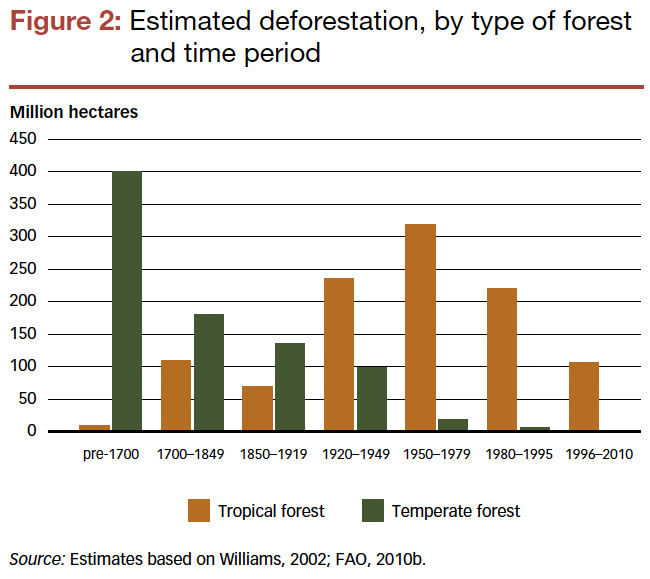


It's worth keeping in mind that the modeled data lines up with reality because it's supposed to. That's how you calibrate your model, by making sure it fits reality.
The real trick is to see how well your model extrapolates from the data you have out into the future. As in, if you feed it data up to, say, 1990, will it correctly spit out 2015 temperatures that fit the reality of 2015, or will it spit out crazy 2015 predictions like the models that were built in 1990 did. And, the bigger question: How will its predictions for 2040 (given 2015 data) match up to the reality over the next 25 years.
We seem to be getting a lot better at the modeling side. That's a good thing, since the first couple decades of watching people panicking and fighting each other over whatever scary results came out of the first generation climate models wasn't any fun to watch.